

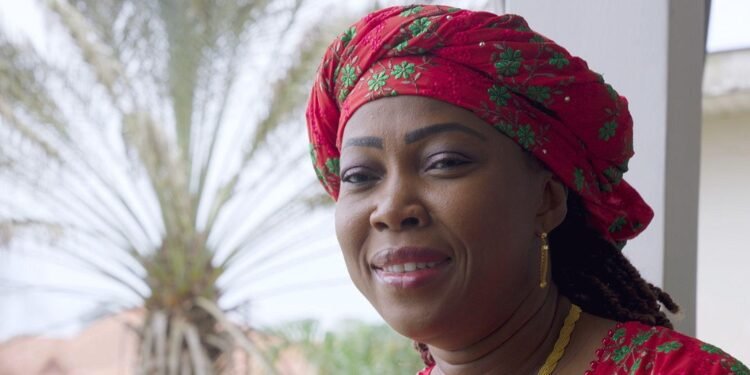
A coalition of medical experts, survivors, human rights activists, and politicians have demanded clarification regarding Sierra Leone’s First Lady, Fatima Maada Bio, after she denied endorsing Female Genital Mutilation (FGM) but refrained from denouncing the practice.
The controversy has placed renewed attention on one of West Africa’s most sensitive and divisive issues, with critics warning that comments attributed to the First Lady risk undermining years of efforts to combat a practice widely condemned by international health and human rights organisations.
Fatima Maada Bio, who currently serves as President of the Organisation of African First Ladies for Development (Oaflad), has come under scrutiny following remarks and public appearances that campaigners notes have created the perception that she supports practitioners of FGM.
In response to mounting criticism, the First Lady insisted she does not support forced circumcision and said her remarks had been misinterpreted. “I am not in favour of any form of circumcision that is forced upon an individual,” she stated.
However, she also stated that she was not prepared to publicly oppose the practice until she had a reliable evidence demonstrating the extent of harm caused by FGM within Sierra Leone.
The position has sparked concern among campaigners, particularly because of her prominent role as an advocate for women and girls.
As founder of the “Hands Off Our Girls” campaign, Fatima Maada Bio has earned international recognition for her efforts to combat child marriage, sexual violence and gender inequality. Yet her refusal to condemn FGM has increasingly become a point of contention among activists who argue that her influence could help accelerate efforts to end the practice.
The most recent criticism comes after more than 20 signatories, including former Sierra Leone Gender Minister Amy Smythe, Human Rights Attorney and UN Specialist Isha Dyfan, medical professionals, survivors, and leaders of civil society, submitted a letter to Oaflad on June 10.
The letter raises concerns that the First Lady’s public remarks may undermine efforts to shield women and girls from harmful customs.
The signatories wrote that “perceptions of support for FGM, whether direct or indirect, risk undermining years of advocacy and creating misalignment with national, regional and international commitments.”
Their concerns were amplified by reports of a recent public event where the First Lady was filmed addressing soweis, the traditional practitioners who carry out circumcision ceremonies within the influential Bondo and Sande societies.
Among those voicing concern is Ranya Kargbo, a Senior United Nations professional and survivor of female genital mutilation
According to Ranya Kargbo, “when you are in a leadership position, your words matter.”
“When [Bio] said to the soweis [the cutters], not to be afraid of anything and that she stands with them, those were powerful words from the highest office in Sierra Leone. When somebody says that, it means I have all the resources and support, do what you want. It is an absolute slap in the face for all of us.”
The First Lady rejected that interpretation, arguing that her comments were intended to encourage dialogue and reassure women who felt excluded from national discussions rather than promote the continuation of cutting practices.
Long-Running Debate Over FGM Returns to National Spotlight
Female Genital Mutilation (FGM) remains one of the most contentious issues facing Sierra Leone despite years of advocacy by local and international organisations.
The practice, which involves the partial or total removal of external female genitalia, is widely regarded by the United Nations and global health bodies as a serious violation of human rights.
Medical experts have linked it to numerous long-term health complications, including severe pain, infections, childbirth complications, infertility, psychological trauma and, in some cases, death.
Yet despite growing international pressure, Sierra Leone remains among the few countries in the region without legislation specifically criminalising FGM.
National survey data show that while prevalence rates have declined in recent years, the practice remains deeply entrenched. The proportion of women who have undergone cutting reportedly fell from 90 percent in 2013 to 83 percent in 2019. However, many girls continue to be subjected to the procedure before reaching the age of 15.
The issue gained additional significance last year when the Economic Community of West African States (Ecowas) Court of Justice described FGM as “one of the worst forms of violence against women” and ruled that it met the threshold for torture under international human rights standards.
The court ordered Sierra Leone to enact and implement legislation criminalising female genital mutilation and to take measures to prevent its occurrence and protect victims.
The ruling came shortly after President Julius Maada Bio assumed the chairmanship of Ecowas, placing additional scrutiny on Sierra Leone’s response to regional human rights commitments.
However, activists note that the government has yet to enact a specific ban on the practice. Critics also point to the Child Rights Act 2025, signed into law by President Bio, which did not include provisions directly addressing FGM.
Meanwhile, Fatima Maada Bio has become a focal point of the debate after sharing controversial material on social media, including an academic article questioning aspects of global anti-FGM advocacy.
She also criticised several prominent anti-FGM campaigners, accusing them of failing to contribute meaningfully to Sierra Leone’s development.