

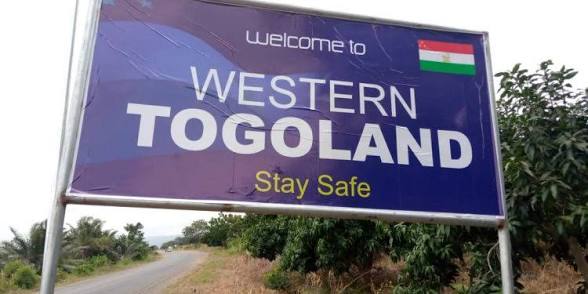
A Call for Truth, Accountability, and Completion of Outstanding International Obligations
There are moments in history when institutions must decide whether their principles are merely aspirational or genuinely binding.
The unresolved status of Western Togoland presents such a moment.
For nearly seven decades, the international community has proceeded on the assumption that the Western Togoland question was settled. Yet a growing body of historical and legal evidence suggests that the central condition upon which the termination of the United Nations Trusteeship was approved may never have been fulfilled.
If this is true, then the issue before us is not merely a regional political dispute. It is a challenge to the credibility of the international legal order itself.
The Fundamental Question
The question is simple:
If the United Nations approved the termination of the Trusteeship on the basis that British Togoland would enter into a political union with an independent Gold Coast, where is that union?
*Where is the constitutional instrument creating it?
*Where is the treaty establishing it?
*Where is the agreement defining the rights and obligations of the parties?
*Where is the legal document demonstrating that the people of Western Togoland entered into a union as a distinct political entity?
After decades of searching, advocates continue to argue that no such union instrument has ever been publicly identified.
This absence raises a profound legal and moral question.
Can a union exist without an act of union?
The Integrity of the Trusteeship System Is at Stake
The United Nations Trusteeship System was not created to facilitate territorial absorption.
It was created to guide Trust Territories toward self-government and self-determination under internationally supervised conditions.
The principle was clear:
A Trust Territory’s status would cease when it attained independence, either separately or in lawful union with another independent state.
If no legally constituted union was ever established, then reasonable people are entitled to ask whether the conditions underlying termination of the Trusteeship were ever fully satisfied.
This is not an extremist question.
It is a legal question.
It is a historical question.
Most importantly, it is a question that has never been answered satisfactorily by the institutions charged with safeguarding international legality.
Silence Cannot Substitute for Compliance
International obligations do not disappear because decades have passed.
Time cannot convert an unfulfilled obligation into a fulfilled one.
Administrative practice cannot replace legal compliance.
Political convenience cannot substitute for international law.
If the international community would not accept such reasoning in contemporary disputes, it should not accept it merely because the events in question occurred many years ago.
The credibility of international law depends upon consistency.
Human Rights Consequences Continue Today
The issue is not confined to historical archives.
It remains a living human-rights concern.
Individuals who peacefully advocate for the political rights of Western Togoland continue to face arrest, prosecution, detention, surveillance, exile, and restrictions upon expression.
Whether one agrees or disagrees with their political objectives is irrelevant.
No democratic society should fear peaceful advocacy.
No individual should lose liberty merely for raising questions concerning self-determination, political status, or historical justice.
The continued existence of detainees, political exiles, and allegations of suppression demands independent scrutiny by international human-rights mechanisms.
What We Ask
We are not asking the United Nations, the African Union, or human-rights organizations to prejudge the outcome.
We are asking them to investigate.
We ask for:
- An independent international legal review of the implementation of UN Resolution 1044(XI) and related Trusteeship obligations.
- Full public disclosure of all relevant archival records concerning the status and disposition of British Togoland.
- An expert examination of whether a legally constituted union was ever established between Western Togoland and Ghana.
- Independent investigation of allegations concerning arbitrary detention, political persecution, restrictions on expression, and treatment of Western Togoland activists.
- Constructive dialogue aimed at peaceful resolution of all outstanding issues.
A Test of International Credibility
The question before the world is larger than Western Togoland.
If a Trust Territory can disappear without clear evidence that the conditions established for its political future were fulfilled, then every former Trust Territory has reason to ask whether international guarantees truly matter.
If a people can spend generations requesting clarification of their legal status without receiving an impartial review, then confidence in international institutions inevitably erodes.
If peaceful advocates can be imprisoned while raising questions that have never been conclusively answered, then the principles of self-determination and human rights become vulnerable to selective application.
The issue is no longer whether the world agrees with Western Togoland activists.
The issue is whether the institutions responsible for administering international justice are willing to examine the evidence and answer the questions.
Conclusion
The people of Western Togoland are not asking the world for sympathy.
They are asking for scrutiny.
They are asking for transparency.
They are asking for accountability.
Above all, they are asking that international obligations be treated as obligations and not as historical suggestions.
If the Trusteeship obligations were fulfilled, let the evidence be produced.
If they were not fulfilled, let the truth be acknowledged.
The credibility of the United Nations, the African Union, and the international human-rights system is strengthened—not weakened—when difficult questions are confronted openly.
History’s unfinished chapters do not disappear.
They wait for justice.
The Western Togoland question remains one of those chapters.
Bobby Quarqoo
A Diasporan Freelance Journalist and Freedom Fighter
June 27, 2026
westtogo@gmail.com
westtogo@outlook.com