

By Leo Nelson
Ghana’s economy has recorded a stronger-than-expected performance in the first half of 2026, with real GDP growth reaching 6.4% in the first quarter, surpassing the government’s full-year growth projection of 4.8%.
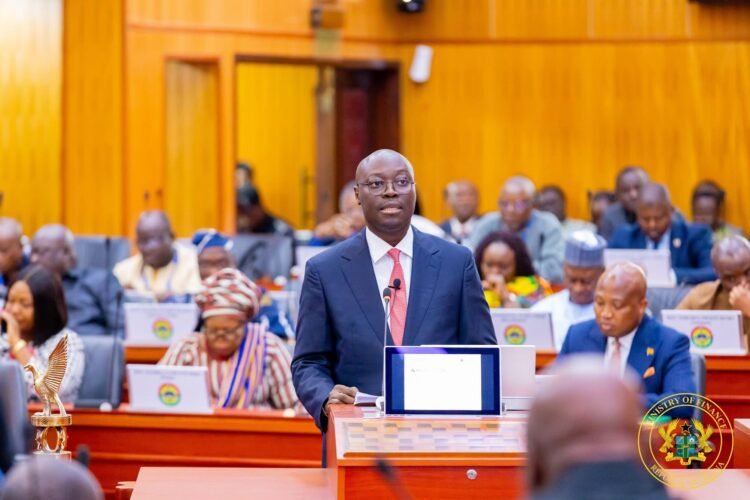
The impressive figures were announced by the Minister for Finance, Dr Cassiel Ato Forson, during the presentation of the Mid-Year Budget Review to Parliament, where he highlighted what he described as a major milestone in the government’s economic recovery programme.
According to the Finance Minister, Ghana has not only achieved its first-half targets but has exceeded several key economic benchmarks, reinforcing the government’s claim that fiscal reforms and economic management measures are yielding results.
“Mr. Speaker, Ghana has not merely met its first half-year target; it has exceeded it,” Dr Forson told Parliament.
The Minister said the latest economic indicators reflected stronger growth momentum, improved fiscal discipline, falling inflation, and increased resilience in the country’s external position.
GDP Growth Surpasses Full-Year Projection
One of the biggest highlights of the Mid-Year Budget Review was Ghana’s economic expansion, which has already exceeded expectations for the entire year.
Dr Forson disclosed that overall GDP growth reached 6.4% in the first quarter of 2026, significantly higher than the 4.8% full-year target set by government.
The non-oil economy also recorded strong growth, expanding by 6.3% during the same period compared with the projected full-year target of 4.9%.
“Overall GDP growth was 6.4% in the first quarter of 2026, well ahead of the 4.8% full-year target,” the Minister stated.
He added that “Non-Oil GDP growth was 6.3% in the first quarter of 2026, well ahead of the 4.9% full-year target.”
The figures represent a major boost for government’s economic recovery narrative, especially after years of economic pressures marked by high inflation, currency instability, and fiscal challenges.
Inflation Drops by More Than Half
Beyond growth figures, Ghana has also recorded a sharp decline in inflation, providing relief to households and businesses. The Finance Minister revealed that inflation has fallen from 13.7% in June 2025 to 5.3% by the end of June 2026.
This performance is significantly better than the government’s end-year inflation target of 8% plus or minus 1%. “Inflation has more than halved, falling from 13.7% in June 2025 to 5.3% by end of June 2026,” Dr Forson told Parliament.
The decline in inflation has been attributed to improved macroeconomic stability, tighter fiscal management, exchange rate improvements, and policy measures aimed at restoring confidence in the economy.
The Finance Minister said the achievement demonstrates that the government’s economic strategy is beginning to deliver measurable results.
Fiscal Balance Shows Stronger Position
The government’s fiscal performance for the first six months of 2026 also exceeded expectations, according to the Mid-Year Budget Review.
Dr Forson disclosed that the primary balance recorded a surplus of 0.9% of GDP on a commitment basis, placing Ghana firmly on track to achieve its end-year target of 1.5% of GDP.
He explained that the stronger fiscal outcome reflected continued commitment to expenditure controls and improved revenue mobilisation.
“Provisional fiscal outturn for the first half of 2026 was stronger than anticipated, indicating continued prudence in fiscal management and enhancing the government fiscal consolidation agenda.”
Government’s total expenditure on a commitment basis stood at 8.0% of GDP by the end of June 2026, below the half-year target of 9.9% of GDP. Primary expenditure also remained lower than projected, recording 6.6% of GDP against a target of 8.1%.
Interest Savings Boost Fiscal Space
Another major achievement highlighted by the Finance Minister was the reduction in interest costs. Interest payments amounted to 1.3% of GDP by June 2026, compared with a half-year target of 1.8%.
According to Dr Forson, the reduction represents savings of about 0.5% of GDP, driven by lower interest rates and improved debt management strategies.
“Interest costs at 1.3% of GDP, as at the end of June 2026, against the half-year target of 1.8% of GDP, indicating that we have saved on interest about 0.5% of GDP.”
The savings provide government with additional fiscal flexibility to support priority programmes while maintaining budget discipline.
Reserves Strengthen Economic Confidence
Ghana’s external position also recorded significant improvement, with gross international reserves reaching five months of import cover by the end of June 2026.
The figure exceeded government’s target of maintaining at least three months of import cover. Dr Forson described the reserve position as evidence of improved economic stability and stronger protection against external shocks.
The combination of higher reserves, declining inflation, stronger growth, and improved fiscal outcomes has strengthened government’s argument that Ghana’s economy is firmly recovering.
Government Highlights Reform Success
The Finance Minister credited the performance to what he described as difficult but necessary decisions implemented consistently by the administration.
“This performance reflects the resolve of this administration to make difficult decisions, implement them consistently, and maintain unwavering fiscal discipline.”
With growth already exceeding expectations, inflation falling faster than projected, and fiscal indicators improving, the government is presenting the first half of 2026 as a turning point in Ghana’s economic recovery journey.
The coming months will determine whether the country can sustain this momentum and translate improved economic indicators into broader benefits for households, businesses, and investors.