

Faces a U.S. Jury -but the Ghanaian Officials who took $1m bribe remain ghosts
TNR Files
On a sweltering Tuesday in Brooklyn, a former Goldman Sachs executive turned Ghanaian state oil refinery boss sat in a federal courtroom, listening as prosecutors laid out a tale of bribery, backroom deals, and a Turkish energy company’s bid to plant its flag in West Africa.
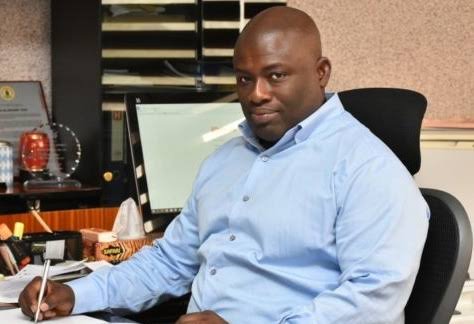
Asante Berko, 52, a dual U.S.-Ghanaian citizen, is charged with conspiring to violate the Foreign Corrupt Practices Act and laundering money allegations that he paid more than $1 million in bribes to Ghanaian government officials and members of Parliament between 2014 and 2017. The payoff, prosecutors say, was meant to grease the wheels for a Turkish firm, Aksa, to build and operate a power plant in Ghana.
Berko has pleaded not guilty. The most serious count carries a maximum of 20 years in prison.
But as the trial unfolds 8,000 kilometres away, a striking irony hangs over the proceedings: the power plant at the heart of the case the Aksa facility at Ahwomaso has already been completed and connected to the national grid this year. It is now a functioning piece of Ghana’s energy infrastructure, its origins now being dissected by a jury of New Yorkers.
And while Berko sits in the dock, the Ghanaian officials he is alleged to have bribed remain unnamed, uninvestigated, and untouched.
Berko’s path to a Brooklyn courtroom is a study in contradictions. In 2020, U.S. regulators brought a civil case against him over the same alleged scheme.
That same year, he was appointed Managing Director of Ghana’s Tema Oil Refinery (TOR) a state-owned asset that the then-government of Nana Akufo-Addo had been trying to revive. How a man under active U.S. investigation for corruption was handed a top state post was never publicly explained.
He was arrested in London in 2022 and extradited to the United States in 2024. His trial opened on July 28, 2026.
Prosecutors allege that Berko leveraged his position at Goldman Sachs to channel bribes to Ghanaian decision-makers in exchange for their support of Aksa’s power project.
The deal was not a small one: the plant was designed to add significant capacity to Ghana’s struggling grid, a prize that would have brought both revenue and political capital to those who helped secure it.
But the allegations suggest that the prize was not earned through competitive bidding or transparent procurement. Instead, it was allegedly purchased with cash funneled through shell entities and offshore accounts.
Berko’s defense has not yet been presented, and he maintains his innocence. But the case has already raised uncomfortable questions in Accra. Why has no Ghanaian official been named in the indictment? Why has the Office of the Special Prosecutor which was created precisely to pursue such cases not opened a parallel investigation? And why has Parliament, where some of the alleged bribe-takers may still sit, shown no interest in self-examination?
“This is a textbook case of transnational corruption, and the U.S. is doing the heavy lifting,” said Prof. Kwame A. Ninsin, a constitutional scholar at the University of Ghana. “The bribe-payers and bribe-takers are two sides of the same coin, but only one side is being prosecuted. That sends a dangerous message: that if you are a Ghanaian official, you can take bribes with impunity, as long as the money comes from abroad.”
The Aksa plant at Ahwomaso now provides electricity to Ghanaian homes and businesses. Its construction created jobs and eased chronic power shortages. None of that is in dispute. What is in dispute is the process by which it was approved.
If the jury in Brooklyn finds Berko guilty, it will confirm that a foreign company used bribery to secure a lucrative state contract and that Ghanaian officials were willing to sell their influence for a fraction of the deal’s value. The plant will still stand, but its legitimacy will be forever tainted.
“Ghanaians deserve to know whether their energy infrastructure was built on a foundation of corruption,” said Dr. Nyaho Nyaho-Tamakloe, a former diplomat and anti-corruption activist. “If the allegations are true, then the people who took those bribes are still walking free, possibly still in office, while the middleman is the only one facing justice. That is not justice that is selective enforcement.”
Berko’s trial comes in the same week that another Ghanaian, Derrick Van Yeboah, was sentenced to 85 months in a U.S. federal prison for running a romance scam and business email compromise ring that stole more than $100 million from victims. Van Yeboah personally pocketed $10 million.
The two cases one involving high-level political corruption, the other involving transnational fraud share a common thread: the United States is aggressively prosecuting crimes that originate in or involve Ghana, while Ghana’s own institutions appear paralyzed or indifferent.
“We are quick to cooperate with the U.S. when they ask for extradition of fraudsters who target Americans,” said Ninsin. “But when the crime is corruption that hurts Ghanaians, we are deafeningly silent.”
Berko’s trial is expected to last several weeks. The prosecution will likely call witnesses and present financial records that trace the flow of bribes. The defense will argue that the payments were legitimate consulting fees or that Berko was acting without corrupt intent.
But regardless of the verdict, the case has already exposed a gaping hole in Ghana’s anti-corruption architecture. The U.S. has the resources, the legal tools, and the political will to prosecute foreign bribery. Ghana has the OSP, but it is hamstrung by constitutional ambiguity and political interference.
“If we truly want to fight corruption, we cannot outsource it to American courts,” said Ninsin. “We must be willing to investigate our own officials, even the powerful ones. Until that happens, the bribe-takers will keep taking, and the power plants and the trust will keep crumbling.”
As the jury in Brooklyn listens to evidence, the question for Ghana is not whether Berko is guilty. It is whether the country will ever be ready to ask the same question of the officials who allegedly sold their country’s future for a few million dollars.