

National Security Chief Offers Media A Conditional Deal
TNR Files
For two days at the Platinum Bay Hotel in Abokobi, Ghana’s private press and its security establishment engaged in an unusual exercise: talking to each other.
The occasion was a capacity-building workshop organised by the Private Newspapers and Online News Publishers Association of Ghana (PRINPAG) in collaboration with the National Security Council Secretariat, under the theme “Media as a Strategic Partner in National Security”.
What emerged was less a training session than a public reckoning with Ghana’s embattled print industry, the chaotic digital information space, and the security institutions that have long viewed journalists with suspicion.
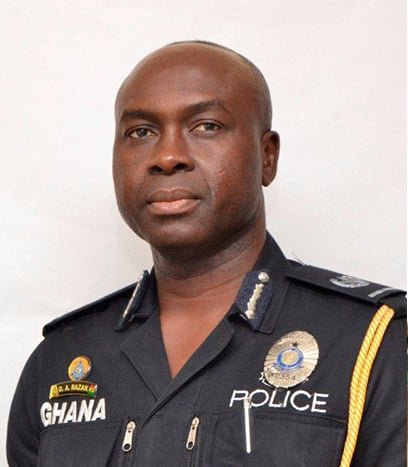
National Security Coordinator COP Osman Abdul-Razak delivered the keynote with an offer that surprised many in the room: his office was ready to establish a “standard channel of dialogue” between security services and newsrooms, so that “clarity replaces speculation in moments of national anxiety”.
“My office is ready to establish a standard channel of dialogue between the security services and your newsrooms so that clarity replaces speculation in moments of national anxiety, and to work with you on guidelines of security reporting drawn up with you and not for you,” he said.
The concession was deliberate. Abdul-Razak stressed that National Security did not intend to impose reporting guidelines on journalists, insisting that PRINPAG should instead propose practical ways of strengthening cooperation. “We have not come to teach. We have come to learn from each other,” he told the assembled editors and publishers drawn from 45 private media establishments.
Using a driving analogy from his law school days, he urged journalists not to remain “in the middle” when the facts were clear. “How do we drive in Ghana? Do we drive in the middle? You don’t drive in the middle. For you to be able to choose a position, it means you have done your research very well, and you know what is right, and you have the courage to do it. If it’s wrong, you say it. If it’s right, you say it. You don’t stay in the middle,” he said.
Abdul-Razak described Ghana’s information space as part of the country’s national security perimeter, “alongside its borders, territorial waters and physical security installations”. A free and responsible press, he argued, could serve as an instrument of security exposing corruption, holding power accountable, and providing “a lawful outlet to frustration that would otherwise reduce to violence”.
The President’s Lament
PRINPAG President David Tamakloe was less conciliatory. In his welcoming address, he warned against equating social media activity with professional journalism. “The madness we witness on social media is NOT journalism,” he declared.
He argued that the rapid growth of digital platforms should not be used to undermine traditional media or disregard the professional standards that had guided journalism for generations. “There is no alternative to the traditional media. The media is only one it has always been one, and it will always remain one,” he said.
Tamakloe also appealed for greater investment in the private media, arguing that a strong democracy required a well-resourced and independent press. “Let us provide the ink through funding, through regulation, and through partnership,” he said.
The Minister’s Diagnosis
Government Communications Minister Felix Kwakye Ofosu, whose speech was delivered by Deputy Government Spokesperson Shamima Muslim, offered the bleakest assessment. “Print is bleeding. And when print bleeds, national security bleeds,” he said.
He sketched a grim picture of an industry in terminal decline: in 2005, the Daily Graphic sold over 100,000 copies a day; today, with double the population, circulation is a fraction. Advertising revenue that once sustained print journalism had migrated to digital platforms. “Google and Meta take over 60% without employing a single reporter in Accra,” the Minister noted.
The decline of print, he warned, was not merely an economic problem. “Social media gives us heat, not light. It tells us there is anger in Bawku, but not why. It shows a video of soldiers, but not whether it is from Ghana or Mali, 2025 or 2021,” he said. Only professional journalism could provide the verification, context, and record that security required.
Ofosu proposed a five-point pact: a secure verification channel linking PRINPAG, National Security and his office for rapid fact-checking; quarterly security briefings for editors; support for Right to Information and safety training; and a PRINPAG Code for Responsible Security Reporting. “Let TikTok be first. Let PRINPAG be right,” he said.
The Cyber Dimension
Cyber Security Authority Director-General Divine Selase Agbeti, delivering closing remarks, warned that the digital environment had intensified the media’s responsibilities. “Journalists and newsrooms are both targets and potential force multipliers. When a journalist’s account is compromised, the attacker gains access not only to data but also to credibility and an audience,” he said.
He urged newsrooms to adopt basic cybersecurity safeguards and proposed five commitments: verify before amplifying; protect operations and people; build cyber-resilient newsrooms; correct misinformation visibly and quickly; and strengthen structured engagement with security institutions.
The Unspoken Question
The workshop closed with an unusual degree of consensus on at least one point: the status quo is unsustainable. But the unspoken question lingered: can a partnership between a cash-strapped press and a security establishment that has historically viewed journalists as adversaries actually work?
Abdul-Razak seemed to acknowledge the challenge. He attributed part of Ghana’s democratic stability in a region of coups to the media’s responsible role at critical moments. “If Ghana’s democracy remains outstanding in a region of coups,” he said, “it is in no small measure because at decisive moments the press has chosen responsibility”.
Whether that responsibility will be rewarded with genuine cooperation or merely managed suspicion remains to be seen.