

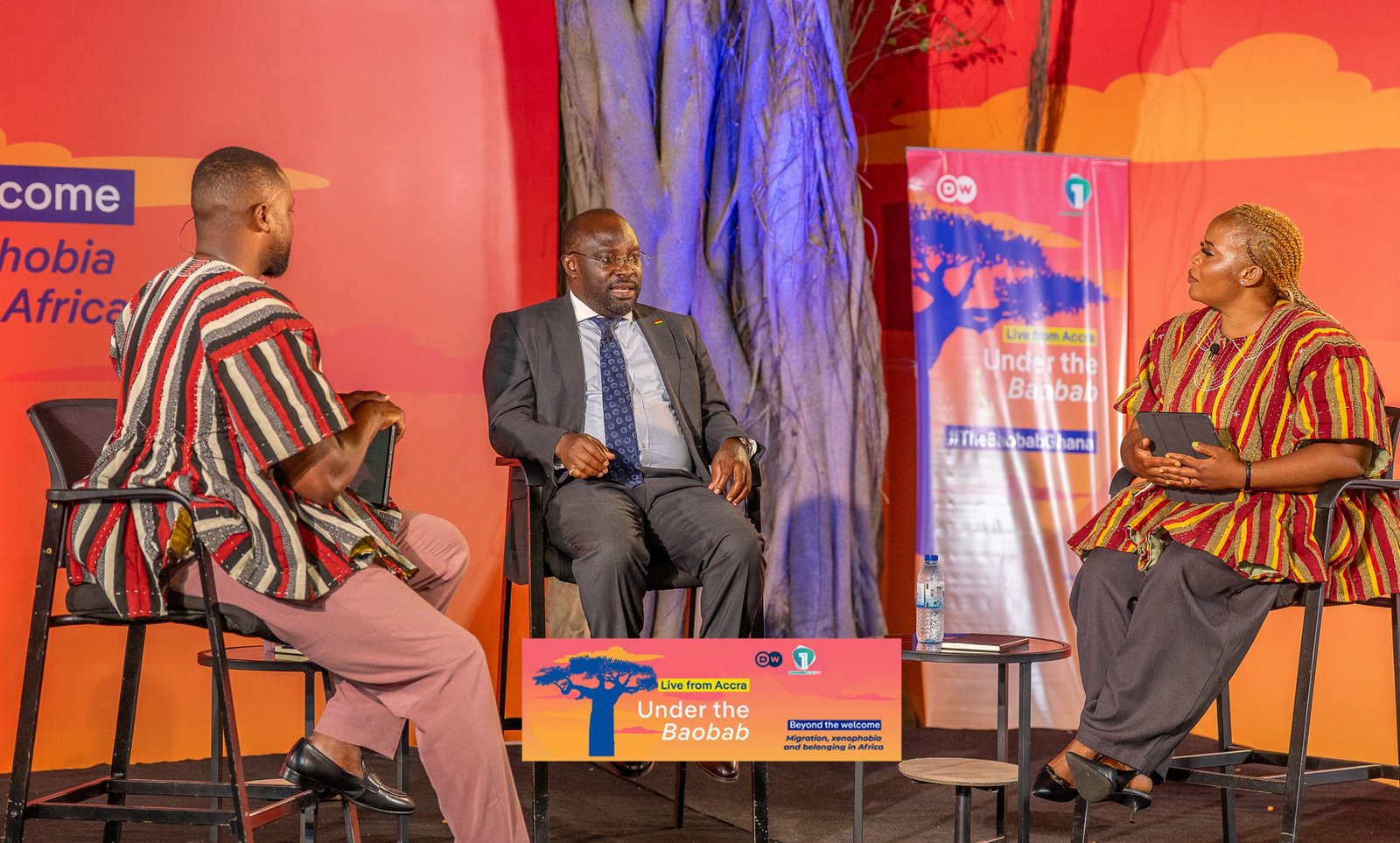
Deutsche Welle (DW), through its English service for Africa, has partnered with Accra-based Channel One TV to launch ‘Under the Baobab’, a new weekly vodcasts dedicated to spotlighting African stories, voices and perspectives.
The inaugural edition, held at the premises of Channel One TV in the national capital on Thursday, October 1, was staged under the theme ‘Beyond the Welcome: Migration, Xenophobia and Belonging in Africa’.
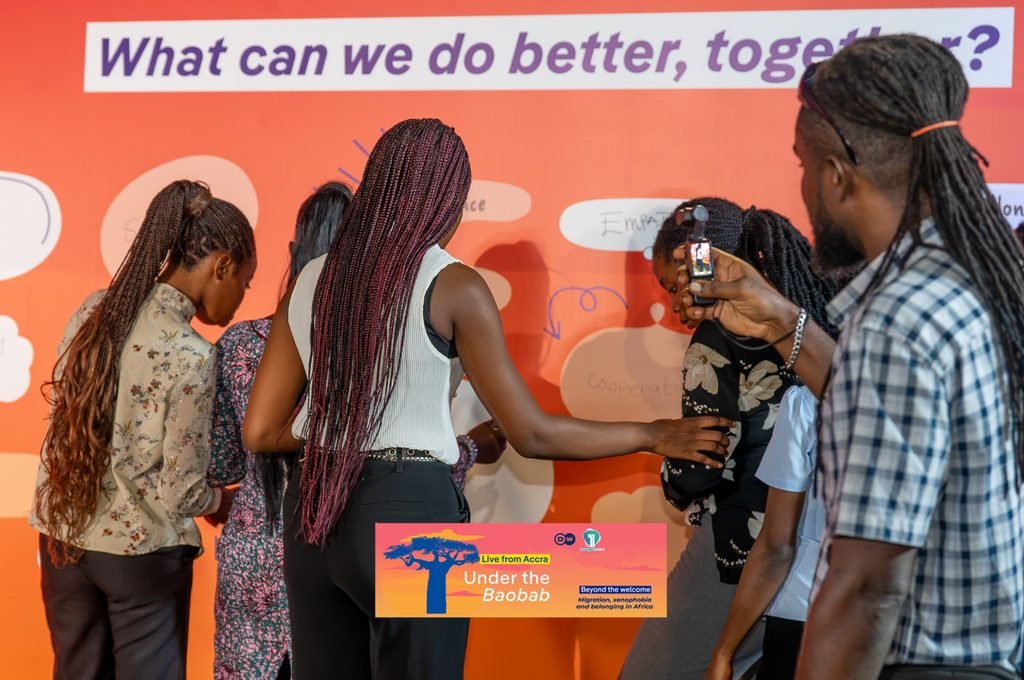
It attracted students, policymakers, media personalities and other key stakeholders.
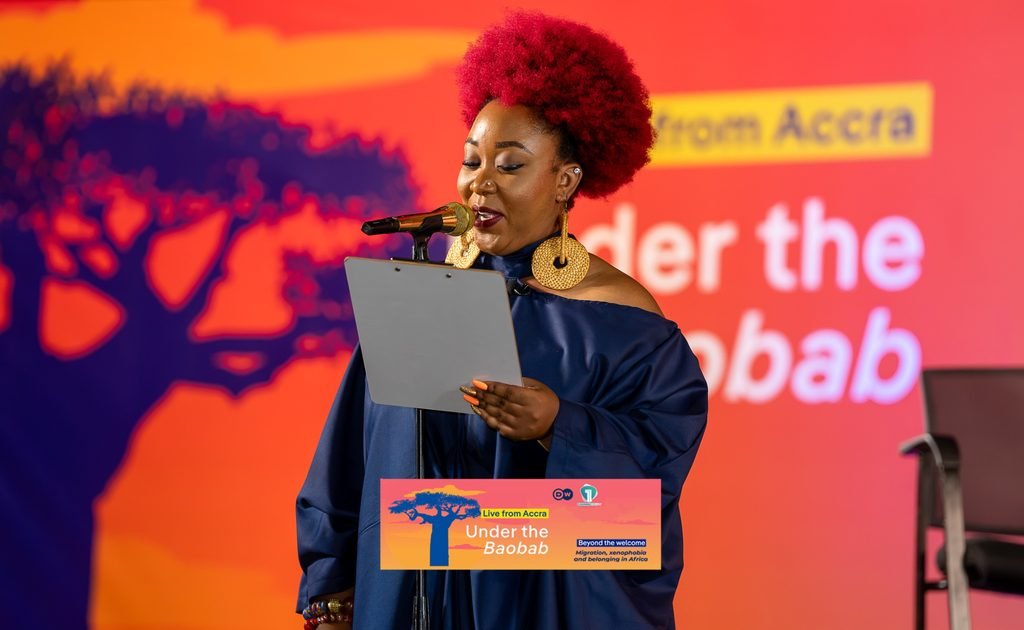
Hosted by Mimi Mefo Newuh and George Okachi, the weekly programme will focus on social developments and current affairs across the continent, offering a platform for critical and constructive discussions on the social, economic and cultural issues shaping Africa.
The first season will concentrate on West Africa — drawing contributions from countries including Ghana, Nigeria and Cameroon — before expanding to capture viewpoints from the continent’s other sub-regions.
Viewers can expect interviews with a wide range of guests, including policymakers, entrepreneurs, artists, educators and community leaders, who will share personal stories, debate fresh perspectives and collaborate on solutions to Africa’s most urgent challenges.
‘A Partnership Built on Shared Values’
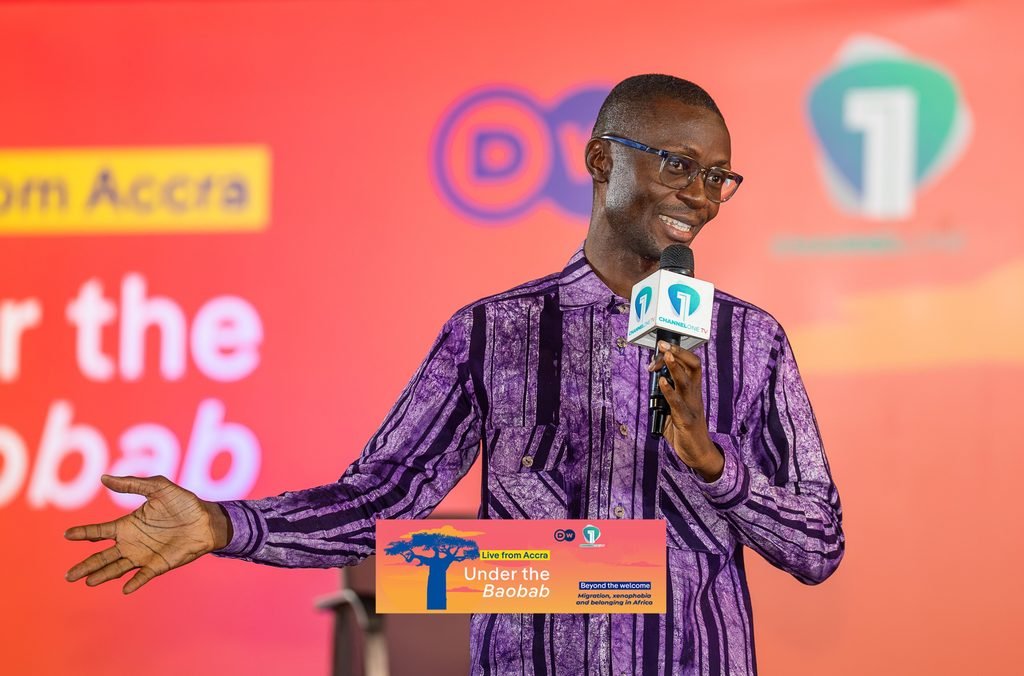
Welcoming the DW team, General Manager of Channel One TV and Citi FM, Bernard Avle, reflected on the significance of the baobab tree and described the collaboration as one rooted in common ideals.
“We are going to share knowledge and compare experiences across the continent,” he said, adding that the programme’s one-year survival was “a testament of resilience” and “a place for discourse.”
“Modern democracies cannot survive without a place where there’s rational public discourse,” Mr Avle noted. “We are excited that tonight we will hear voices — not only of the high and mighty, but also of ordinary students.”
He stressed that while some partnerships are based on mutual need, “this partnership is based on shared values. We are all committed to resilient, strong democracies, and the oxygen for democracy is an independent, vibrant media.”
“Whether we are publicly funded or profit-oriented, we are all focused on the public good,” he said, before delivering a message to young people: “The future belongs to young people… Don’t be intimidated. You don’t need a ticket to barge through the door. The door is already open.”
‘Migration Is Not the Problem’
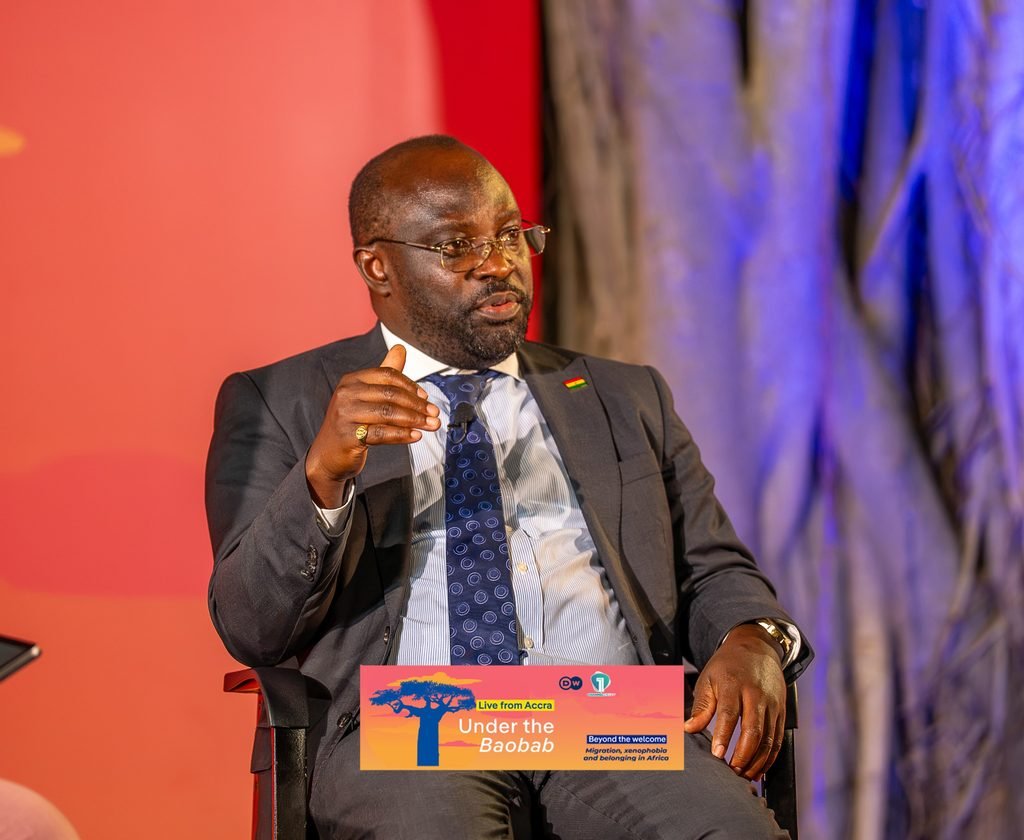
Special guest Ambassador Harold Adlai Agyeman, Coordinating Director for Political and Economic Affairs at the Ministry of Foreign Affairs, commended the partnership and described the theme as apt, considering current happenings on the continent.
Tracing Africa’s long history of movement — from the migration narratives of the Ga people to similar accounts across the continent — he argued that modern borders are recent constructs, and that restricting African movement is “an anathema to who we are.”
“Migration is not the problem,” he declared. “We have migrated throughout centuries, and we will need to continue to migrate… When the fears and frustrations of people are instrumentalised to create the impression that the foreigner, the migrant, is the problem, all of us have a responsibility to speak out against it.”
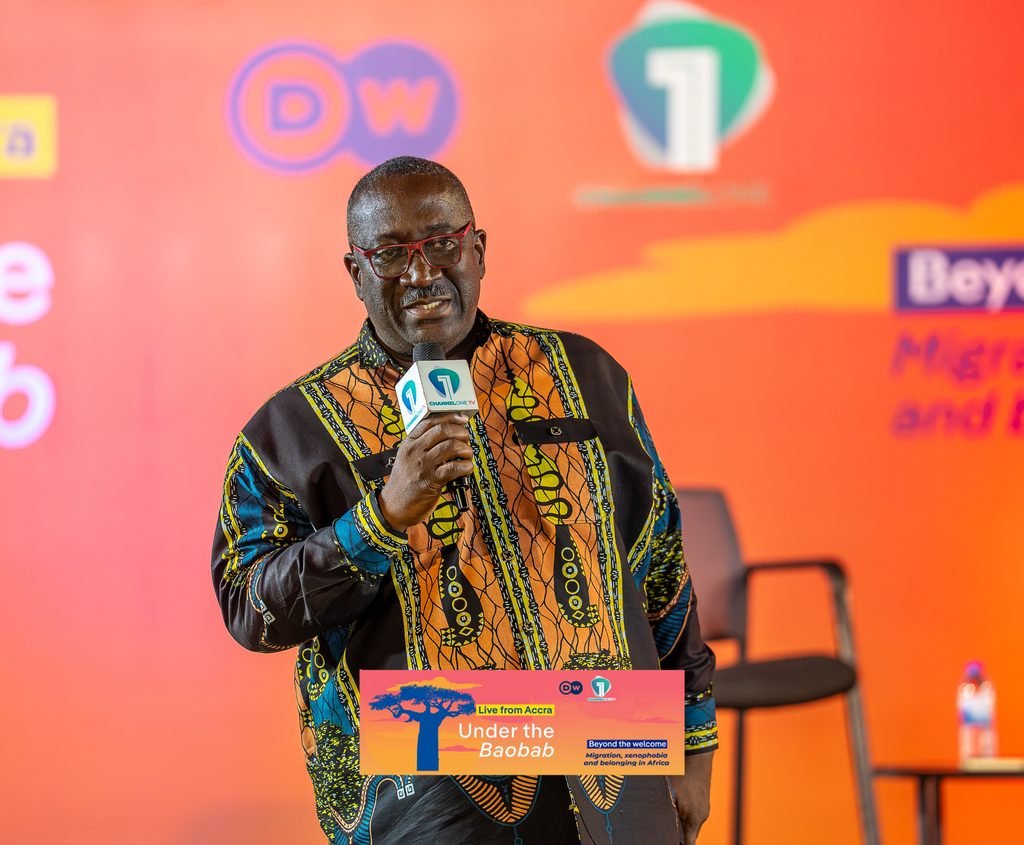
The Ambassador maintained that prosperity comes through integration rather than isolation, citing Africa’s collective GDP of about $3.5 trillion and the over $220 billion generated in intra-African trade in 2024 alone under the African Continental Free Trade Area.
“But if we are fragmented, that figure is meaningless,” he cautioned, urging citizens to respond to those who scapegoat migrants “with facts and with the moral authority of the collective legacy that migration has brought into our lives as a people.”
“Belonging means we should not be asked the question the poem asked — ‘Where are you from?'” he added. “We all belong here… An African identity should be what collectively drives us towards the prosperity, peace and stability we require.”
‘A Space Where African Voices Are Truly Valued’
Head of English for Africa at DW, Asumpta Lattus, hailed Channel One TV for the partnership and paid tribute to the dedication of the team behind the production.
She revealed that the idea for the show was born from “a very simple and powerful question: How do we create a space where African voices, experiences, innovations and perspectives are not just heard, but truly valued and amplified?”
“The baobab tree, often called the tree of life and wisdom, has long been a place where communities gather to exchange wisdom, resolve challenges and imagine the future,” she explained. “We wanted to bring that same energy into a modern conversation platform that connects people across generations and countries.”
Pointing to her own team, drawn from 15 different countries, she said their varied experiences remain “deeply rooted in African realities and aspirations.”
“Great ideas may begin with a conversation, but they come to life through teamwork, commitment and countless hours of hard work,” she noted, disclosing that nearly a year was spent shaping a show that represents “not only Ghana, but the whole continent.”
Ms Lattus expressed gratitude to Channel One TV “for believing in us” and for its work in Ghana, which she said aligns with DW’s mission and vision, expressing the hope that Under the Baobab will become “a place where stories are shared, ideas are challenged, laughter is welcomed, and new possibilities take root.”
By Gifty Boateng