

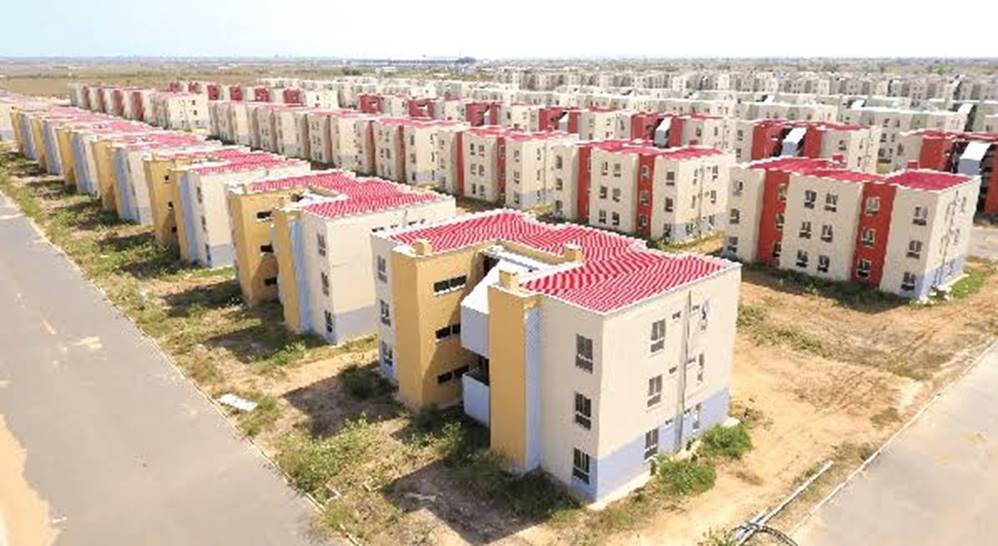
Only 5% Have Houses, GSS Data Reveals
By Philip Antoh
Ghana’s housing deficit continues to widen, with recent data from the Ghana Statistical Service painting a stark picture: only 5% of Ghanaians can secure shelter entirely on their own.
While approximately 60% of the population relies on state-facilitated support for accommodation, a worrying 30% cannot access housing even with government subsidies.
These figures were highlighted in a joint statement issued by the Ministry of Works, Housing and Water Resources (MWHWR) and the Ministry of Local Government, Chieftaincy and Religious Affairs (MLGCRA) to commemorate World Habitat Day 2026 on October 5.
Observed under the theme ‘Adequate Housing for All,’ the day underscored the daily struggles millions face in finding a place to live.
The ministries emphasized that housing transcends mere physical structures; it is a cornerstone of security, dignity, and community thriving.
However, despite ongoing efforts, homeownership and decent accommodation remain elusive for many Ghanaians due to exorbitant land prices, escalating construction and infrastructure costs, and a severe lack of affordable housing finance.
Advancing Affordable Housing Delivery
To counter these challenges, the government is pursuing policies aimed at improving affordability, expanding financing options, and decentralizing housing delivery.
By collaborating with private developers, the state is facilitating access to land, basic infrastructure, and credible off takers while leveraging private sector expertise.
A flagship intervention is the National Mortgage Scheme, implemented in partnership with the National Housing Fund and Republic Bank.
The scheme offers mortgage financing at an approximate interest rate of 8.4% per annum with repayment periods stretching up to 20 years, specifically targeting Ghanaians excluded from traditional mortgage markets.
Furthermore, initiatives like the Greenville District Housing Programme and the National Rental Assistance Scheme are being rolled out to expand affordable housing choices beyond major urban centres.
Promoting Inclusive Housing
The government has pledged to ensure housing is accessible to all, particularly vulnerable groups and Persons with Disabilities (PWDs). In ongoing developments, ground-floor units are being reserved for PWDs to ensure convenience, and implementing agencies have been directed to consult disability organizations during the planning and design phases. Additionally, provisions for inclusive housing are being embedded into the ongoing review of the National Housing Policy to guarantee future projects serve all citizens equitably.
Strengthening Housing Delivery Through Policy
In July 2026, the government, through the MLGCRA, launched two landmark frameworks: the National Urban Policy and Implementation Plan (2026-2035) and the complementary National Slum Upgrading and Prevention Strategy (2026-2035).
The Urban Policy prioritizes investment in affordable and social housing by streamlining development approvals, expanding low-income rental options, upgrading informal settlements, and boosting private sector participation.
It also seeks to strengthen ties between local authorities, housing institutions, and investors.
Complementing this, the Slum Upgrading Strategy recognizes that adequate housing is vital to preventing informal settlements. It advocates for practical interventions such as land tenure regularisation, allocating public land for low-cost housing, land pooling and readjustment schemes, innovative financing mechanisms, and resilient building technologies.
Building Sustainable Communities and Partnerships
The government acknowledges that sustainable human settlements require more than just housing units; they necessitate essential infrastructure like potable water, sanitation, roads, electricity, and public spaces.
Consequently, it continues to promote integrated development that pairs housing delivery with these vital services, working closely with Metropolitan, Municipal, and District Assemblies (MMDAs), the private sector, and financial institutions.
The ministries also recognized the invaluable contribution of UN-Habitat, whose longstanding technical and financial support has been instrumental in shaping Ghana’s housing sector.
Notably, UN-Habitat assisted in preparing the Ghana Housing Profile 2024 and supported the development of the newly launched National Urban Policy and Slum Upgrading Strategy.
As Ghana marks World Habitat Day 2026, the government reaffirmed its commitment to expanding access to decent, affordable housing.
“We call on all stakeholders government institutions, traditional authorities, civil society organizations, development partners, the private sector, and citizens—to support efforts toward achieving adequate housing for all,” the joint statement concluded.