

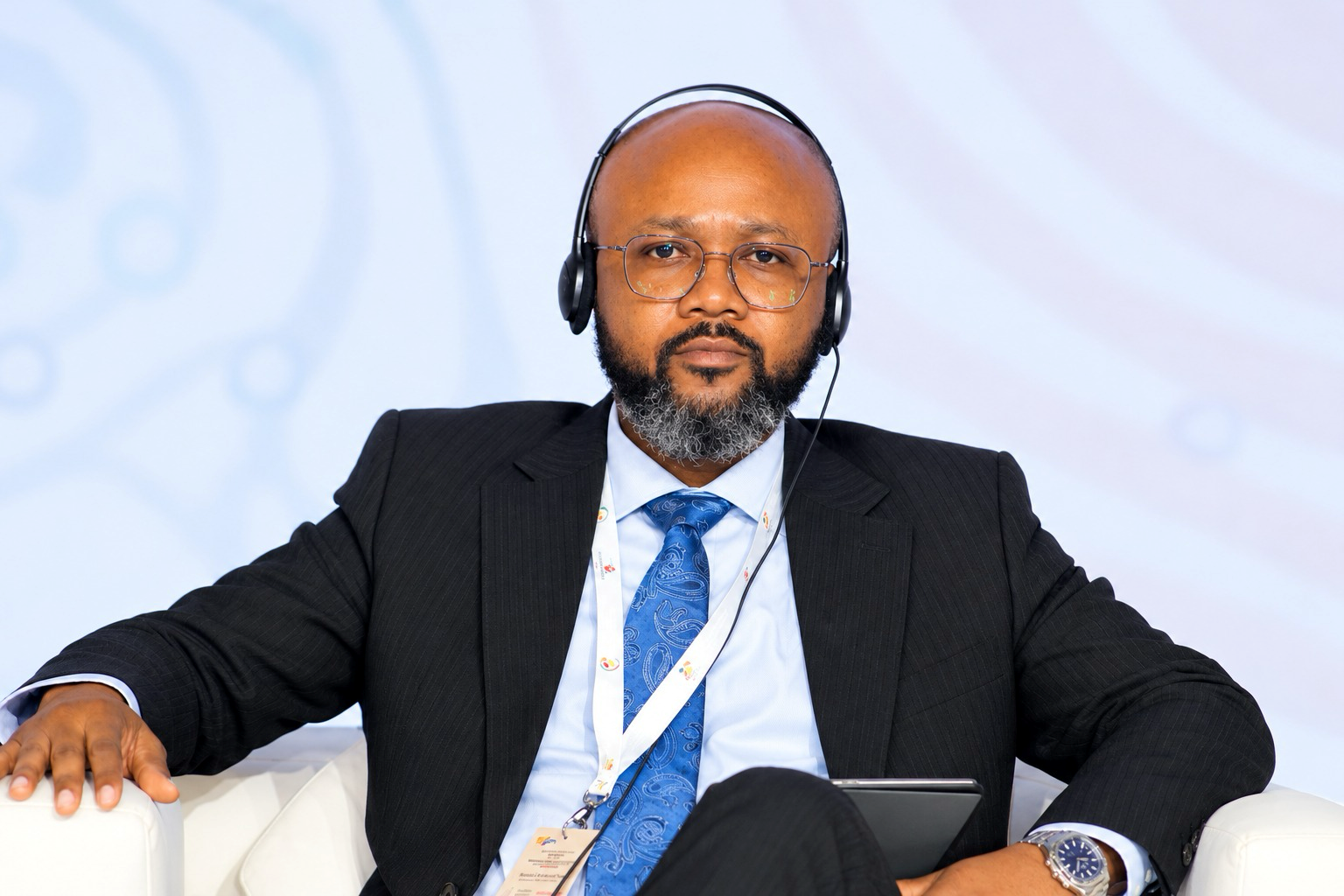
Agbeti Calls For Stronger Laws, Skilled Workforce And Coordinated Cyber Defence
By Gifty Boateng
The Chairman of the African Network of Cybersecurity Authorities (ANCA), Dr Divine Selase Agbeti, has urged African governments to move beyond statements of intent and deliver concrete, measurable action on cybersecurity, warning that the continent’s digital transformation depends on it.
Delivering a keynote address on “From Continental Sovereignty to International Cooperation” at the African Cybersecurity Forum, part of the 2026 Morocco Cybersecurity Week, Dr Agbeti said Africa stands at a defining moment as governments digitise public services, businesses adopt emerging technologies, and citizens increasingly rely on digital platforms for education, healthcare and commerce.
While these developments create enormous opportunities for growth and innovation, he cautioned, they also expose countries to increasingly complex risks — including cybercrime, ransomware, attacks on critical infrastructure, online fraud and the misuse of emerging technologies.
Dr Agbeti stressed that cybersecurity can no longer be treated as a purely technical concern.
“Cybersecurity is no longer simply a technical matter. It is a question of national security, economic stability, effective governance, public trust and sovereignty,” he told delegates.
Noting that a cyber incident in one country can disrupt essential services in another, he said no state can confront these challenges alone. At the same time, he cautioned that a common continental agenda must reckon with national realities, as countries differ in legal frameworks, institutional maturity, resources and technical capacity.
“The objective is not to impose identical arrangements on every country, but to strengthen our respective national systems in ways that enable effective cooperation,” he said.
Drawing on Ghana’s experience, Dr Agbeti — also Director-General of the country’s Cyber Security Authority — cited the Cybersecurity Act, 2020 (Act 1038), which establishes the legal framework for cybersecurity regulation, creates the Cyber Security Authority and provides for the protection of Critical Information Infrastructure.
“Legislation alone is not enough,” he warned. “Our frameworks must be effectively implemented, our institutions adequately resourced, and our people equipped with the skills required to respond to evolving threats.”
Dr Agbeti said regional cooperation offers countries still building their capabilities a pathway to learn from others and strengthen institutional readiness. Through ANCA, member authorities have deepened collaboration, exchanged knowledge and laid the groundwork for a more coordinated response to shared threats.
He also underscored the growing importance of cyber diplomacy, calling for stronger ties between cybersecurity authorities and Ministries of Foreign Affairs so that technical expertise informs diplomatic engagement.
“Our participation in international forums must go beyond attendance,” he said. “We must contribute meaningfully to discussions, build strategic partnerships and advocate approaches that reflect our legitimate national and continental interests.”
He added that alignment with international standards must be guided by “practical outcomes rather than compliance on paper,” with partnerships designed to build sustainable, independent national capability.
Insisting that “partnerships are valuable, and commitments are important — yet ultimately, progress is measured by action,” Dr Agbeti outlined priority areas for the continent:
Strengthening national governance through effective legal frameworks, clear institutional responsibilities and improved coordination;
Enhancing capacity development through leadership training, technical exchanges and sustainable institutional partnerships;
Deepening operational cooperation through trusted threat intelligence-sharing, joint exercises and coordinated responses to cross-border incidents;
Advancing cyber diplomacy by linking technical authorities with diplomatic institutions;
Promoting international standards in ways that respond to national realities and improve outcomes; and
Building trusted partnerships with regional organisations, development partners, academia and the private sector.
These priorities, he said, must reinforce one another: strong national institutions enable effective cooperation, while trusted partnerships strengthen national capabilities.
Dr Agbeti commended the Kingdom of Morocco, the General Directorate of Information Systems Security (DGSSI), Smart Africa and all partners for convening the forum, and acknowledged insights from earlier speakers General Abdellah Boutrig and His Excellency Mohamed Methqal.
He closed with a call to purpose: “Let us move from ambition to implementation, from dialogue to action, and from fragmented efforts to purposeful cooperation. Together, we can build a safer, more resilient, and more trusted African digital future.”