

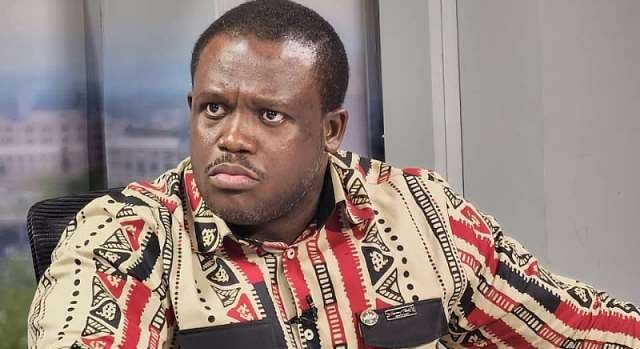
The Minister of Communication, Digital Technology and Innovations Samuel Nartey George, has threatened to shut down all politically and religiously affiliated media houses in Ghana if given the freedom to do so, arguing that the country’s broadcasting landscape has become overcrowded and increasingly difficult to regulate.
The Minister described the proliferation of radio and television stations in the country as excessive, questioning why a country with a population of approximately 35 million should have nearly 700 radio stations and 120 television stations.
“If you leave me, I will shut down every political and religiously affiliated media house so that we have a clean slate in this country,” the Minister declared.
According to the Minister, the growing number of politically and religiously affiliated broadcasters poses challenges to responsible journalism and effective regulation, warning that the situation could lead to what he described as “media tyranny” rather than media freedom.
The Minister also raised concerns about religious organisations allegedly operating broadcasting stations through proxy companies, despite restrictions under the country’s broadcasting laws.
He explained that some religious bodies reportedly use business entities as fronts to obtain broadcasting licences from the National Communications Authority (NCA), making it difficult for the regulator to establish the actual ownership and affiliations of such stations.
The Minister argued that if religious broadcasting affiliations should be restricted, politically affiliated media organisations should also be subjected to similar scrutiny.
Recounting his efforts to sanitise the broadcasting sector since assuming office, the Minister said he had presented the President with a list of 268 media houses identified for various regulatory infractions.
He said he spent nearly three hours explaining the violations committed by the affected stations and why regulatory action, including shutdowns, was necessary.
According to him, he initially planned to close down the affected media houses in phases rather than undertake a blanket exercise, announcing the first batch of 64 stations for closure.
However, he said the exercise encountered resistance shortly after the announcement, with the President of the National Media Commission (NMC) reportedly appealing directly to the President of the Republic against the move.
The Minister claimed that the NMC President raised concerns about the potential damage the shutdowns could cause to Ghana’s international reputation, particularly given the President’s background as a former media practitioner.
He further disclosed that the President subsequently directed him to grant an amnesty to the affected media houses, effectively halting the planned enforcement exercise.
The Minister said the decision to grant the amnesty was a matter of public record, adding that the intervention had complicated efforts to address regulatory breaches within the broadcasting industry.
He expressed frustration that some journalists and media industry representatives who should support efforts to improve standards were instead opposing measures aimed at enforcing compliance.
“If you are trying to fix the problem and it is the same journalists and your representation that is fighting those who are trying to fix the problem, you’re fighting yourself,” he said.
The Minister maintained that Ghana’s broadcasting sector requires stronger regulatory enforcement to address licensing violations, improve accountability and ensure that media freedom is not abused.
By Gifty Boateng