

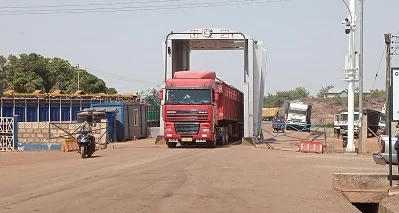
The Foundation for Security and Development in Africa (FOSDA) has appealed to the Government to lift, without further delay, the curfew imposed on Hamile following the dynamite explosion that rocked the border community on 3 November 2026.
In a statement issued on Sunday, the Accra-based organisation cautioned that the continued movement restrictions were taking a heavy toll on the livelihoods of residents, even as it acknowledged the State’s duty to preserve security and public order.
“FOSDA recognises government’s responsibility to maintain security and public order. However, the organisation is concerned about the growing economic and social hardship the restrictions are inflicting on residents,” the statement noted.
According to FOSDA, Hamile’s economy is driven largely by trade, transportation and cross-border commerce, leaving residents particularly exposed whenever movement is restricted for extended periods.
The organisation further warned that restrictions which drag on without clear communication or a definite timeline for review could erode trust between residents and security agencies, stoke tensions and weaken the community cooperation on which effective border security depends.
Mounting economic losses
Information gathered by FOSDA from local contacts suggests that women food vendors, traders, transport operators, shop owners and other small-scale businesses are already recording significant income losses, while residents struggle to access essential services during restricted hours.
Of particular concern, the statement said, are reports that long-haul trucks conveying goods to Burkina Faso and other neighbouring countries remain stranded, with parked vehicles stretching from Hamile towards Nandom about 17 kilometres. FOSDA cautioned that the disruption risks pushing the economic fallout beyond Hamile, affecting transport operators, traders and entire regional supply chains.
Security measures must be proportionate
While conceding that some security response was necessary after the incident, FOSDA insisted such measures must be proportionate, regularly reviewed and responsive to changing circumstances. With reports indicating that calm has returned, the authorities should urgently reassess whether the curfew remains necessary, the organisation said, adding that targeted measures — including proper controls on firearms and explosives — could be maintained without imposing blanket restrictions on residents’ movement and livelihoods.
Investigation must not be abandoned
FOSDA stressed that lifting the curfew should not signal the end of the probe. Authorities, it said, must urgently establish the origin, quantity and intended destination of the explosives, the circumstances of their detonation, and the allegations of firearm use during the initial interception and the confrontation that followed. The reported civilian injuries, the organisation added, demand an impartial investigation and accountability wherever wrongdoing is established.
FOSDA also called for stronger preventive border security through adequately resourced and operationally empowered Border Security Committees (BOSEC), improved intelligence-sharing and meaningful engagement with border communities.
“Hamile’s residents should not continue to bear the prolonged economic and social costs of an unresolved security incident. The Government must act with urgency to restore normal life, ensure accountability and address the security vulnerabilities exposed by this tragedy,” the statement said.
It concluded: “Security must protect both lives and livelihoods. FOSDA therefore calls for the immediate lifting of the curfew, a speedy and credible investigation, and decisive action to prevent a recurrence.”
Foundation for Security and Development in Africa (FOSDA) — Accra, Ghana | www.fosda.org