

Secret Blueprint Demands Host Community Ownership in New ‘Tarkwa Goldfields’ Deal
By Stanley Assor
A powerful coalition of indigenous professionals is quietly mounting an aggressive, high-stakes campaign to force the Ghanaian government to upend the ownership structure of the country’s flagship gold mine, an exclusive New Republic investigation has revealed.
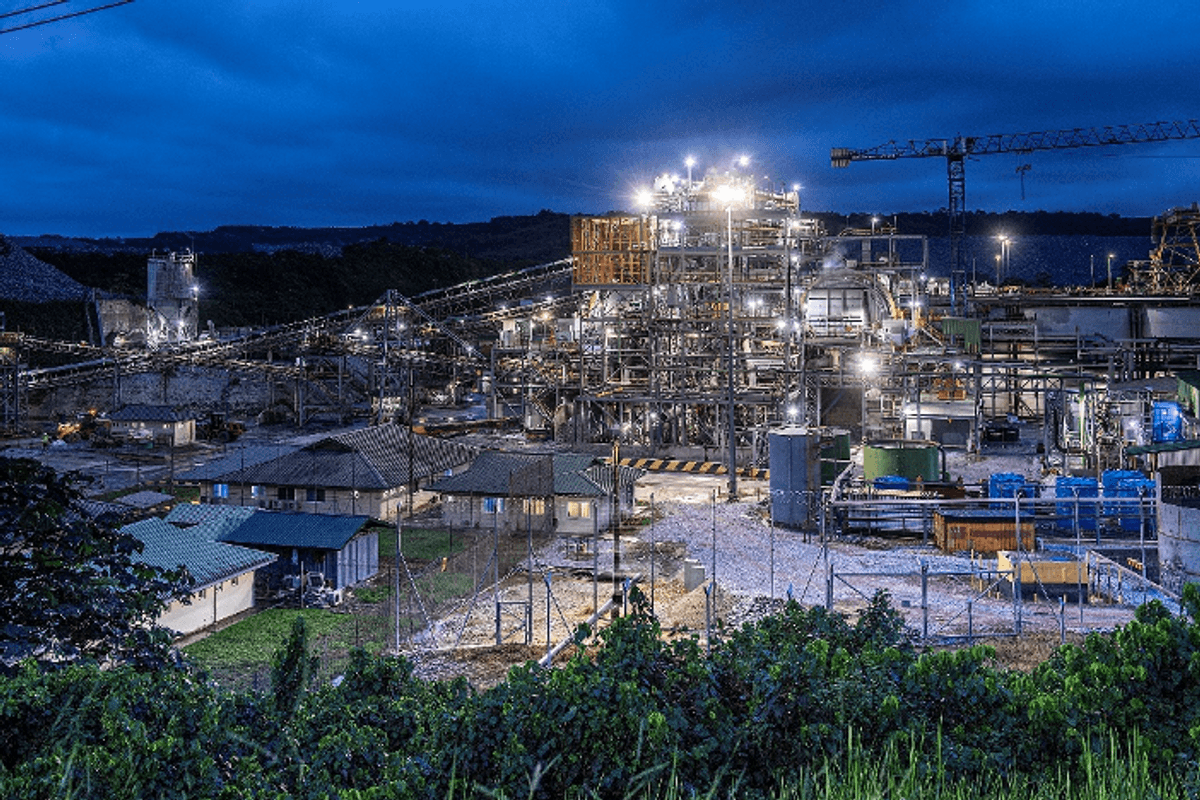
For months, the future of the Gold Fields Tarkwa mine a sprawling 17-year asset with an estimated annual production value of up to $2.3 billion has been the subject of intense speculation, with government insiders whispering of a looming “localization” agenda.
Now, leaked internal documents and exclusive interviews with key figures in the Wassa enclave reveal the shadowy blueprint driving this agenda: a plan to force a radical “Reset” of the mine’s lease renewal, demanding that a 10% free-carried equity stake and a 2% quarterly revenue share be carved out for the host communities.
The strategy is being spearheaded by the Wassa Professionals Network (WPN), a highly organized, diaspora-backed think tank of technocrats, lawyers, and mining engineers from the Amenfi, Fiase, and Mpohor traditional areas.
While the WPN’s public posture has been one of civic advocacy, sources within the network told The New Republic that this is a calculated, top-down pressure campaign designed to corner a government already exploring options to offload the mine to local investors ahead of the lease’s April 2027 expiry.
A High-Stakes National Security and Economic Gamble
Gold Fields has sat on the Tarkwa lease since its application for renewal in November 2025. The company, which reported a staggering GH¢5.8 billion in corporate taxes, royalties, and dividends to the state in 2025, has signaled it is preparing to negotiate. But the WPN is not waiting for the negotiation table. They are building a gallows for the current 90/10 ownership model.
“The government cannot ignore us,” a senior WPN strategist, who spoke on condition of anonymity because of the sensitivity of the negotiations, told The New Republic. “We are not just asking for corporate social responsibility. We are demanding ownership. We have drafted the legal and financial framework to ensure that if Tarkwa is to be renewed, or sold to a local investor, the Wassa people are not left holding the bag. We want a seat at the table, a vote on the board, and 2% of the gross revenue directly into our communities.”
The blueprint, a copy of which was reviewed by this newspaper, demands a 10% free-carried equity interest held through an accountable Wassa Trust Fund, complete with voting rights and board representation. Additionally, it demands 2% of gross mineral sales revenue, payable quarterly without deductions.
To force the government’s hand, the WPN is reportedly leveraging the growing global wave of resource nationalism. The documents detail how jurisdictions like the DRC, Botswana, and Papua New Guinea have revised their mining codes to ensure host communities retain between 5% and 15% equity.
“We are telling the government that the era of 90/10, where the community gets nothing but dust and displaced graves, is over,” a prominent traditional leader in Tarkwa told The New Republic. “The Apinto Divisional Council has already drawn a line in the sand. The lease renewal must be tied to shared prosperity. If the government tries to bypass us, we will make the process politically toxic.”
The Local Ownership Dilemma
The timing of the WPN’s aggressive push is no accident. The New Republic has learned that it is directly designed to intersect with the government’s quiet, but persistent, desire to exert greater control over the Tarkwa mine by transferring operational control to a “resource-capable” local investor a move that aligns with President Mahama’s recent rhetoric at the “Mining in Motion 2026” forum in Accra regarding a fair community share in mineral benefits.
However, this is where the WPN’s strategy becomes a double-edged sword. If the government heeds the WPN’s demands for a 10% community stake, it will drastically devalue the mine for any potential local buyer, who would have to contend with a newly empowered, legally entrenched community board.
“The government is caught in a vise,” a former Minerals Commission official, who is closely monitoring the Tarkwa file, told The New Republic. “They want to offload the mine to a local player to prove a point about Ghanaian ownership. But WPN’s demands mean that any local buyer will have to give up 10% straight away to the community, plus 2% of their top-line revenue. It’s a massive financial disincentive for local capital. The WPN has essentially weaponized equity.”
The Cost of Extraction
The WPN’s agitation is rooted in decades of documented trauma and displacement. Their internal dossier highlights the 2001 tailings dam failure that contaminated the Asuman River, the 2022 Appiatse explosion, and the staggering loss of nearly 5,000 hectares of farmland between 1986 and 2002. But the most damning statistic is the displacement of 20,000 to 30,000 people between 1990 and 2008 due to resettlement.
“For decades, we have paid the price for Ghana’s gold with our lands, our health, and our cultural heritage,” another WPN insider said. “Now, with Gold Fields declaring 7.4 million ounces in reserves, we are saying no more. We are not asking for charity. We are asking for a return on our ancestral investment.”
The WPN is currently leveraging the reputational risk for Gold Fields. The company has touted its commitment to host-community suppliers, noting GH¢6.5 billion spent with local vendors. But the WPN is turning that narrative on its head, arguing that procurement is a mere placebo compared to the loss of intergenerational wealth.
The Reckoning
Asat press time, efforts to reach Gold Fields management for its official response on the specifics of the WPN’s leaked demands proved futile.
But the clock is ticking. With the April 2027 lease expiry looming, the WPN’s secret blueprint is no longer just a document; it is a political litmus test for the government’s vaunted “Reset” agenda. If the government grants Gold Fields a standard renewal without the 10% community equity, it risks a massive backlash in the Western Region. If it mandates the WPN’s terms, it risks scuttling its own plan to sell the mine to local business magnates.
As one WPN member put it: “We are not just asking for a slice of the pie. We are rewriting the recipe. And the government either bakes it with us, or they will have to explain to the people of Wassa why they are still hungry while the gold leaves their soil.”