

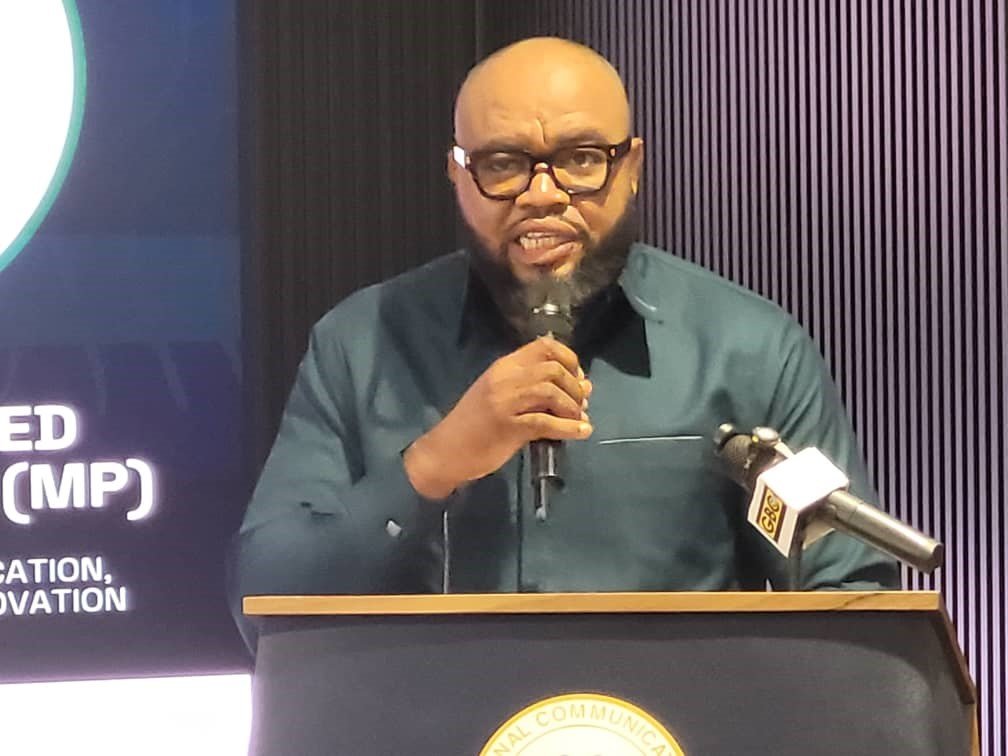
The Director of the Ghana Space Science and Technology Institute (GSSTI), Dr Joseph Tandoh, has challenged policymakers to position the country to take full advantage of the global space economy, which rakes in nearly 680 billion US dollars annually.
Speaking at the second edition of the Ghana Space Conference 2026, Dr Tandoh argued that Ghana’s geographical location places it in a prime spot to profit from the sector but only if the right policy and regulatory frameworks are put in place.
He noted that countries with established regulatory structures in the space sector are already reaping significant financial rewards and urged Ghana to fast-track the development of a national space agency to regulate and streamline activities in the industry.
“The sector generates $2 billion daily. The question is, as a country, where is that money coming from? How are we positioning ourselves to be part of this economy? There’s a lot that we can do,” he said.
Regulatory Vacuum
Dr Tandoh explained that this year’s conference will focus on operationalising the national space policy approved by Cabinet in 2025 and defining the mandate of the yet-to-be-established Ghana Space Agency, how the agency is needed to protect the country, generate profit and build local capacity.
He expressed concern that although Ghana has signed several international instruments, including the Outer Space Treaty, the Rescue Treaty and the Liability Convention, the country lacks domestic legislation to enforce them.
“So, what it means is, if something happens, we don’t have any law that will protect us as a country. That’s why we are pushing for the development of our national space bill,” he said.
He highlighted the current regulatory gap, pointing out that any university or start-up could today decide to build a satellite without any oversight.
“One key thing in the Outer Space Treaty is that every country is responsible for authorising and supervising every space activity within its territory whether by government, a private individual or a start-Up and that responsibility currently lies with nobody,” he added.
From Vision to Action
Addressing the conference under the theme ‘From Vision to Action’, the Deputy Minister of Communication, Digital Technology and Innovation, Mohammed Adams Sukparu, said the government of President John Dramani Mahama has placed digital transformation, innovation, science and technology at the heart of the national development agenda.
He said government believes these technologies can solve real problems, improve livelihoods and accelerate national development.
“When we talk about space, many people immediately think of rockets, astronauts and distant planets. But the more important question for Ghana is this; how can space technology help us improve lives here on earth?” he said.
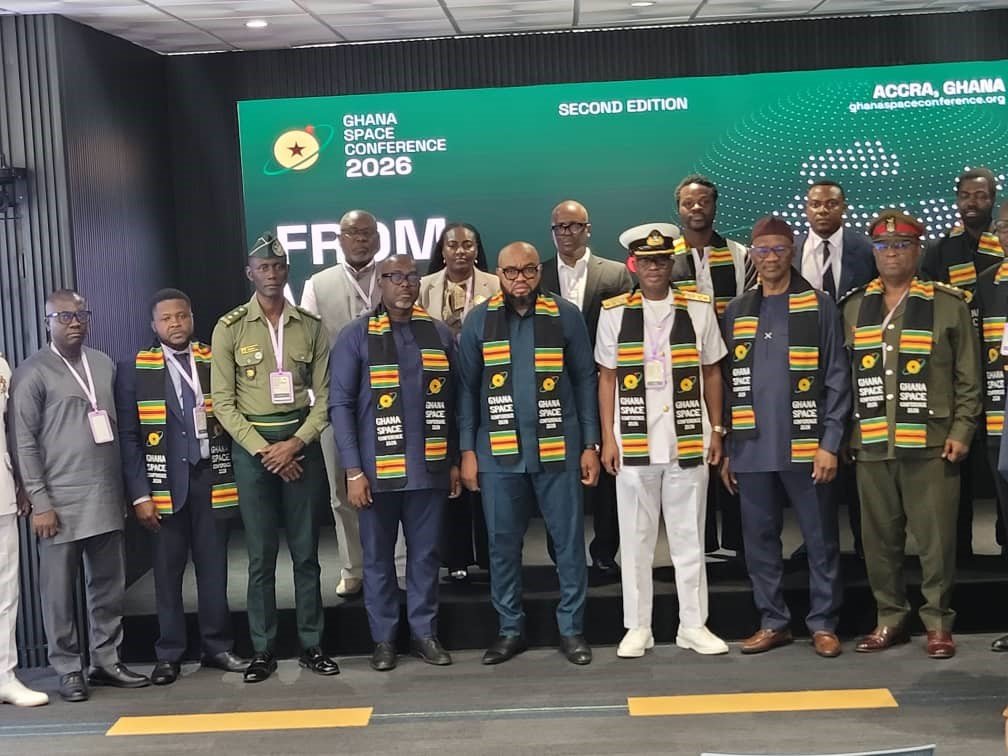
The Deputy Minister stressed that space technology is no longer a luxury reserved for advanced economies but an essential tool for development, noting that satellite technology supports weather forecasting, climate monitoring, disaster preparedness, agriculture planning, maritime security and environmental protection.
Satellite communications, he added, can extend connectivity to communities where traditional telecoms infrastructure is difficult or expensive to deploy, while geospatial data can improve urban planning, transportation and the management of natural resources.
Practical Applications
“Our challenge is therefore not whether Ghana should invest in space technology, but how quickly and effectively we can translate that investment into tangible benefits for our people,” Mr Sukparu said.
He painted vivid scenarios of where space-based solutions could make a difference the farmer who needs reliable weather information to decide when to plant, flood-prone communities that require early warning systems, coastal settlements confronting erosion and environmental degradation, and underserved communities still disconnected from reliable digital services.
He said government’s ambition is to build an economy where technology creates opportunities, improves public service delivery, strengthens productivity and generates decent jobs with space science and technology playing a central role.
Connectivity and Spectrum
On connectivity, the Deputy Minister said the Ministry’s vision is a digitally connected Ghana where geography, income or social background does not determine access to opportunity.
“We are expanding our digital infrastructure, strengthening our communications ecosystem, and pursuing policies that support affordable and reliable connectivity. But we must recognise that the future of telecommunications is not limited to towers,” he said, noting that satellite communications are becoming an increasingly important part of the global connectivity ecosystem.
He said the responsibility of government is to create an enabling environment where satellite and terrestrial networks complement each other to reach every part of the country with implications for education, healthcare, agriculture, financial services, entrepreneurship and digital public services.
“A child in a rural community deserves the same opportunity to access digital learning resources as a child in Accra. A farmer in Nkoranza in the Bono East Region should be able to benefit from digital agriculture services just as a business owner in the capital benefits from digital solutions,” he said.
He also underscored the importance of spectrum management as satellite communications expand, saying national communication authorities must ensure efficient, responsible and forward-looking management of the country’s spectrum resources while balancing innovation, competition, national security and public interest.
From Consumer to Creator
Mr Sukparu cautioned that Ghana cannot build a sustainable space economy by relying exclusively on technologies developed elsewhere and challenged the country to progressively move from being a consumer of space technology to a creator of space-based solutions.
That, he said, requires investment in research and development, stronger partnerships between universities and industry, support for local technology companies and deliberate investment in human capital.
He also had a message for the young people in attendance: “Space is not preserved for astronauts. There is a place for you in this industry. Whether you study engineering, computer science, law, artificial intelligence, cybersecurity, telecommunications, business or environmental science, you have a role to play. The next generation of African space entrepreneurs may be sitting in this conference today.”
He pledged that government would continue to provide the enabling environment, but urged academia, industry and development partners to also invest in mentorship, research, innovation and opportunities for young people.
“Importantly, women must be at the centre of this transformation. We cannot build a competitive technology ecosystem while excluding half of our population from these opportunities,” he added.
By Philip Antoh