

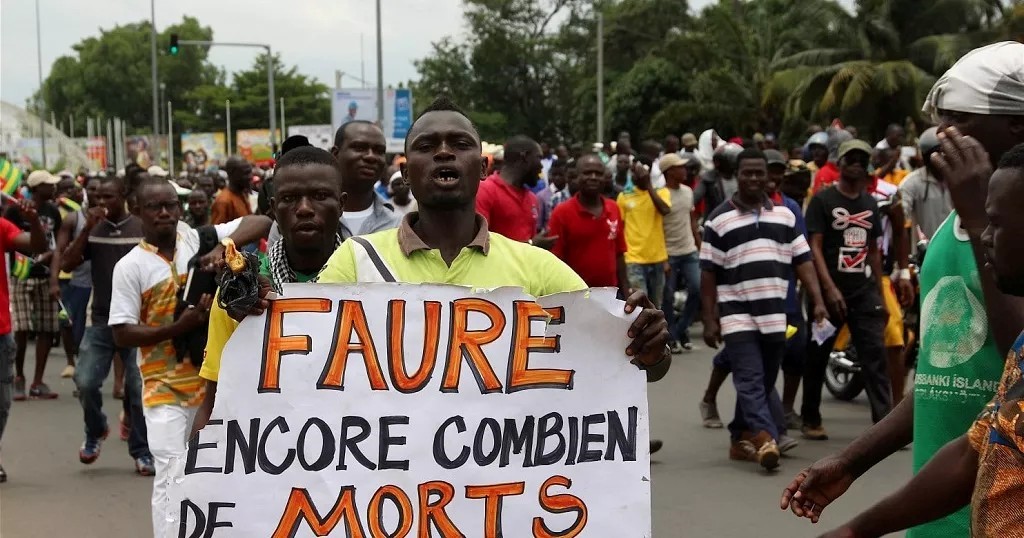
In a bold escalation of civil unrest, thousands of Togolese youths have taken to the streets, challenging President Faure Gnassingbé’s grip on power following constitutional reforms that many label a “constitutional coup.”
The reform, passed by a ruling-party dominated parliament, shifts Togo from a presidential to a parliamentary system, allowing Gnassingbé to become President of the Council of Ministers indefinitely, effectively extending the Gnassingbé dynasty, which has ruled for nearly six decades.
Former BBC Lomé correspondent and long-time critic of the Gnassingbé dynasty, Effoe Sassouga in an interview with The New Republic, dissected the implications of this transition, highlighting a blend of dynastic authoritarianism, generational defiance, and regional silence.
According to Sassouga, the new parliamentary system is anything but democratic. “The constitutional reform raises serious concerns about legitimacy,” he said. “This legalistic manipulation perpetuates dynastic authoritarianism under the guise of constitutionalism,” he remarked.
While the law was passed through parliament, it concentrated executive authority in a role newly created for Gnassingbé and removed term limits.
Sassouga warned of a dangerous precedent. “It undermines separation of powers, weakens checks and balances, and erodes public trust in institutions.”
The long-term implications, he argued, could include “deepened political instability and disenfranchisement.”
The protests sweeping the country, he noted, mark a generational shift – With over 60% of the population under 30, young Togolese are using social media platforms like Facebook and TikTok to organize dissent, even in the face of strict internet controls and public gathering bans.
“This digital activism enables rapid information sharing and decentralized coordination, making it harder for authorities to suppress dissent entirely. It also signals a new political consciousness among African youth, who combine online engagement with street protests to demand systemic change, echoing broader Gen Z movements across the continent,” Sassouga observed.
Despite clear violations of ECOWAS protocols, the regional body has remained largely silent—a stance Sassouga attributes to its own weakened position.
“ECOWAS’s credibility has been severely undermined by military coups in Mali, Niger, and Burkina Faso,” he explained. “Togo’s constitutional coup is more subtle, involving legal manipulation rather than force,” he added.
Sassouga believes this puts ECOWAS in a bind. “Sanctioning Togo risks further fragmentation, while inaction emboldens others to subvert democracy legally,” he said, while urging regional and international bodies to craft new frameworks for addressing both military and constitutional coups. “We need nuanced strategies that include diplomatic pressure, support for civil society, and conditional aid,” he advised.
The regime’s response has been brutal. Reports of at least seven deaths, as well as torture and home invasions by security forces, point to a government increasingly reliant on force.
“Togo faces a considerable risk of torture,” Sassouga said. “The scale and brutality of the repression suggest a regime deeply insecure about its hold on power.”
He emphasized that such repression undermines the potential for peaceful dialogue. “The government’s reliance on violence over engagement reflects a fragile regime prioritizing survival over democratic legitimacy,” he added.
Economic discontent runs parallel to political grievances. Rising living costs, energy shortages, and the government’s CFA 31 billion expenditure to manage power crises have inflamed public frustration.
“Economic hardship is a critical driver of the protests,” Sassouga noted. “These are as much about socioeconomic justice as they are about political reform.”
Despite decades of rule by the Gnassingbé family, Togo remains one of the world’s poorest countries.
“There is a disconnect between political legitimacy and economic performance. Failure to deliver tangible improvements undermines the regime’s claim to legitimacy,” Sassouga said.
As calls for reform intensify and protests grow in strength, the Togolese crisis may well define the region’s democratic future. Whether the regime adapts or doubles down remains to be seen, but the youth, Sassouga asserted, are unlikely to remain silent.
By Nelson Ayivor