

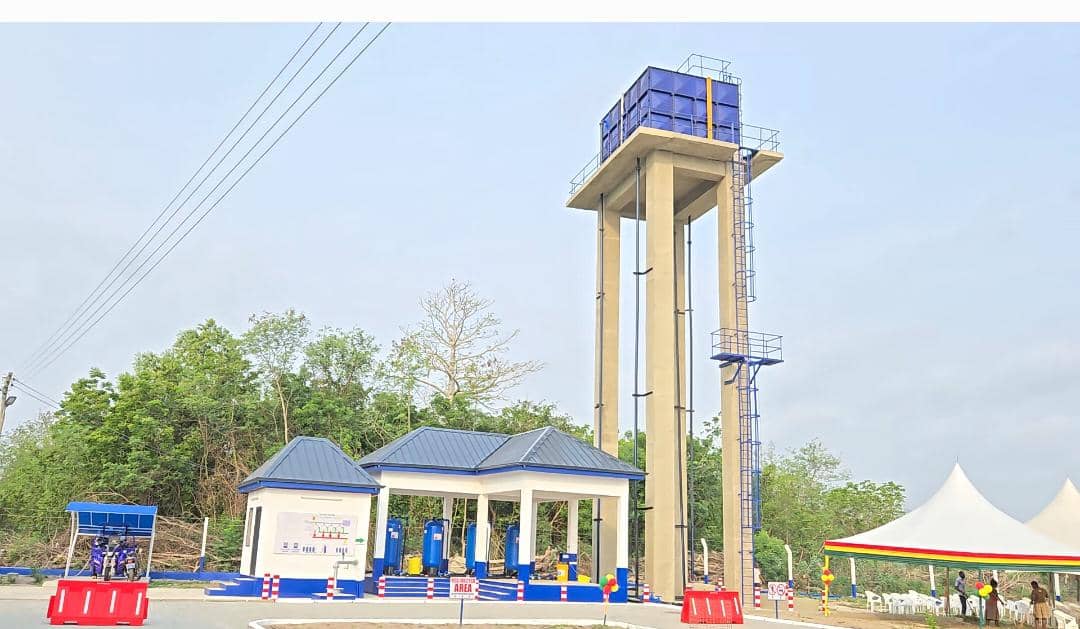
For residents of Anyako, Konu, and Seva, in the Keta Municipality, life has long been defined by a painful paradox: surrounded by the sea and lagoon, yet without safe water to drink. For two decades, families endured salty and contaminated sources, battling health risks and daily uncertainty.
That story changed on Monday, March 9, 2026 with the commissioning of the Anyako–Konu–Seva Water Project, a modern facility designed to deliver clean, treated water directly to households and standpipes. The commissioning ceremony, spearheaded by the Member of Parliament (MP) for the area, Hon. Kwame Dzudzorli Gakpey, drew government officials, traditional leaders, assembly members, and jubilant residents who gathered to witness what many described as “a blessing after 20 years of waiting.”
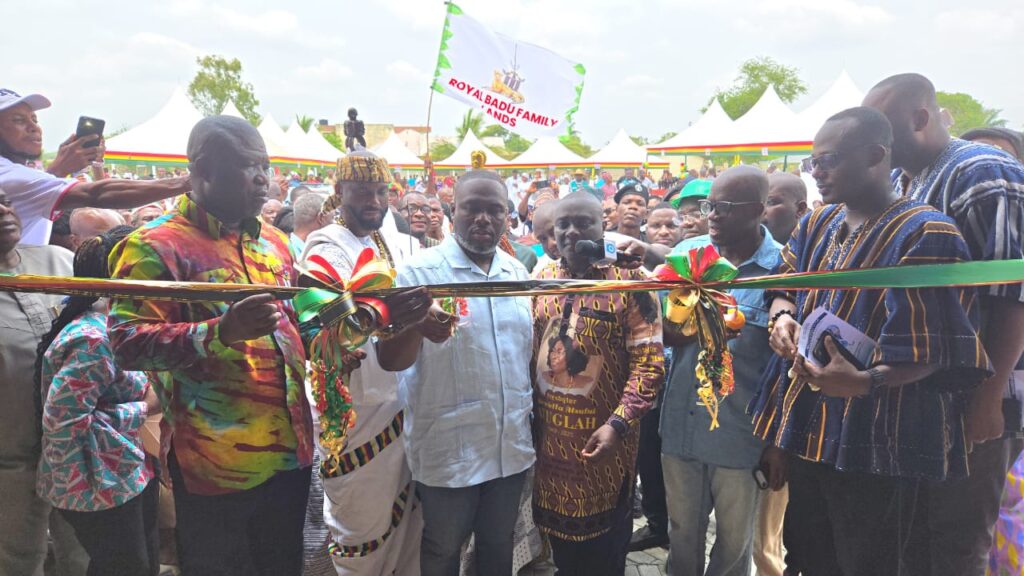
Speaking at the event, Minister for Works, Housing and Water Resources, Kenneth Gilbert Adjei, said the project forms part of government’s broader agenda to expand access to potable water in underserved communities. He noted that the initiative aligns with President John Dramani Mahama’s infrastructure drive to improve living conditions and make clean water a fundamental right for all citizens.
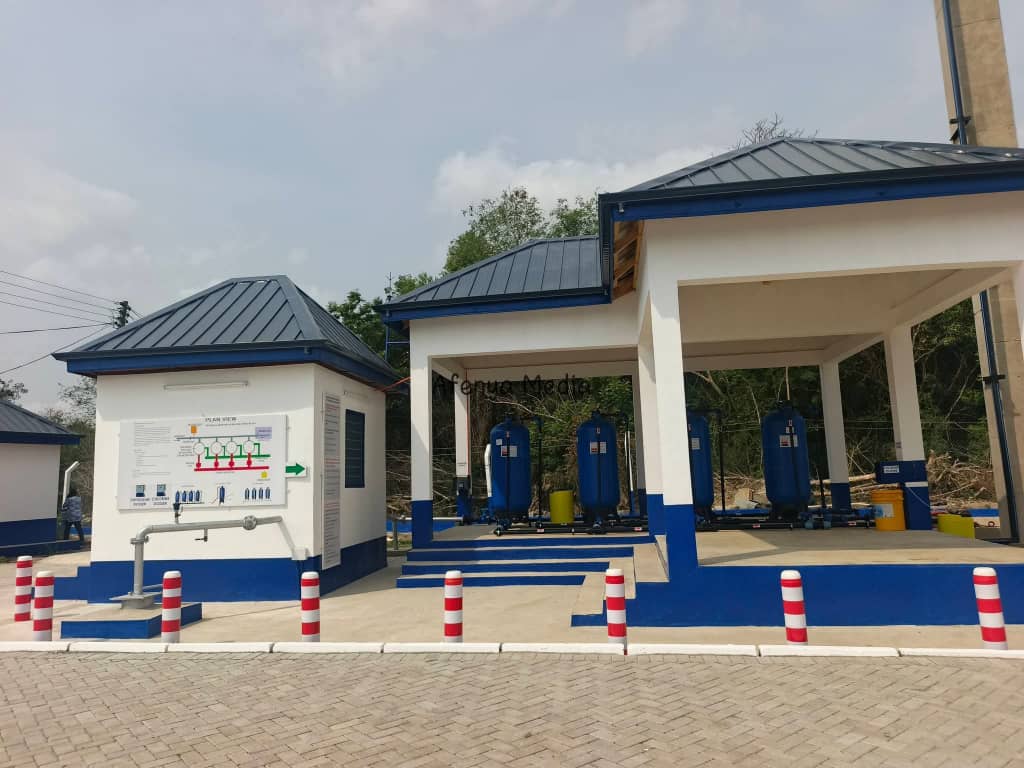
The facility includes a modern treatment unit, a high-capacity hybrid submersible pump, solar-powered energy systems, and more than 12 kilometres of distribution pipelines. Fifteen standpipes fitted with smart tap technology will ensure accountability, reduce waste, and generate revenue for maintenance.
Volta Regional Minister James Gunu reiterated government’s commitment to providing potable water across the region, stressing that water is “life itself” and essential for protecting health and livelihoods. The Chief Executive Officer of the Community Water and Sanitation Agency, Vincent Kuagbenu, urged residents to take ownership of the facility by paying bills promptly and reporting faults to ensure sustainability.
For the communities sandwiched between sea and lagoon, the commissioning was more than an infrastructure launch—it was the end of a paradox. Mothers expressed relief that their children would no longer suffer stomach ailments from unsafe water. Elders recalled years of appeals, describing the project as “a dream fulfilled.”
As one resident summed it up: “We have lived with water all around us, but none to drink. Today, that story has changed.”