

By Gifty Boateng
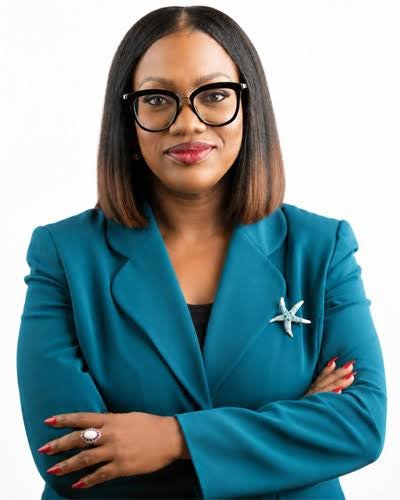
The Ghana Audit Service has recovered more than GH¢18 billion in public funds over the past four years, Auditor-General Dr. Pamela Graham announced this week. In 2025 alone, the Service says it prevented GH¢11.7 billion in wrongful payments by identifying irregularities before the money left the public purse.
These are extraordinary numbers. They are also, by the standards of Ghanaian public accountability, unprecedented. No previous Auditor-General has reported recoveries on this scale. No previous Auditor-General has claimed to have saved the state nearly GH¢12 billion in a single year.
But the disclosure raises a question that Dr. Graham did not address in her remarks: if GH¢18 billion was improperly paid out and later recovered, who authorized the improper payments in the first place? And why have so few of them faced consequences?
Dr. Graham made the disclosure at the African Organisation of Public Accounts Committees Conference in Accra, where she called on public institutions to take “concrete corrective action” on audit findings.
“From 2022 to date, we have actually recovered over GH¢18 billion from the work of the Auditor-General,” she said, according to a transcript of her remarks. “We have saved the country about GH¢11.7 billion from wrongful payments only in 2025.”
She argued that financial audits should not merely identify irregularities after they have occurred but should provide “strategic information to improve internal controls and guide government policy decisions.” Financial statements, she said, should be viewed not as “historical investigative tools” but as “instruments for shaping future controls and policy formulation.”
It is a vision of the Audit Service as a preventative institution, not just a reporting one. Whether it is achievable depends on whether public institutions act on the Service’s recommendations and whether the political system allows them to.
To that end, Dr. Graham announced that the Audit Service will roll out an electronic platform next month to track the implementation of audit recommendations. The Audit Recommendations Tracker will enable the Service, the Public Accounts Committee, and members of the public to monitor the status of recommendations contained in audit reports.
It will indicate which recommendations have been implemented, which remain outstanding, the reasons for delays, and the amounts identified for recovery, pursued, and successfully recovered.
The initiative forms part of five pillars guiding the 2026 audit cycle: continuous engagement, timeliness, technology, people, and impact.
“Audit reports should mark the beginning of corrective action rather than the end of the accountability process,” Dr. Graham said.
It is a welcome development. Ghana’s audit reports have historically been long on findings and short on follow-up. Recommendations are made, reports are presented to Parliament, and then often nothing happens. The tracker could change that by making non-compliance visible.
But visibility is not the same as accountability. A public dashboard showing that a ministry has failed to implement a recommendation does not, by itself, force the ministry to implement it. The tracker will be useful only if Parliament, the Public Accounts Committee, and the public use it to demand action.
Professor Francis Dodoo, who chaired the conference, raised a question that Dr. Graham did not directly answer: what happened to the audits conducted during the COVID-19 period that may not have been reported?
“The public deserved clarity on what happened and the appropriate action that should follow, where necessary,” Dodoo said, according to the transcript. He urged the Service to address concerns surrounding reports that some audits conducted during the pandemic might not have been reported.
This is not a minor issue. The COVID-19 period was marked by emergency spending, accelerated procurement, and relaxed oversight. If audits from that period were suppressed or left unreported, it would represent a significant gap in the accountability record.
Dodoo also called for firm action against the misappropriation of public funds, warning that allowing wrongdoing to go unpunished could ultimately disadvantage the wider population.
The Member of Parliament for Atiwa West, Abena Osei-Asare, offered a perspective that cut to the heart of the problem. Accountability, she said, must begin before auditors arrive at public institutions.
By the time the Auditor-General conducts an audit, public funds may already have been spent and procurement decisions concluded. Stronger accountability measures must be implemented throughout the financial management process
This is the structural weakness that no amount of auditing can fix. The Auditor-General can identify irregularities, recommend recoveries, and track implementation. But the Auditor-General cannot prosecute. That is the job of the Attorney General, the Economic and Organised Crime Office, the police, and the courts.
If those institutions do not act, audit findings become a ritual. The same ministries appear in the same reports year after year, with the same findings, the same recommendations, and the same lack of consequences.
The GH¢18 billion figure is impressive. It is also, in a sense, an indictment. It means that GH¢18 billion was improperly paid out of the public purse money that could have been spent on schools, hospitals, roads, or electricity. The fact that it was recovered is a credit to the Audit Service. The fact that it was paid out in the first place is a failure of the institutions that are supposed to prevent it.
Dr. Graham’s reforms the tracker, the focus on prevention, the five pillars are steps in the right direction. But they will not solve the underlying problem. That problem is political. It is the willingness of powerful people to tolerate, protect, and sometimes participate in the misappropriation of public funds.
Until that changes, the Audit Service will continue to recover billions. And the public will continue to ask why the money was lost in the first place.