

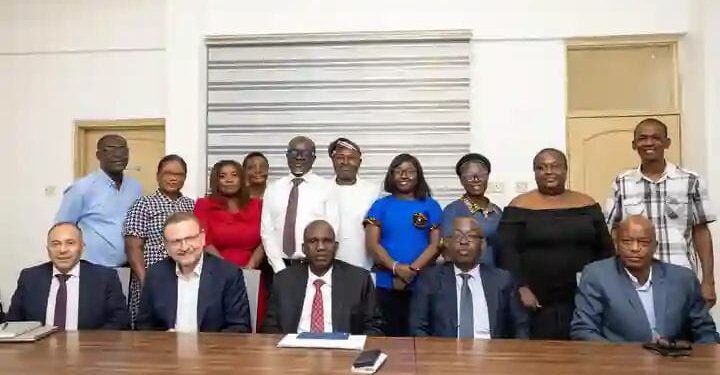
The Chief Executive Officer of the Korle Bu Teaching Hospital, Dr. Yakubu Seidu Adams, has received a delegation from Belgium through the Ministry of Health aimed at improving the hospital’s waste management system.
The disposal of medical waste is an important yet challenging aspect of healthcare delivery in major hospitals. In an effort to increase knowledge and ensure appropriate measures are in place regarding medical waste, a delegation from Belgium met with officials at Korle Bu Teaching Hospital.
This meeting was made possible by the Ministry of Health in Ghana, which shows how important the issue surrounding the disposal of medical waste is in Ghana. The visit forms part of a broader initiative aimed at resolving the dangers related to improper disposal of medical waste.
The hospital management was engaged in thorough discussions that focused on current processes and the challenges faced in dealing with biomedical waste. The team outlined that their main focus was to make an assessment of how their hospital disposes their clinical waste and explore means of improving the system.
During his speech, the Chief Executive Officer of Korle Bu Teaching Hospital, Dr. Yakubu Seidu Adam, expressed his appreciation and positive hope about the collaboration. He emphasized that medical waste management has long been a pressing issue for the hospital and described the intervention as being timely and critical.
“The team, which includes international development partners from Belgium and the Ministry of Health, noted that they were interested in how the hospital manages its biomedical waste to tailor what they have to meet the hospital’s standard.”
He opined that proper management of medical waste is vital within the hospital. This, he said, is important in protecting healthcare workers, patients, and the surrounding community from potential health hazards.
He assured the delegation of the hospital’s willingness to provide full cooperation and also afforded them the needed support to guarantee that all disposable medical equipment is handled safely and professionally.
The delegation from Belgium, as well as representatives from the Ministry, highlighted their interest in knowing how the hospital currently isolates and disposes of its medical waste. They reemphasized that the information gathered during the meeting would inform the development of solutions that are tailored to meet the hospital’s needs.
This will ensure its capability to deal with issues both in the present and in the long term. Medical waste includes hospital tools such as sharp needles, infectious materials, and chemical by-products. These wastes have the ability to cause severe environmental and health risks if not managed properly.
During the engagement, the visiting team pointed out the importance of inculcating current technologies and exercising precaution during waste segregation at source, ensuring they are safely kept, and ensuring that the disposal of the waste does not pose a threat to the environment.
Present at the meeting were key members of Korle Bu’s management team, which reflects the institution’s collective commitment to addressing the issue. Among them were the Director of Administration, Mr. Munir Alhassan; Director for General Services, Mrs. Cynthia Gyekye; Head of Biomedical Engineering, Mr. Lloyd Baffoe; Head of the Environmental Unit, Mr. Daniel Fekpe; Head of Infection Prevention and Control (IPC), Ms. Serwaa Amoah; Deputy Director of Administration and Executive Assistant to the CEO, Ms. Gertrude Kinney; and Head of Public Relations, Mr. Mustapha Salifu.
This partnership, as believed, will impact the hospital’s medical disposal methods, thereby promoting safe ways of medical waste management in Ghana’s health system. It is also in alignment with Ghana’s commitment to achieving sustainable healthcare delivery as well as ensuring safety in the environment.
As the meeting concluded, the collaborating partners expressed optimism about the outcome of the discussions, citing their impact and timelines. With the dangers posed by poor medical waste disposal, it is therefore imperative to put measures in place to mitigate the risk.