

as inflation falls and global risks rise
By Leo Nelson
For 14 straight months, inflation in Ghana has fallen — a steady, unbroken decline that has brought the rate from a punishing 23.1 percent last year to 3.3 percent in February, its lowest level since 2021.
The numbers suggest a quiet victory for the West African nation’s economic managers. After years of soaring prices that squeezed households and eroded incomes, the worst appears to be over.
But for the Bank of Ghana, which opened its two-day Monetary Policy Committee meeting Monday, the path forward is anything but clear. The same global forces that helped tame inflation — falling commodity prices, tight monetary policy, fiscal discipline — are now showing signs of reversing, with escalating conflict in the Middle East threatening to upend the careful calculations of policymakers across the developing world.
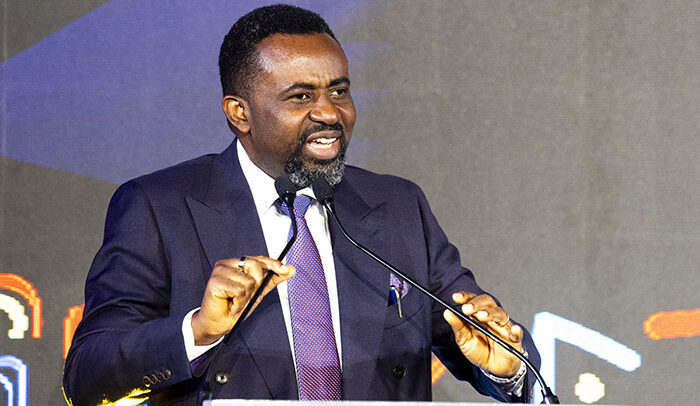
“We are in a very difficult moment,” said Governor Johnson Asiama, who is expected to announce the committee’s decision on Wednesday. “We have to balance the domestic progress we’ve made against external risks that are completely beyond our control.”
The central bank’s benchmark policy rate, currently 22.5 percent, has been a key tool in bringing down inflation. But with prices now stabilizing, businesses and trade groups have been pressing for a cut arguing that lower borrowing costs would stimulate an economy still recovering from the debt restructuring and fiscal consolidation of recent years.
A rate reduction would signal confidence in Ghana’s economic trajectory and could ease access to credit for small businesses and households. But it also carries risks. If global oil prices spike or supply chains are disrupted, imported inflation could quickly return and a lower policy rate would leave the central bank with less room to respond.
“The dilemma is real,” said Nana Osei Bonsu, executive director of the Private Enterprise Federation, which represents Ghanaian businesses. “We need growth, we need credit, but we also need stability. The question is whether we can have both.”
The conflict involving the United States, Israel and Iran has introduced new uncertainty into global energy markets. For Ghana, which relies heavily on imports for refined petroleum and manufactured goods, any sustained disruption would feed directly into domestic prices raising transportation costs, pressuring the currency and potentially eroding the gains of the past year.
“We’re not insulated,” said Courage Martey, an economist at Databank, a Ghanaian financial services firm. “If global prices go up, we feel it. The only question is how quickly and how severely.”
Analysts expect the monetary policy committee to hold the rate steady this week, adopting a wait-and-see approach as global conditions evolve. But the decision is not unanimous, and some members may push for a cut, arguing that delaying a reduction could slow growth and deepen unemployment.
For Asiama, the choice reflects a broader tension facing central bankers across Africa: how to maintain credibility with international investors while responding to domestic political and economic pressures. Finance Minister Cassiel Ato Forson has signaled his preference for lower borrowing costs, but the central bank’s constitutionally mandated independence means Asiama must balance those expectations against his primary mandate of price stability.
The outcome will be closely watched by investors, businesses and international financial institutions, all of whom are looking for signals about Ghana’s commitment to the reforms undertaken as part of its $3 billion International Monetary Fund program.
“If they cut, markets will want to know why and whether it’s justified by the data,” said Leslie Dwight Mensah, an economist and researcher at the University of Ghana. “If they hold, businesses will want to know when they’ll finally get relief. Either way, communication will be just as important as the decision itself.”
On the streets of Accra, where inflation has eased but living costs remain high, the debate inside the central bank’s headquarters can feel remote. Market traders still complain about the price of imported goods. Drivers still grumble about fuel. And young people still struggle to find work.
But for those who remember last year’s inflation peak when prices rose so fast that savings evaporated and budgets collapsed there is also a cautious sense of relief.
“We’re not where we want to be,” said Martey, the economist. “But after what we’ve been through, stability feels like progress.”
The question, for Ghana’s central bank, is how long that stability can last.