


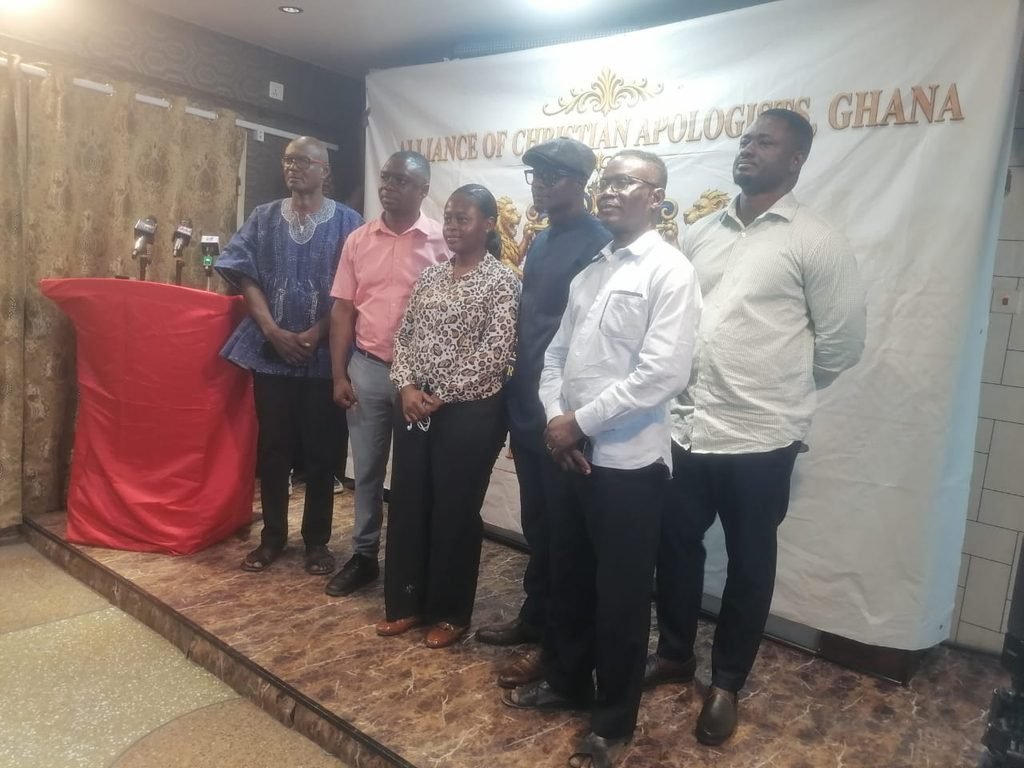
The Alliance of Christian Apologists, Ghana, is demanding the equal and consistent enforcement of the country’s laws regarding religious expression, citing the recent arrest and prosecution of Christian cleric Apostle Daniel Junior Yaw Adjei as a test of constitutional fairness.
At a press conference, the group emphasized that Ghana’s constitutional protections of freedom of religion, conscience, and expression must apply uniformly to Christians, Muslims, traditional believers, and non-religious citizens alike.
They clarified that their stance is not an attack on any faith, but a defense of the constitutional order and the equal application of the law.
To this end, the Alliance drew a firm legal line between criticizing religious beliefs—which should be protected—and speech that crosses the threshold into threats, incitement, or criminal conduct.
The Alliance specifically scrutinized the police’s handling of Apostle Adjei’s case.
The Ghana Police Service previously confirmed the arrests of both Imam Masud Abdullah and Apostle Adjei over separate videos containing alleged inciteful and offensive comments concerning Prophet Mohammed, stating both cases were subject to due process.
However, the Alliance questioned whether the two suspects were held to the same legal standard.
Presenting a chronology of events, the group argued that Imam Masud’s alleged remarks concerning those who insult Prophet Mohammed preceded Apostle Daniel’s video.
Consequently, they challenged the Police to explain what evidence linked Apostle Daniel to the earlier “Kotokoli audio” recording that allegedly provoked the Imam.
Furthermore, the group demanded explicit clarity on the legal basis for Apostle Daniel’s prosecution.
They called on authorities to specify the exact words deemed inciting, the statutory provisions relied upon, and whether the statements constituted a genuine threat or call for violence.
While acknowledging that Daniel should face due process if his statements meet the legal elements of an offence, the Alliance insisted that causing religious offence alone should not automatically equate to a criminal offence.
The Alliance also raised serious alarm over the alleged assault of the handcuffed cleric while in police custody an incident previously condemned by the Christian Council of Ghana.
The group demanded a public update on investigations into the breach, questioning how a civilian gained access to a suspect in custody and whether any Police personnel facilitated the attack.
They are calling for transparency regarding disciplinary actions against any culpable officers and the prosecution of the civilian assailant.
Beyond the Adjei case, the Alliance reported reviewing over 2,000 videos and recordings containing attacks on Christianity.
While they stressed, they are not asking authorities to criminalize religious criticism, they demanded the same legal test be applied regardless of the faith being targeted.
They also flagged alleged restrictions on Christians establishing or operating churches in several communities, calling for independent investigations into these claims.
The group firmly rejected the notion that local religious customs or community pressure could override the Constitution, reminding the public that Ghana remains a constitutional republic where citizens retain their fundamental rights regardless of where they live.
Ultimately, the Alliance called on the Police and relevant state institutions to explain the basis of Daniel’s arrest, investigate alleged calls for religious violence, account for the custody assault, and examine restrictions on Christian worship.
Pledging to pursue these concerns through peaceful and lawful means—including media engagement, public debate, petitions, and judicial remedies the group concluded that no religion, leader, community, or individual should be above the law, and every citizen is entitled to equal protection under it.