

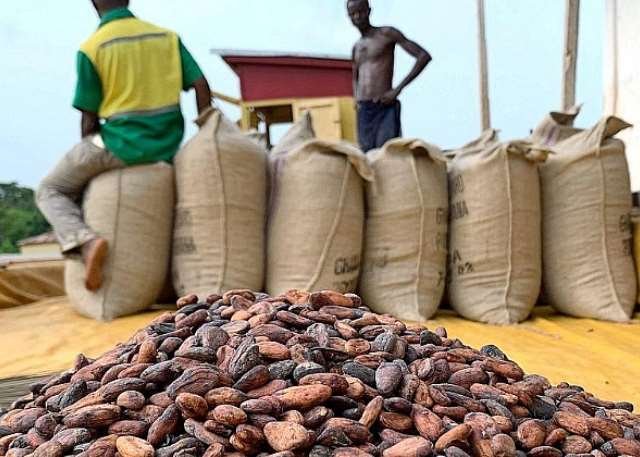
Cocoa Buyers Cry for Cash
By Prince Ahenkorah
The Ghana Cocoa Board (COCOBOD) has acknowledged outstanding payments to licensed cocoa buying companies but says the situation is not new and does not indicate an inability to meet its financial obligations.
The response follows concerns raised by the Chamber of Cocoa Marketers Ghana that its members are owed about GH¢4 billion by COCOBOD.
The Chamber has warned that the outstanding payments could affect the ability of licensed cocoa buying companies to secure fresh financing to purchase cocoa from farmers when the new cocoa season begins.
Speaking on Citi News, COCOBOD’s Head of Public Affairs, Jerome Kwaku Sam, explained that it was normal for the Board to have some outstanding obligations to licensed buying companies at the end of a cocoa season.
He said the latest cocoa season ended about a month and a half ago, making it possible for some payments to remain outstanding.
“So if the season ended just about a month and a half ago, it is only reasonable, logical, that there possibly could be some outstanding amounts that COCOBOD would have to make to the licensed buying companies or the chamber,” he said.
Mr Sam explained that licensed buying companies purchase cocoa on behalf of COCOBOD and later submit Cocoa Takeover Receipts (CTORs) to the Board for payment.
He said COCOBOD had, however, prioritised payments to cocoa farmers before settling its obligations to the buying companies.
“Our farmers as well as the licensed buying companies. So between these two stakeholders, we thought that prioritising the cocoa farmer who does the cultivation and who makes available the beans for us to give in purchase and sell ought to be prioritised,” he said.
According to Mr Sam, COCOBOD is now preparing to engage the licensed buying companies to resolve the outstanding payments.
“Plans are far advanced to meet with the licensed buying companies or the chamber to iron out all outstanding payments that we have,” he said.
He attributed part of the current situation to COCOBOD’s transition from its previous financing model to a new funding arrangement, which has involved consultations and discussions with stakeholders.
Mr Sam also rejected suggestions that the outstanding payments represented a new development or demonstrated an inability by COCOBOD to settle its debts.
“No, this is not new,” he said, adding that licensed buying companies had in previous years carried outstanding balances from one cocoa season into another.
He cited concerns raised by the Chamber as far back as 2023, when the organisation indicated that COCOBOD had carried outstanding obligations to licensed buying companies into subsequent seasons.
“I am not in any stretch of imagination saying that that should be the case, but I am only stating that if we have an outstanding like this, it does not epitomise Cocoa Board’s inability to settle its debt obligation to the licensed buying companies,” he said.
Mr Sam said COCOBOD was aware of the financial challenges facing licensed buying companies and was working towards arrangements that would enable them to secure financing for cocoa purchases in the new season.
He disclosed that the Chamber had already contacted the Chief Executive of COCOBOD to request a meeting on the matter.
The meeting, which is expected to take place next week, is intended to allow both sides to discuss the outstanding payments and find a way forward before the opening of the new cocoa season.
“Because of his busy schedule, which is known to them, he hasn’t fixed the meeting, but he was looking at next week where we will iron out all these issues even before the opening of this season,” Mr Sam said.
He added that the meeting would also provide an opportunity for COCOBOD to respond to the Chamber’s concerns and provide the necessary assurances.
“That will be the appropriate forum for these discussions to be made. That is where proper responses and assurances will come,” he added