

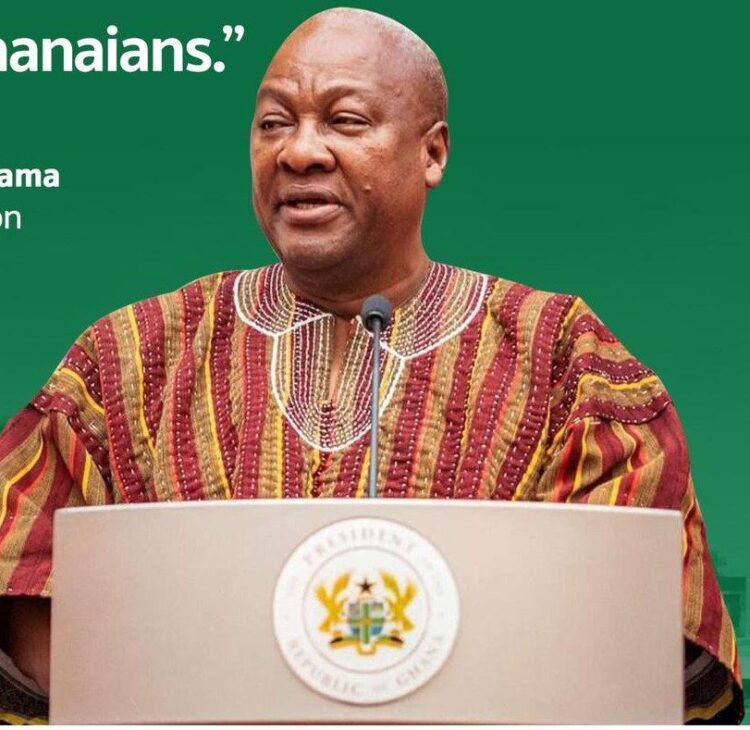
President John Dramani Mahama has reaffirmed his administration’s commitment to combating corruption through lawful and transparent means, insisting that accountability must be pursued strictly within the framework of Ghana’s constitutional order.
Speaking during his 2nd State of the Nation Address to the Parliament of Ghana, the President said the fight against corruption is firmly on course, even as public impatience grows over the pace of prosecutions.
Addressing lawmakers, and entire nation, President Mahama acknowledged widespread frustration among citizens who expect swift justice for those who abused public trust.
He stressed, however, that while the demand for accountability is legitimate, the government cannot abandon due process or resort to shortcuts that undermine the rule of law.
“Mr Speaker, the Government remains resolute that corruption will not be tolerated, regardless of status or political affiliation.”
The President emphasized that Ghana’s democratic journey demands restraint and fidelity to legal procedures, noting that the country consciously rejected arbitrary justice when it embraced constitutional rule in 1992.
He reminded Parliament that the Constitution was adopted to protect citizens from abuse and to ensure that justice is administered fairly and consistently.
Recoveries and Ongoing Investigations
Providing an update on enforcement efforts, President Mahama revealed that as of December 2025, the Economic and Organised Crime Office (EOCO) had recovered more than six hundred million Ghana cedis in misappropriated funds. He said the office has investigated 462 cases across various sectors, with 15 currently before the courts.
Beyond financial recoveries, he highlighted successes in tackling organized crime, noting that EOCO has dismantled transnational car jacking syndicates and recovered 29 luxury vehicles.
According to the President, these outcomes demonstrate that law enforcement agencies are making tangible progress despite the complexity of the cases involved.
He told Parliament that corruption today is often sophisticated, transnational and deeply embedded, requiring careful investigation and coordination across institutions.
For this reason, he said, results must be measured not only by speed but by the durability of convictions and the recovery of stolen assets for national development.
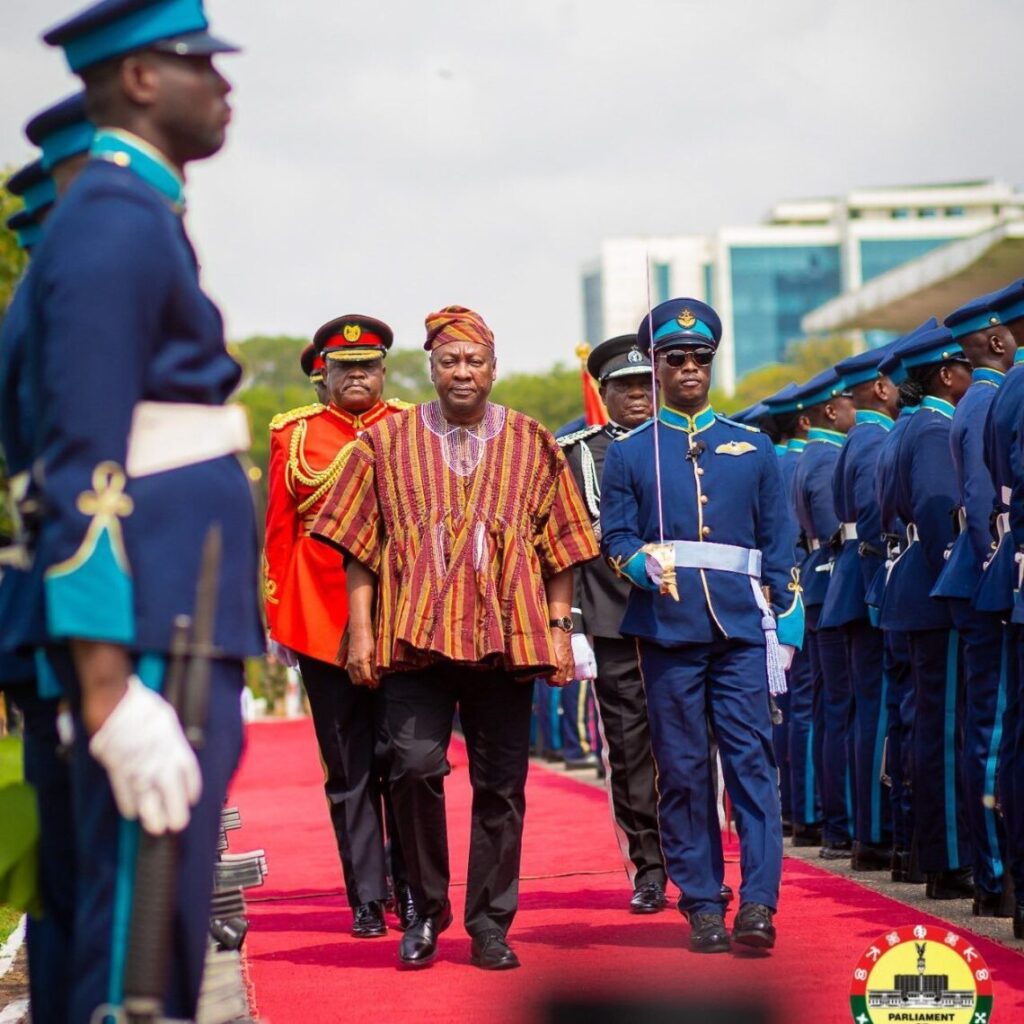
President Mahama stated that the Attorney General’s Office will continue to deploy both criminal prosecution and non conviction based asset recovery mechanisms to ensure that stolen public resources are returned to the state. He explained that asset recovery is a critical component of the anti corruption agenda because it directly restores value to the public purse.
He stressed that the government’s approach is grounded in law, with investigations conducted thoroughly, dockets properly prepared and charges filed only when evidence meets the required legal threshold.
According to him, every accused person must be given the opportunity to defend themselves in court and to exercise their right of appeal, even on the smallest points of law.
The President acknowledged that this painstaking process can appear slow, but insisted that it is essential to safeguarding justice. He said shortcuts may satisfy public anger in the short term, but they often lead to miscarriages of justice and long term damage to democratic institutions.
Lessons from the Past
Reflecting on Ghana’s political history, President Mahama recalled periods under military and unconstitutional governments when extrajudicial methods were used against individuals perceived to be corrupt.
He said such actions were sometimes seen as swift justice but were accompanied by regrettable excesses that violated human rights and eroded public confidence.
He told Parliament that the nation learned hard lessons from those eras, leading to the overwhelming adoption of constitutional governance in 1992. That decision, he said, was a collective commitment to the rule of law, accountability and the protection of individual rights.
President Mahama reminded lawmakers that on January 7, 2025, he swore an oath before the people of Ghana to uphold the Constitution.
According to him, that oath binds him to pursue justice lawfully, even when public pressure demands faster or harsher action.
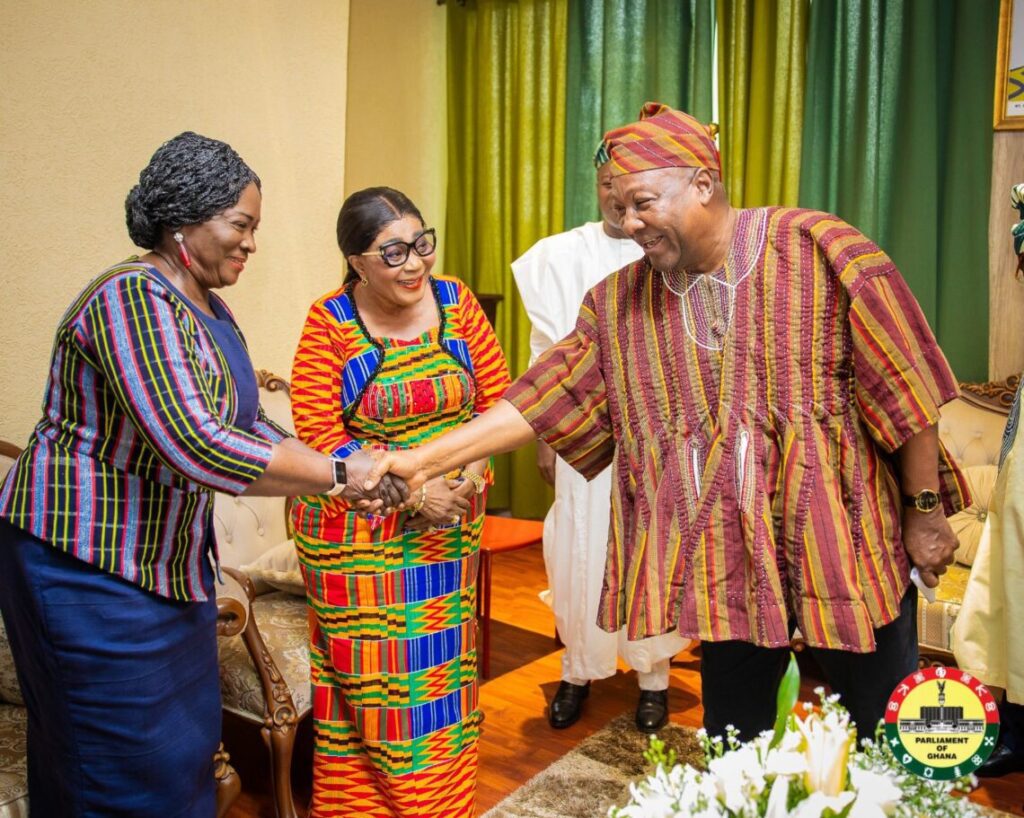
The President admitted that he shares the impatience of many citizens who want to see wrongdoing punished. However, he stressed that justice must not only be done but must be seen to be done through credible and transparent processes.
He argued that thorough investigations and fair trials protect society as a whole by ensuring that only those truly guilty of offences against the state are punished.
He urged Ghanaians to remain vigilant but also to trust institutions tasked with enforcing the law. According to him, strengthening these institutions and allowing them to work independently is the surest way to sustain the anti corruption fight beyond individual administrations.
President Mahama concluded by reaffirming that his government will remain firm in its resolve, guided by the Constitution and the rule of law. He said the objective is not vengeance but accountability, recovery of stolen resources and the rebuilding of public trust in governan