


By Godson Bill Ocloo
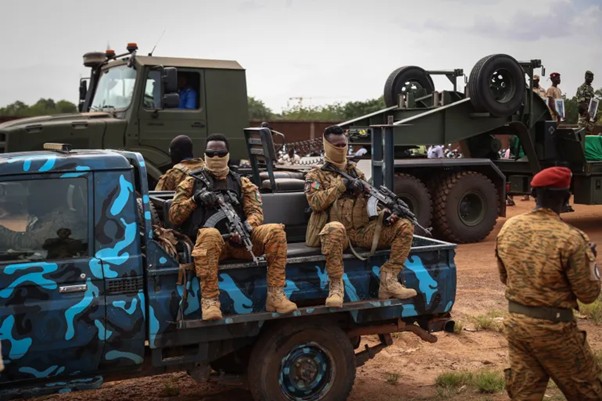
The recent terrorist attack in Burkina Faso that claimed the lives of Ghanaian tomato traders is not merely another tragic incident in the Sahel’s protracted crisis. It is a strategic warning. It signals a dangerous evolution in the region’s conflict dynamics one in which economic lifelines and civilian livelihoods have become deliberate targets.
Across the Sahel, violence is no longer confined to military installations or state symbols. Markets, farms, and trade corridors are increasingly under threat. According to the Global Terrorism Index 2024, the Sahel now accounts for nearly half of all terrorism-related deaths worldwide. Burkina Faso ranks among the most affected countries. Meanwhile, more than two million people are internally displaced within Burkina Faso, and over five million require humanitarian assistance.
These statistics reveal a region under profound strain. But beyond casualty counts lies a subtler transformation: the civilianization of conflict. Armed groups are targeting agricultural producers, transport operators, and cross-border traders, the very actors who sustain regional economies. The attack on Ghanaian tomato traders reflects this shift. West Africa’s economy depends heavily on informal cross-border trade.
The World Bank estimates that such trade may account for up to 30–40% of intra-regional commerce, with women forming a large share of participants. Agricultural commodities such as tomatoes move daily between Burkina Faso and Ghana, supporting urban markets and rural households alike.When these corridors are attacked, the consequences ripple outward:- Income losses for families —Disruption of food supply chains, Commodity price volatility, Increased transport costs and Heightened economic uncertainty.
This is not simply terrorism. It is economic destabilization. Ghana, long regarded as a pillar of stability in West Africa, shares a deeply interconnected border economy with Burkina Faso. Northern Ghana’s markets depend significantly on Sahelian agricultural flows. Security analysts, including the United Nations Office for West Africa and the Sahel, have warned of increasing spillover risks toward coastal states.
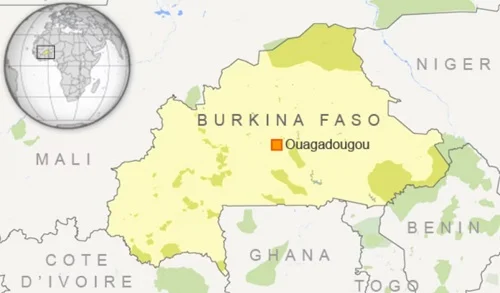
The buffer zone between high-intensity Sahel conflict areas and coastal economies is narrowing. If economic corridor insecurity spreads, Ghana and its neighbors could face trade contraction, rising food prices, and mounting pressure on border governance systems. This is why the Burkina Faso attack must be viewed through a human security lens.
Human security shifts the focus from territorial defense to the protection of individuals and livelihoods. First articulated in the UNDP’s 1994 Human Development Report, it emphasizes freedom from fear, freedom from want, and the preservation of dignity. The attack undermines all three. Traders were deprived of safety. Families now face sudden financial vulnerability. Communities operate under heightened uncertainty. At the Africa Centre for Human Security and Emergency Management (ACHSEM), we maintain that economic actors are not peripheral to security — they are central to it. Protecting economic corridors must become a frontline priority in West Africa’s stabilization strategy.
What must be done?
First, ECOWAS should institutionalize structured economic corridor protection mechanisms. Trade routes linking Sahelian and coastal states require coordinated patrols, intelligence-sharing platforms, and systematic risk mapping. Second, trader associations and transport unions should be formally integrated into early warning systems.
These actors often detect emerging threats before formal structures do. Third, governments should explore micro-insurance and compensation frameworks for informal cross-border traders. Given the scale of informal commerce, its vulnerability represents a systemic risk. Fourth, border community resilience must be strengthened through youth employment programs, agricultural value-chain investment, and local governance reform.
Military operations alone will not secure markets. If attacks on economic actors become normalized, West Africa risks gradual contraction of intra-regional trade, escalating food insecurity, and erosion of integration gains achieved under ECOWAS and the African Union’s Agenda 2063.
The Sahel crisis has already displaced millions and destabilized rural economies. Allowing insecurity to penetrate deeper into trade corridors would multiply these consequences.The attack on Ghanaian tomato traders is therefore more than a tragic episode. It is a strategic signal. When trade routes become conflict zones, integration weakens. When traders operate in fear, markets shrink.
When economic lifelines are severed, instability deepens. Human security must move from rhetoric to operational doctrine. Protecting economic corridors is not merely about commerce. It is about safeguarding livelihoods, stabilizing food systems, and preserving regional peace. West Africa must act decisively, not reactively. Because protecting trade is protecting people. And protecting people is protecting peace.

The writer is the Executive Director, Africa Centre for Human Security and Emergency Management (ACHSEM)