

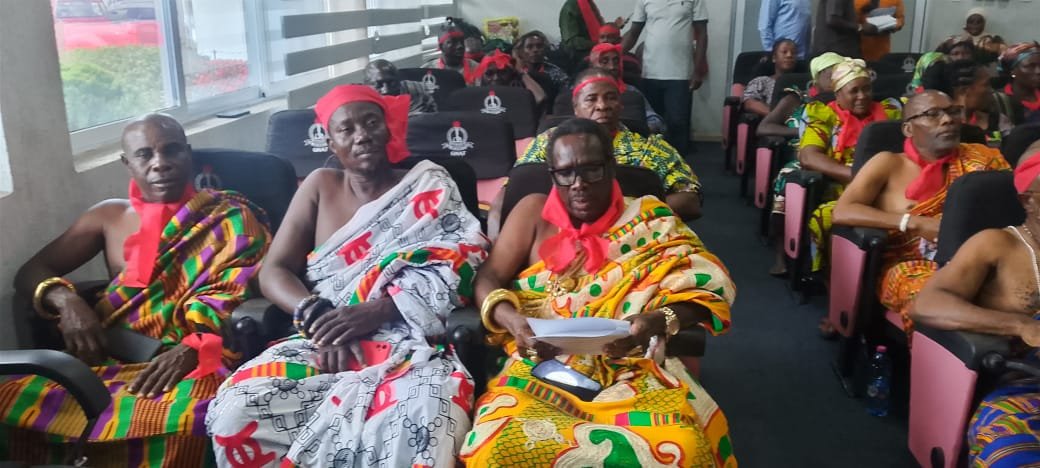
Ghanaian fishing communities are mounting pressure on the government to permanently revoke offshore gold exploration licenses, warning that the activities pose a severe threat to the country’s marine biodiversity and the livelihoods of coastal populations.
In a press statement issued on behalf of the communities, Nana Kwamena Sankah called for the immediate cancellation of reconnaissance licenses granted to Gold Coast GRC Ghana Ltd.
The groups are demanding that the government entirely abandon its plans for offshore gold exploration and exploitation in Ghana’s coastal waters.
The fishers raised alarm over the reported granting of 10 licences covering approximately 10,000 square kilometres of marine waters.
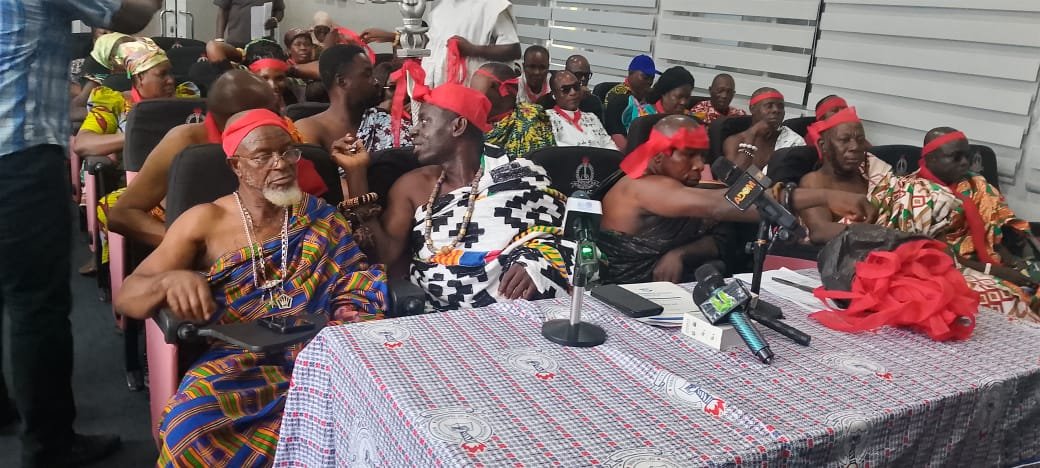
They are demanding full transparency regarding how these licensed areas overlap with the ecologically sensitive Greater Cape Three Points Marine Protected Area.
The communities argued that the ocean is a living ecosystem that sustains marine biodiversity, food security, employment, and the cultural heritage of coastal dwellers.
They cautioned that disrupting fish populations and destroying marine habitats could permanently transform productive artisanal fishing grounds into barren zones, jeopardizing communities that have relied on the sea for generations.
To back their demands, the fishing groups cited Ghana’s international environmental commitments.
They referenced Sustainable Development Goal (SDG) 14, which mandates the conservation and sustainable use of oceans, as well as the Kunming-Montreal Global Biodiversity Framework’s Target 3, which requires the conservation of at least 30 per cent of marine and coastal areas by 2030.
Furthermore, the statement insisted that the government must enforce the expanded inshore exclusion zone, which was recently extended from six to twelve nautical miles under the Fisheries and Aquaculture Act, 2025 (Act 1746).
The communities stressed that these legal protections must result in tangible safeguards for traditional fishing grounds, rather than merely existing as provisions on paper.
While the communities welcomed the President’s recent decision to suspend the offshore gold exploration activities, they argued that a temporary pause is insufficient.
They maintained that only the outright revocation of the licences and a definitive commitment to marine conservation can secure the long-term welfare of Ghana’s coastal ecosystems and the communities that depend on them.