

…Wontumi Sentenced to 20 Years on Various Counts—A Legal Earthquake for Ghana
By Innocent Samuel Appiah
On Monday, 20th July 2026, Ghana woke to a judicial decision that did not merely punish a person but struck at a system. The conviction and sentencing of the Ashanti Regional Chairman of the New Pathriotic Party (NPP), Bernard Antwi-Boasiako, popularly known as Chairman Wontumi, is not one more episode in the endless cycle of political courtroom drama. It is a decisive moment in the national struggle for accountability, a stern reminder that environmental protection is not optional, and a direct response to the long-standing belief, which is quietly held by many, that status can be used as a shield.
The Accra High Court’s outcome was heavy and unambiguous: 20 years on each of various counts, to run concurrently, together with a fine of GH¢300,000. For some, the headline will look like punishment arithmetic. But for the nation, the significance goes deeper. This is a milestone that tests the integrity of Ghana’s rule of law, whether it truly applies not only to the small actors, but also to the powerful, the connected, and the influential.
A Sentence That Reorders the Galamsey Equation
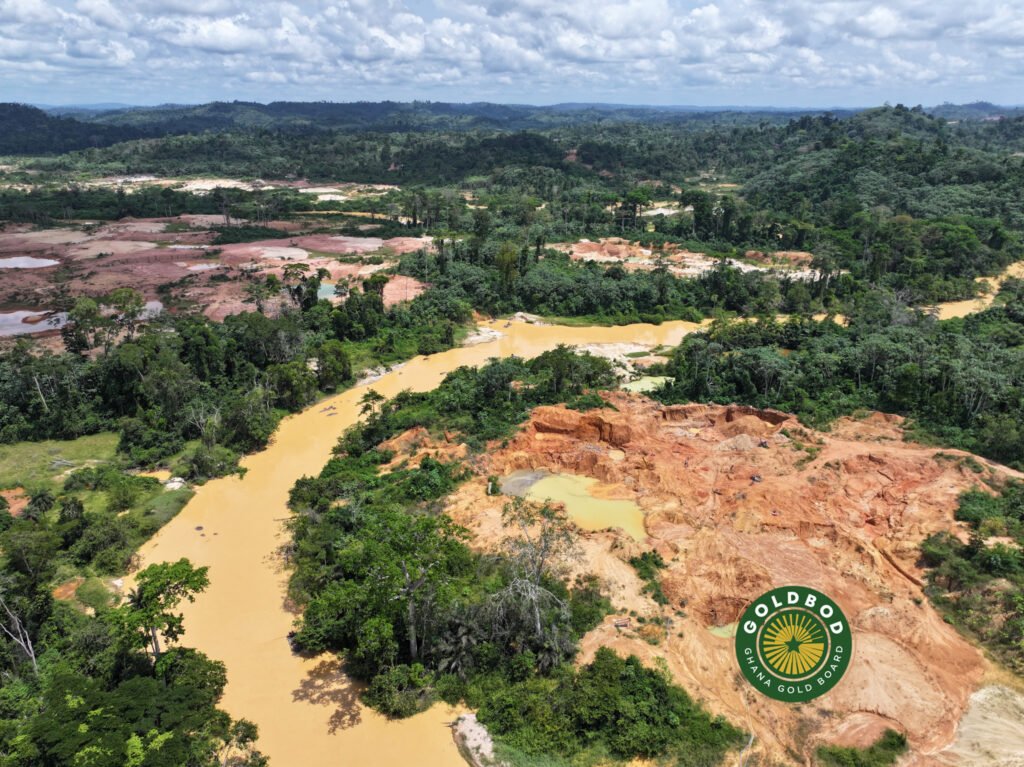
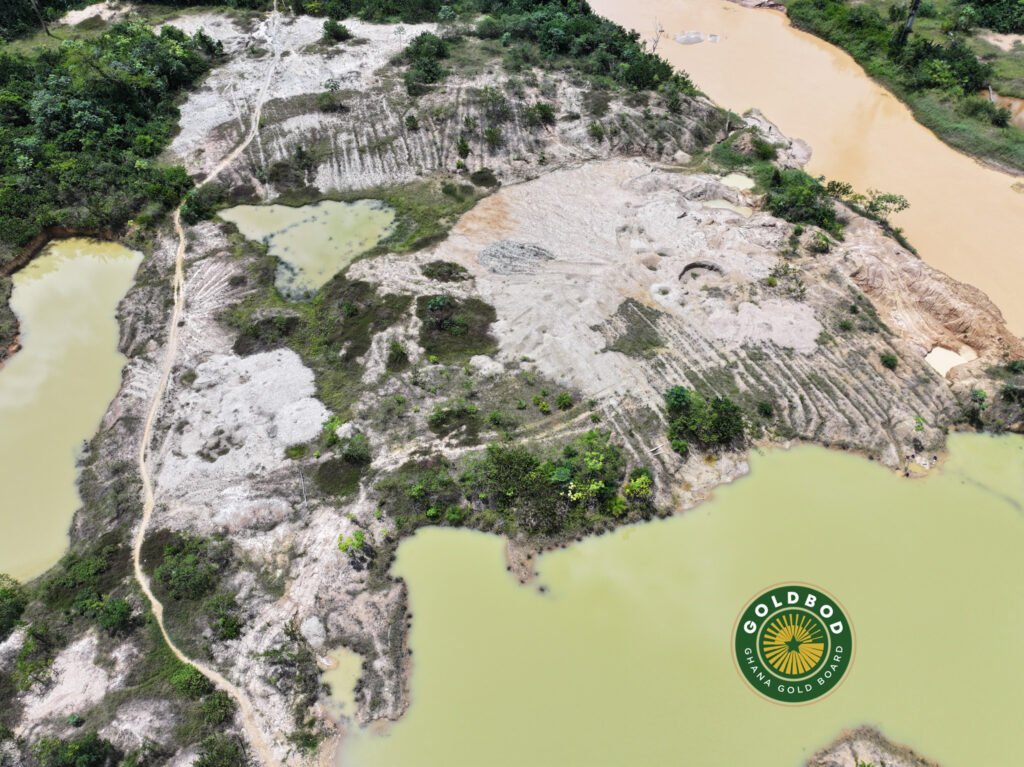
Illegal mining, popularly known as galamsey has survived in Ghana for decades not simply because gold is valuable, but because the meaning of responsibility has often been treated as negotiable. For too long, the public has watched illegal mining grow across landscapes: farms scarred, rivers clouded, drinking water polluted, and communities forced to live with the consequences, while those who benefited or facilitated continue to survive politically, financially, and socially.
In many instances, people have hoped that the law would eventually lose interest, that the case would drag, that pressure would soften the outcome, or that convenient explanations would replace accountability. Yet, today’s sentence forces Ghana to confront a more uncomfortable truth: galamsey is not merely vandalism with machines. It is a governance failure, a chain of decisions, permissions, tolerances, and failures to prevent wrongdoing. It is not only the hand that destroys the land, but also the systems and authorities that allow destruction to repeat itself.
When the court imposes 20 years on the counts, even though the terms run concurrently, it signals that the acts before the court were not treated as trivial, careless, or accidental. The court measured seriousness against seriousness. In doing so, it reorders the national expectation of what happens when environmental crime becomes organized and persistent.
Justice as a Deterrent, Not a Celebration
In a country where political identity and public emotion often move faster than legal reasoning, many people have a tendency to reduce judgments to slogans. A conviction becomes a celebration for one side; it becomes a disappointment for another. But the power of today’s ruling lies in what it can become: a deterrent framework.
The galamsey crisis is not only about people operating excavators. It is about the ecosystem that helps illegality continue, often through normalisation of wrongdoing and the quiet assumption that consequences will never fully arrive. That ecosystem includes networks that treat “permission” as routine, enforcement weaknesses that allow repeat offences, and the influence of political or economic actors who sometimes believe they can ride above consequences.
A sentence like this attacks the belief that illegal profit is worth the risk. It insists that wrongdoing has a cost that can no longer be ignored. When imprisonment is paired with a monetary penalty, the message becomes clearer: the court is not only punishing an individual; it is warning a culture that has profited from environmental harm.
“Running Concurrently” Doesn’t Reduce the Meaning
Some may focus on the legal detail that the sentences are concurrent rather than consecutive. But this should not distract Ghana from the moral and legal weight of the decision.
The meaning of the judgment is not found in the calendar alone. It is found in what the court found and how it structured accountability across multiple counts. Conviction on four counts means the court accepted that more than one legal offence was sufficiently established. It means that the case contained multiple legally recognisable realities, not a single narrative that could be simplified or dismissed.
Therefore, even with concurrent terms, the verdict still carries a strong moral message: the accused was held responsible on each count that the court determined was proven beyond the required standard. The legal system is not saying one act happened while everything else was a misunderstanding. It is saying the court saw enough for full judicial consequence.
The Fine: A Financial Warning to a Culture of Reckless Profit
The GH¢300,000 fine strengthens the court’s message by adding a financial deterrent to the deprivation of liberty. Prison time alone punishes the individual, but fines signal something wider—an attempt to break the economic logic that illegal activity can always be converted back into gain.
This penalty is not just an amount; it disrupts a dangerous business belief that has haunted Ghana’s environmental battles: that the profit from illegality will always be greater than the cost of punishment. If the mathematics of crime remains profitable, illegal activity becomes sustainable. If punishment begins to outweigh gain, illegality becomes risky and unattractive.
By imposing both imprisonment and a fine, the court is communicating that galamsey cannot continue to function like a business model with manageable consequences.
Why This Verdict Matters Beyond One Name
This sentencing is significant far beyond the person of Chairman Wontumi. Ghana is a nation that watches outcomes not only for justice, but also for precedent. When courts deliver judgments like this, they become reference points for how future cases may be approached—what evidence becomes persuasive, what patterns of illegality may trigger stronger responsibility, and how courts interpret the seriousness of environmental harm.
It changes how concession holders and stakeholders may think about obligations. It forces compliance systems—where they exist only on paper—to face the possibility of real enforcement. It challenges enforcement agencies to apply the law without selective courage. It also challenges those who have believed that environmental crimes are “untouchable” because the accused are influential.
And even when political narratives try to claim ownership of the verdict, the court’s work remains what it always is: evidence, law, judicial findings, and punishment. Today’s ruling suggests Ghana is no longer willing to treat environmental crime as optional or occasional.
A Turning Point for the Nation’s Environmental Future
Galamsey is not only about gold. It is about water—the water people drink, the rivers that feed communities, and the aquatic ecosystems that sustain life. It is about food security, since farmlands become unusable and livelihoods collapse. It is about public health, because contaminated water and polluted environments harm bodies long after the mining machines have gone quiet. And it is about human survival, because communities should not have to endure devastation as the cost of other people’s enrichment.
By imposing significant prison terms on multiple counts, Ghana’s judiciary is declaring that environmental protection is not a slogan reserved for political speeches. It is a legal duty backed by consequences. This verdict therefore becomes a statement about Ghana’s future: the earth is not a commodity for destruction by the powerful.
What Happens Next
Every judgement opens a new chapter. The country will now watch for what comes after yesterday’s decision: whether it is upheld through further legal processes, how enforcement agencies apply the principles underlying the case to other matters, and whether environmental restoration becomes faster, deeper, and more serious—proportionate to the harm done.
But whatever the next legal steps are, the core fact remains clear. Ghana has heard a courtroom verdict—and it is not a whisper. It is a warning.
GoldBod’s Reclamation Is Already Moving—And It’s Shifting the Narrative
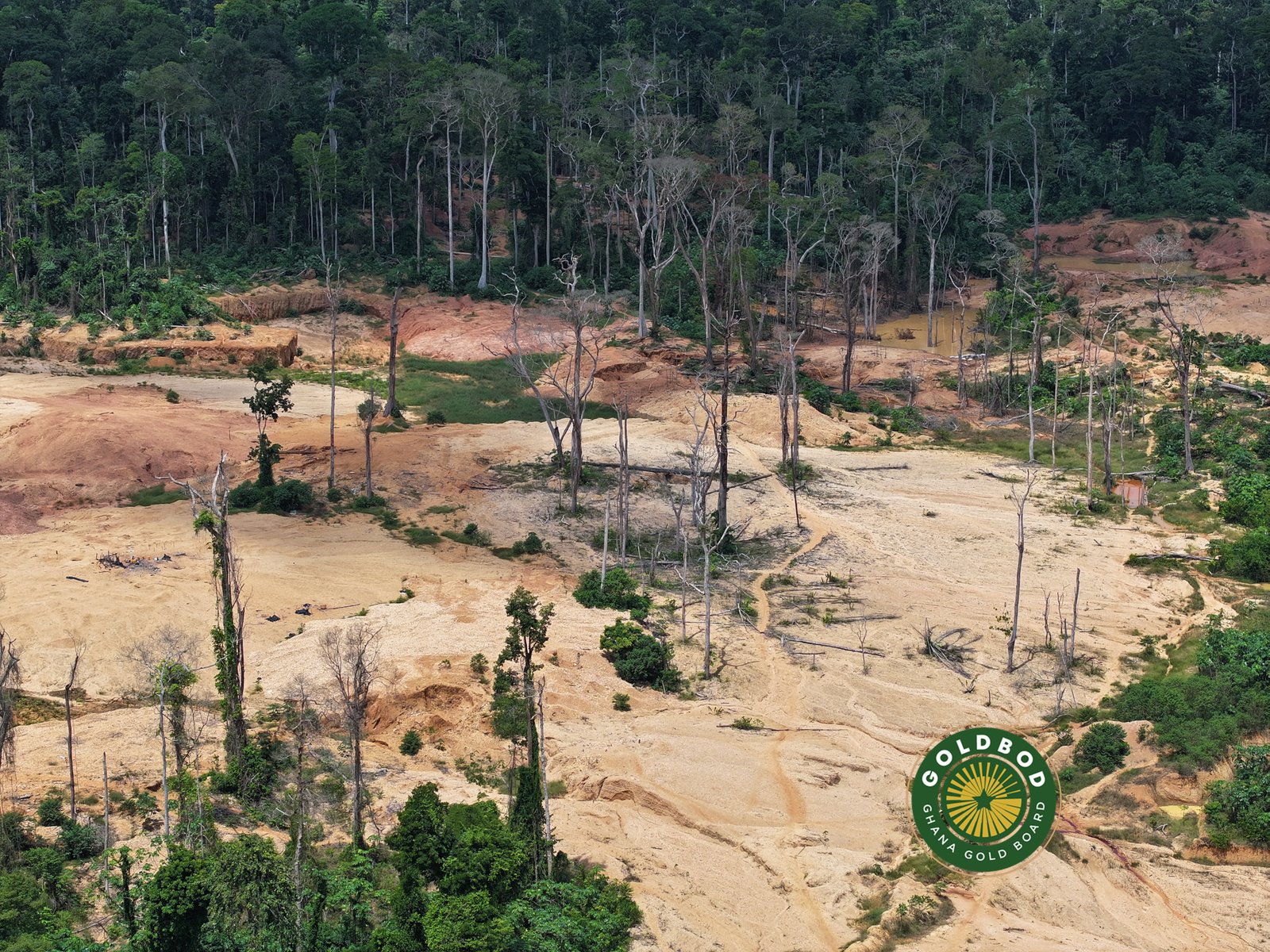
Now, this is where the story becomes even more consequential. Because before the July 20th verdict, real recovery work is already unfolding. The Ghana Gold Board (GoldBod) recently signed an agreement with the Ghana Armed Forces and the Forestry Commission through financial support to reclaim damaged land at the Tano-Nimiri Forest—land that has been affected by mining activities, particularly where environmental degradation and illegal extraction have occurred in the forest, located at Samreboi in the Western region, which recorded serious flooding recently..
And this reclamation effort matters not only because it promises restoration. It matters because it changes the atmosphere of the trial itself. It shows that Ghana is no longer only prosecuting; it is also actively planning consequences and recovery on the ground.
In practical terms, the country is sending a message that galamsey destruction will not simply be followed by political apologies and temporary crackdowns. Recovery will begin, supervision will intensify, and the state is positioning itself to address both illegal extraction and environmental damage. Significantly, the reclamation effort is connected to the very issue over which Wontumi was facing trial, an indication that the land narrative was no longer hypothetical. It is already becoming a national action agenda.
July 20 May Become a Precedent Bigger Than One Man
This is why the judgement could become a precedent far larger than the dock. Mining companies were watching, because they want clarity about the enforcement environment and legal expectations for concession holders. Prosecutors were watching, because they want to know how far the law will reach when accountability becomes difficult. Concession holders were watching, because they were learning what the state would treat as negligence, tolerance, or unacceptable failure to prevent wrongdoing. Even galamsey operators were watching, because they were assessing whether illegal mining could continue under protective shadows of legal ownership.
If the court finds that concession authority carries enforceable responsibility when illegal mining occurs repeatedly under one’s watch, then Ghana will have strengthened the deterrent effect of the law. If the court finds the evidence insufficient to establish that responsibility, then the state may be forced into revisiting how it handles concession monitoring, compliance enforcement, and proof requirements. Either way, July 20 verdict was not just about individuals. It was about how Ghana defines responsibility in the galamsey economy.
Final Word: Justice Has a Sound
There are many kinds of silence in Ghana. Silence from officials who should act. Silence from systems that protect the powerful. Silence from communities who have learned to endure damage with little relief. Today, that silence broke.
On 20th July 2026, Bernard Antwi-Boasiako was convicted and sentenced to 20 years on each of four counts (concurrent) and a fine of GH¢300,000—a decision that insists Ghana’s laws must work not only for the weak, but also for the influential.
Galamsey has always threatened the environment. Now it has become—at least in today’s ruling—a threat to impunity itself. And for Ghana, that is the real earthquake: the reminder that wrongdoing cannot forever hide behind power, reputation, or noise.