

Unverified claim of fatal brain haemorrhage contradicted by state media images as succession uncertainty keeps world guessing
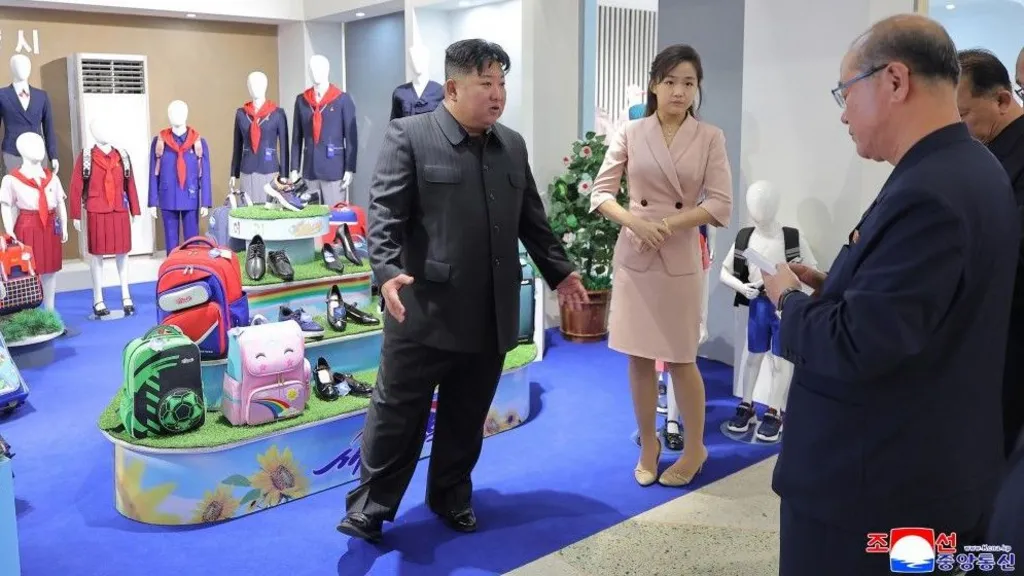
North Korea has released photographs of leader Kim Jong Un attending a public event with his daughter, Kim Ju Ae, following an unverified claim circulating online that he had died from a brain haemorrhage in China.
The photographs, published by state newspaper Rodong Sinmun, show the 42-year-old leader touring a clothing and footwear exhibition with his daughter and senior officials.
Their release came hours after Wanjun Xie, a Chinese dissident based in the United States, alleged that Kim had been taken to a hospital in Beijing in a coma, had died and was secretly returned to North Korea.
Xie, who identifies himself as chairman of the Chinese Democratic Party, a group banned by Beijing, provided no verifiable evidence for the claim.
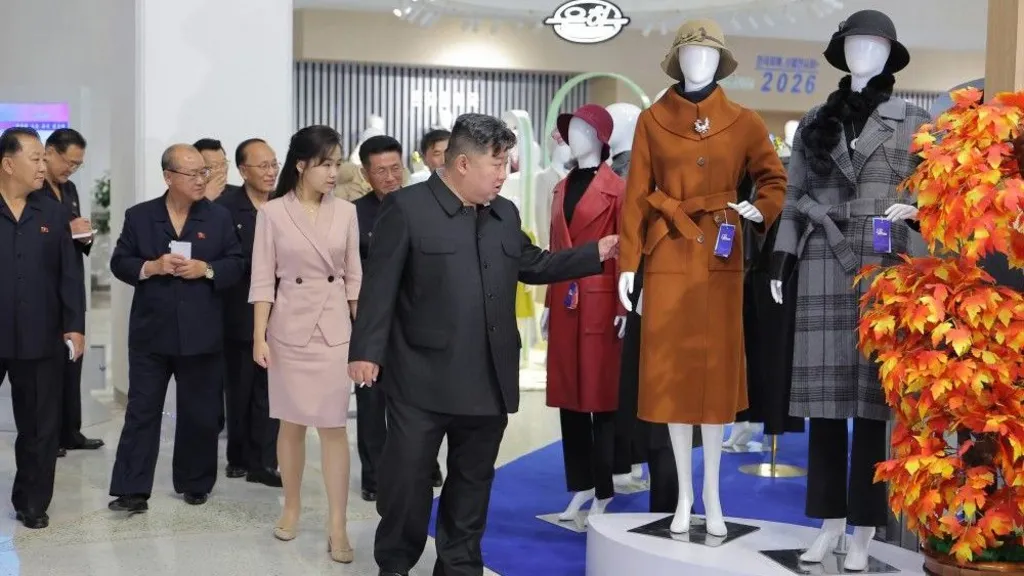
Although the photographs cast doubt on the report, their publication does not establish exactly when they were taken. South Korean intelligence officials, meanwhile, told Yonhap News Agency they had received no information supporting the allegations.
The episode has renewed attention on the information vacuum surrounding North Korea, where restrictions on independent reporting and limited access to the leadership make claims about Kim’s health particularly difficult to verify.
Repeated false alarms
The latest report follows previous false alarms about Kim’s health.
In 2020, speculation about his condition intensified after he disappeared from public view. A prominent North Korean defector claimed he was “99% certain” Kim had died following cardiovascular surgery. Kim subsequently appeared in public, undermining the claim.
Xie has also circulated unverified allegations concerning Chinese President Xi Jinping, further underscoring the need for independent evidence before accepting his latest report.
The recurring rumours are fuelled partly by uncertainty over North Korea’s succession arrangements and the international consequences of a sudden change in leadership.
Kim inherited power after the death of his father, Kim Jong Il, in December 2011. His grandfather, Kim Il Sung, had ruled before Kim Jong Il, establishing three generations of family rule.
Unlike his predecessors, however, Kim Jong Un’s eventual successor has not been formally established publicly.
His daughter, Kim Ju Ae, has increasingly appeared alongside him at prominent events, including military engagements. South Korea’s National Intelligence Service has assessed that she may be undergoing preparation for a future leadership role, although no formal designation as heir has been announced.
Her age and the absence of an established succession arrangement leave unanswered questions about how the ruling party, military and other powerful institutions would respond if Kim became incapacitated.
Health concerns and security implications
Kim’s health has repeatedly attracted scrutiny. South Korean officials have previously raised concerns about his weight and smoking habits, while cardiovascular disease has featured in accounts of the Kim family’s medical history.
Those concerns, however, do not establish that he is currently suffering from a serious illness.
Any sudden leadership crisis would have significant implications for regional security because North Korea possesses nuclear weapons and ballistic missile capabilities.
China could face pressure along its border if instability triggered refugee movements, while South Korea and the United States would have to assess the implications for military readiness and control of North Korea’s strategic weapons.
The United States maintains approximately 28,000 troops in South Korea.
These stakes help explain why intelligence agencies closely monitor developments involving Kim. But North Korea’s secrecy makes reliable assessments difficult, leaving room for unverified reports to spread rapidly.
For now, there is no independently verified evidence supporting Xie’s claim that Kim Jong Un has died. The photographs released by North Korean state media challenge the rumour, but the timing of the images remains unclear.
The latest episode once again exposes the difficulty of distinguishing credible intelligence from speculation about the leadership of one of the world’s most closed political systems.