

By Leo Nelson
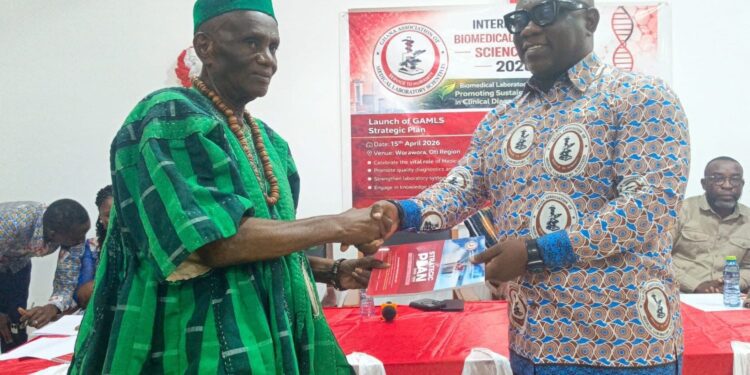
The Ghana Association of Medical Laboratory Scientists (GAMLS) has unveiled a sweeping five-year strategic plan designed to overhaul medical laboratory services across the country, with particular attention to communities that have long been left behind by the healthcare system.
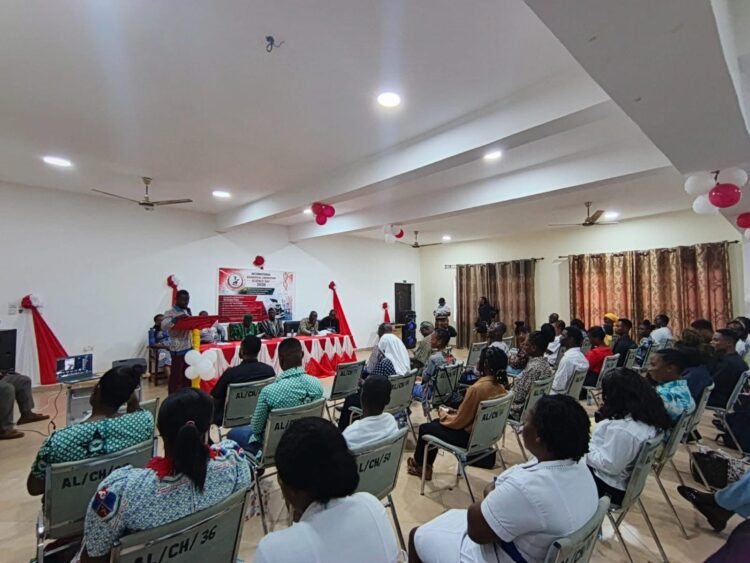
The plan, covering the period 2026 to 2031, was officially launched during the commemoration of the 2026 International Biomedical Laboratory Science Day in Worawora. The event drew government officials, health professionals, development partners, and media representatives reflecting the broad coalition GAMLS says it needs to drive the agenda forward.
GAMLS President, Dr. Eric Kofi Aidoo described the plan as a product of collective ambition. According to him, it reflects the aspirations of medical laboratory professionals across the country and was shaped through extensive consultations with stakeholders at multiple levels.
“Sustainable diagnostic systems require a well-trained workforce, reliable supply chains, strong governance structures, and the deliberate integration of technology into everyday laboratory operations,” Dr. Aidoo said.
He noted that the global theme for this year’s celebration sustainability in clinical diagnostics aligns directly with Ghana’s need to build health systems resilient enough to respond to emerging and future health challenges.
The 2026–2031 Strategic Plan is anchored on six priority areas: strengthening organisational capacity, expanding advocacy and partnerships, promoting professional standards and regulation, enhancing service delivery, supporting continuous professional development, and improving financial sustainability.
According to GAMLS, implementation will be tracked through periodic evaluations, including a formal mid-term review in 2028 and a final comprehensive assessment in 2031.
Dr. Aidoo stressed that achieving the plan’s objectives would require robust collaboration with key institutions, including the Ministry of Health, the Ghana Health Service, academic institutions, development partners, and the private sector. He also acknowledged the contributions of international bodies specifically the International Federation of Biomedical Laboratory Science and the African Society for Laboratory Medicine in supporting the growth of the profession in Ghana.
The GAMLS president also used the platform to remind government of its manifesto commitments to the sector, specifically calling for the establishment of a Medical Laboratory Science Council as a priority deliverable. The association formally recognised the work of its Strategic Planning Committee, whose efforts were described as instrumental in developing the policy document. In a message to its membership, GAMLS leadership acknowledged the resource constraints and infrastructure gaps that laboratory professionals face daily and urged them to actively champion the plan’s implementation.
Delivering the keynote address, Oti Regional Minister John Kwadwo Gyapong used the occasion to highlight a troubling reality at the heart of Ghana’s healthcare system. According to the minister, more than 70 percent of all clinical decisions depend directly on laboratory results making the sector far more central to patient outcomes than is commonly recognised.
He pointed specifically to the Oti Region, where health facilities continue to grapple with shortages of skilled personnel, inadequate equipment, and fragile supply systems that leave patients without access to quality diagnostic care.
“Patients in these areas often do not receive timely and accurate diagnoses, which ultimately affects treatment outcomes and the overall quality of care due to the limited number of qualified medical laboratory professionals and laboratories in the region.”
Gyapong called for urgent and coordinated action to reverse this trend. He proposed the introduction of incentive packages to attract qualified professionals to underserved rural areas, alongside improvements to physical infrastructure and the strengthening of logistics systems that keep laboratories running.
He also pointed to ongoing government plans to establish a Medical Laboratory Science Council, promote local production of laboratory reagents and consumables, and develop proficiency testing centres signalling some alignment between the association’s demands and government’s stated intentions.
The District Chief Executive of Biakoye, Eric Kwaku Opong, reinforced the call for action. He voiced strong support for the government’s Free Primary Healthcare policy, arguing that its success in identifying health conditions early depended heavily on functional laboratory services at the community level. He pledged that the government would do its best to support all areas of healthcare delivery, including medical laboratory services, for the benefit of Ghana.