

.Aaccuses Mining Firm of Waging Media War While Case is in Court, Insists Termination Followed Years of Unpaid Fees
The Minerals Commission has told Northern Ashanti Mines Limited to stop its public relations offensive and allow the courts to adjudicate its dispute over the revocation of its mineral rights, accusing the company of running a media campaign even as it pursues the same matter through litigation.
According to the Commission, the company has already dragged the Minister for Lands and Natural Resources, the Minerals Commission and the Attorney-General to court making the judiciary, not the press, the proper arena for settling the disagreement.
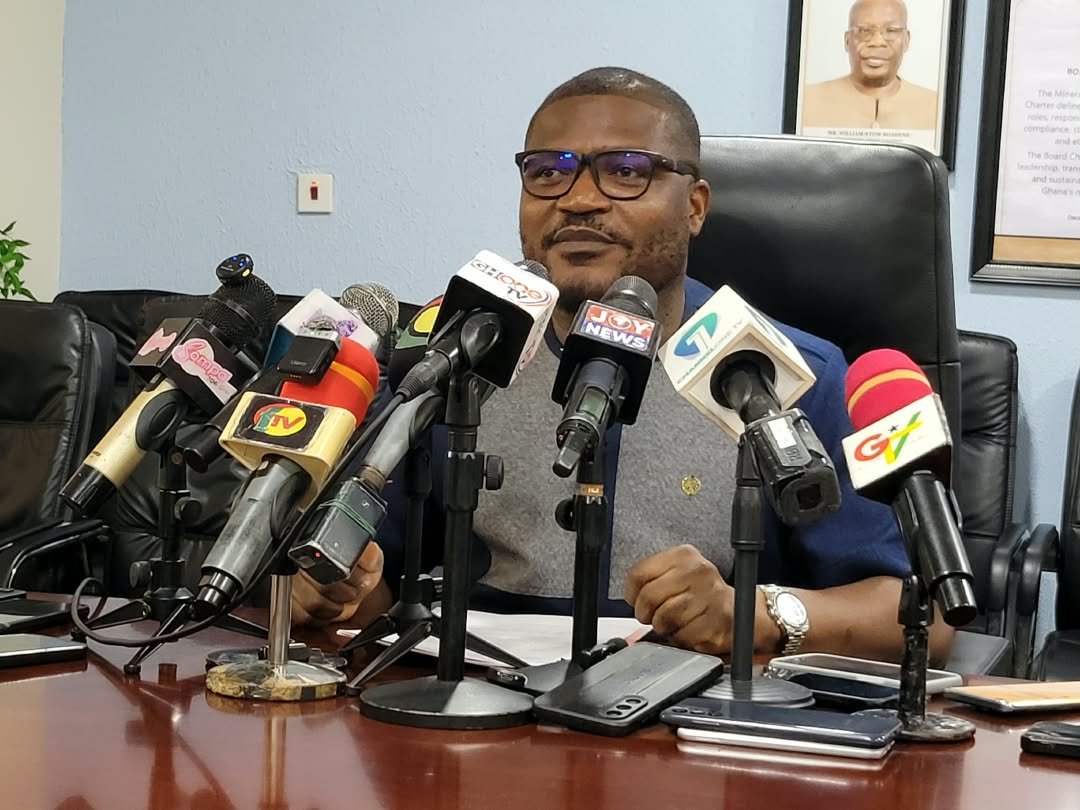
The position was made known at a press briefing held at the Commission’s head office in Accra on Thursday, October 29, 2026, where officials dismissed allegations of bad faith and insisted the termination was executed in full accordance with the law.
The Commission noted that Northern Ashanti Mines received the termination notice and acknowledged it, only to turn around and challenge the decision legally. It found curious the company’s twin approach of publicly calling for dialogue while simultaneously suing the very state institutions it sought to engage.
US$8.33 Million Debt Trail
At the heart of the dispute is the termination of mineral rights formerly held by Northern Ashanti Mines — previously known as Owere Mines — after years of alleged failure to pay Annual Mineral Right fees.
The Commission disclosed that the company’s accumulated debt on its mining leases had ballooned to US$8.33 million as of April 2025, with a further US$49,928 outstanding on prospecting licences.
It said the termination did not come suddenly but followed a chain of notices stretching from 2020 to 2026. After a Notice to Remedy Breach was served in May 2020, the company — following the transitional takeover by BCM Investments — proposed clearing the debt in four instalments. That plan, however, never materialised, and follow-up notices issued in 2022 and 2025 also failed to produce compliance.
With the defaults persisting, the Commission said it wrote to the Minister for Lands and Natural Resources on April 7, 2026, notifying him of the continued breach and requesting the issuance of a termination notice. The Minister duly approved, clearing the path for the revocation of the mineral rights.
Within the Law, Commission Insists
Rejecting the company’s claim that the action was unlawful, the Commission argued that the Minister merely exercised authority conferred by statute, and that the Commission itself acted strictly within its mandate.
It further stressed that the termination does not wipe the slate clean, emphasizing that Northern Ashanti Mines remains liable for its financial obligations.
The Commission explained that the mineral rights have now reverted to the State, which is duty-bound to safeguard the associated assets against encroachment, dissipation and illegal activities, citing Section 70 of the Minerals and Mining Act, 2006 (Act 703) as part of the legal framework governing mining assets after termination.
It also served notice that it reserves the right to chase the company for every cedi and dollar outstanding to the State.
“No One Is Above the Mining Laws”
The Commission reminded all stakeholders that Ghana’s mineral resources belong to the people of Ghana, and that companies granted the privilege to exploit them must honour the legal and financial conditions attached to their licences and leases.
It warned that no company — regardless of its financial muscle or ability to bankroll a publicity campaign — should expect to escape its statutory obligations.
The Commission maintained that the termination was the consequence of persistent non-compliance, not an arbitrary administrative whim.
Northern Ashanti Mines, for its part, has rejected the Commission’s account and is contesting the termination in court.
The Commission, however, said it remains undeterred by the public controversy and is committed to enforcing the country’s mining laws without fear or favour.