

By Prince Ahenkorah
A diplomatic visit by President John Dramani Mahama has inadvertently cast a harsh light on Lusaka’s heavy-handed approach to illegal mining, sparking a parliamentary and media debate that contrasts Ghana’s institutional reforms with Zambia’s shoot-to-kill policy.
Mahama’s engagement was characteristically measured. He outlined Ghana’s multi-pronged strategy against the galamsey menace: the creation of the National Anti-Illegal Mining Operations Secretariat (NAIMOS) and the establishment of the Ghana Gold Board as the sole buyer to plug smuggling loopholes. But it was his broader message that Africa needs strong institutions, not strongmen—that landed with unexpected force in Lusaka.
The contrast could not be starker. While Mahama spoke of structured reforms and integrating local miners into a regulated system, Zambia’s army commander had recently issued a chilling directive: illegal miners are to be shot on sight. Coming from the Chief of Defence Staff, it was an order carrying the full weight of the state.
During parliamentary debates following Mahama’s departure, one opposition MP drew explicit parallels. He noted that Ghana had also deployed soldiers to mining areas, but their role was carefully circumscribed providing security while civilian agencies handled enforcement and regularisation.
“The lesson we draw from that is that we have a similar problem,” the lawmaker observed, adding pointedly that Zambia’s constitutional framework, like Ghana’s, provides for independent arms of government.
Mahama’s emphasis on the separation of powers resonated beyond the mining debate. His argument that the continent requires strong institutions rather than strong men has given oxygen to longstanding anxieties about executive overreach in Zambia.
“We desire that the three arms of government should operate independently, and we draw lessons from the emphasis the President of Ghana made,” the MP told the House—a remark widely interpreted as a critique of Lusaka’s centralised approach to governance.
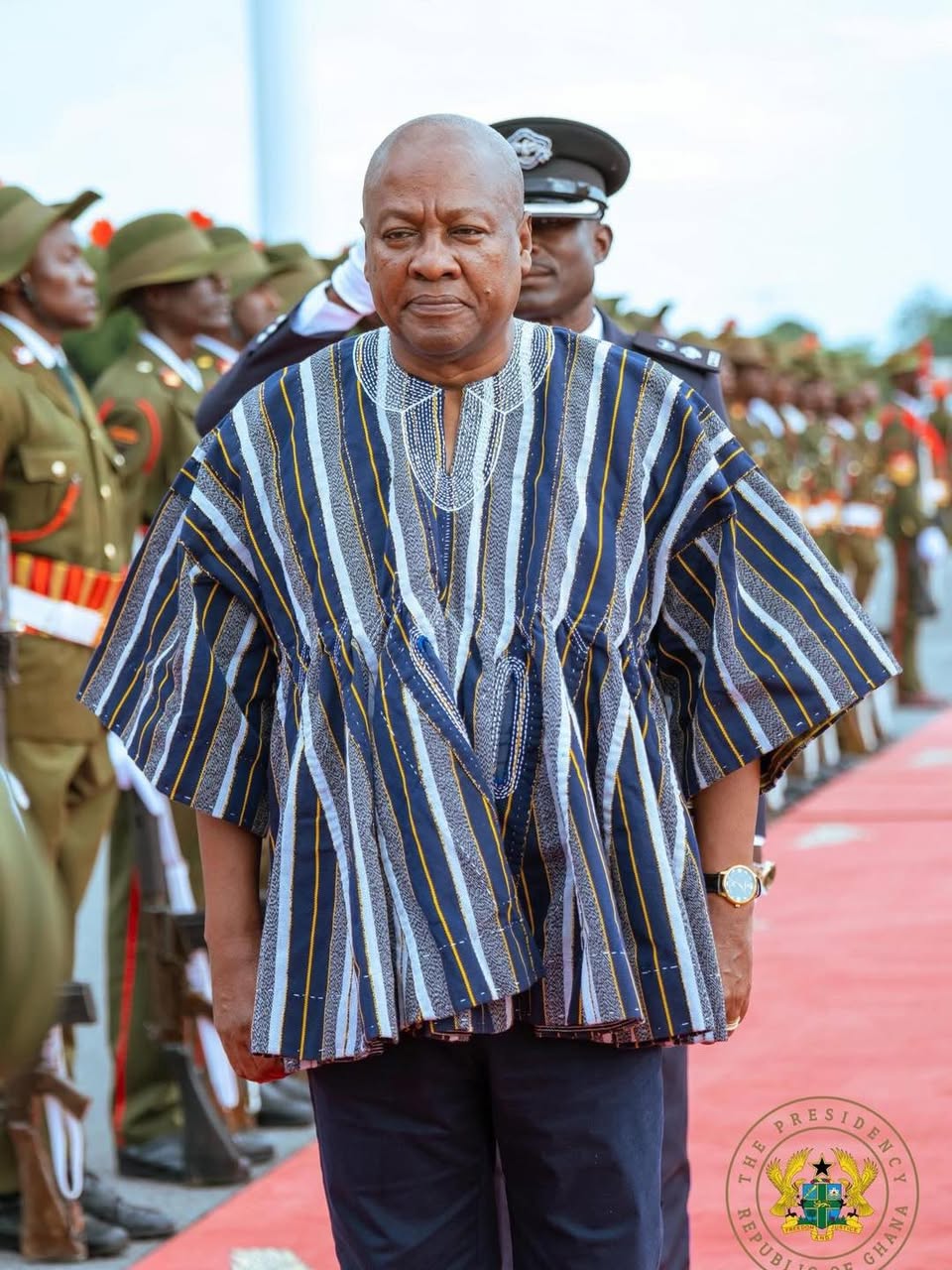
Media commentators have been more direct. Beyond noting Mahama’s traditional attire, which caught the public eye, columnists have seized on the philosophical contrast between Ghana’s institutionalist approach and Zambia’s militarised response. Calls have since emerged for key bodies the Electoral Commission of Zambia (ECZ), the judiciary, the Attorney General’s office, and the Financial Intelligence Centre (FIC) to bolster their operational autonomy.
For the ruling administration, the Mahama effect is deeply inconvenient. Embracing his message would imply criticism of current policies, including the army’s shoot-to-kill orders. Dismissing it, however, risks appearing indifferent to human rights and institutional integrity.
What began as a routine diplomatic visit has exposed a fundamental governance fault line. In the world of Africa Confidential, where such contrasts often reveal deeper truths, Mahama’s brief stay in Lusaka may have longer consequences than anyone anticipated particularly for those mining gold in Zambia’s restive provinces.