


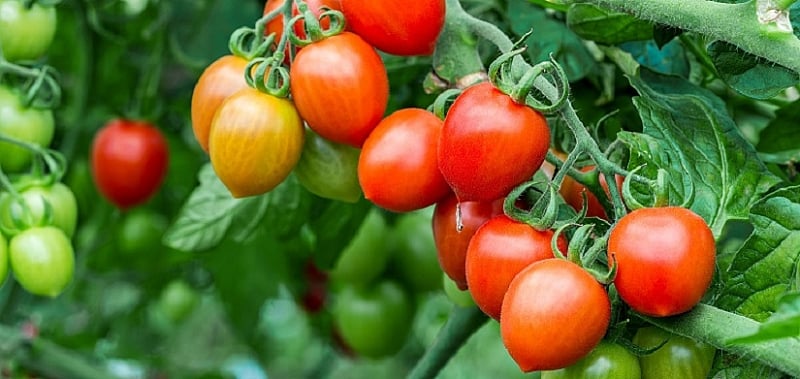
The World Bank has activated a massive financial buffer to safeguard Ghana’s agricultural sovereignty, targeting two of the nation’s most critical sub-sectors: tomatoes and cocoa, decisively insulating local farmers from external shocks, as geopolitical tensions in the Middle East threaten to disrupt global fertilizer and input supply chains.
During a recent stakeholder engagement on food security in Accra, the World Bank’s Senior Agricultural Economist, Dr. Ashwini Sebastian, unveiled the details of the multi-million-dollar emergency intervention – noting that under the directive of the Ministry of Trade, Agribusiness and Industry (MoTAI), a $20 million grant has been fast-tracked to resolve the “tomato crisis,” while a $75 million fund is now active to rehabilitate the nation’s diseased cocoa stocks.
“To counter the Burkina Faso export ban, a US$20 million grant has been deployed to boost local tomato production, targeting a yield of 6,000 metric tonnes to end import reliance. The World Bank secured this US$20 million grant from the Dutch Government specifically to boost local tomato production under the FSRP”
Dr. Ashwini Sebastian explained that the initiative, part of the West Africa Food System Resilience Programme (FSRP), targets a high yield of high-quality tomatoes in the immediate harvest cycle, and seeks to move away from scattered interventions and toward cluster-based farming on large tracts of land that permanently ends Ghana’s import reliance.
A key component of this emergency strategy is the rapid deployment of water infrastructure to bypass the limitations of the dry season. The government, led by Minister for Food and Agriculture, Hon. Eric Opoku, announced an official installation of 250 specialized boreholes dedicated exclusively to tomato farmers, as part of strategies to handle the Burkina Faso ban.
This infrastructure push ensures that cultivation is no longer tethered to unpredictable rainfall patterns, allowing for a 24-hour agricultural cycle that maintains a steady flow of produce to urban markets. The technical specifications of the borehole project include solar-powered pumping systems to mitigate high fuel costs, further insulating farmers from the input surges currently plaguing the global energy market.
Government engineers noted that these 250 sites were selected based on soil suitability and proximity to trade routes, ensuring the 6,000-tonne target is a logistical certainty.
Cocoa Rehabilitation And Disease Control
While the tomato sector receives an immediate boost, the $75 million allocation for cocoa represents a long-term restoration of Ghana’s primary export earner.
Dr. Ashwini Sebastian confirmed that this massive commitment, supported by grant financing from the Norwegian Government, is earmarked for the rehabilitation of 25,000 hectares of cocoa farms devastated by the Cocoa Swollen Shoot Virus Disease (CSSVD).
For years, the productivity of the Western and Ashanti regions has been hampered by these diseased ghost farms, which yield a fraction of their potential. The strategy involves the total removal of infected trees and the replanting of hybrid, disease-resistant varieties.
This rehabilitation effort is being managed in coordination with COCOBOD, though under a new mandate of high fiscal transparency. The funds will go directly toward compensating farmers for the loss of their old trees and providing them with technical inputs – including specialized fertilizers – needed to nurture new crops.
With a focus on 25,000 hectares, the government aims to restore Ghana’s position as a global leader in premium cocoa production. This is a sovereign wealth protection measure designed to secure the foreign exchange reserves necessary for national economic stability.
The timing of this World Bank intervention is critical as Middle Eastern tensions have sent the prices of fertilizers soaring. For the Ghanaian farmer, these surges threatened to make the current planting season prohibitively expensive.
The emergency strategy includes a subsidized input pipeline that uses a portion of the World Bank funds to bulk-purchase fertilizers and distribute them through the Ghana Enterprises Agency (GEA) and local cooperatives. This buffer mechanism ensures that the cost of production remains stable, preventing the inflationary spiral that follows spikes in global commodity prices.
The Ministry of Trade, Agribusiness and Industry has emphasized that this strategy is a direct application of the value-addition philosophy. With a guaranteed supply of 6,000 metric tonnes of tomatoes, local canning factories that have sat idle for years are now preparing to resume operations.
This creates a secondary economic effect, generating industrial jobs and reducing the need for imported tomato paste, further saving the nation’s hard-earned foreign currency.
The activation of the World Bank’s emergency strategy is a defining moment for Ghana’s agribusiness sector.
The $95 million total investment into tomatoes and cocoa is an investment in the dignity of the Ghanaian farmer and the stability of the Ghanaian table.
With 250 boreholes under construction and 25,000 hectares of cocoa being replanted, the roadmap to recovery is clearly defined.