

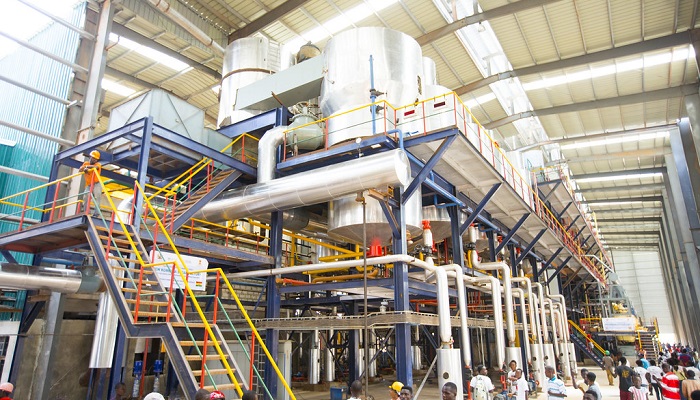
…No Light, Water, Company Swimming in Debts
By Phillip Antoh
The Komenda Sugar Factory, a towering monument to unfulfilled promise on Ghana’s coast, has been plunged into darkness and dry taps after its utility supplies were severed over unpaid bills. The disclosure, made in Parliament by Trade Minister Elizabeth Ofosu-Adjare, lays bare the catastrophic state of a project once touted as a flagship of industrialisation.
In a stark admission to legislators on Tuesday, the Minister painted a picture of systemic decay. The factory, she revealed, has been disconnected from the national grid by the Electricity Company of Ghana and its water supply suspended by the Ghana Water Company Limited, the inevitable consequence of mounting debts. It is a humiliating setback for a facility meant to symbolise self-sufficiency.
Yet the utility cut-offs are merely the symptoms of a deeper rot. Minister Ofosu-Adjare catalogued a litany of mechanical failures, noting that critical machinery has not been serviced since the plant was commissioned in 2016. “Generators and motors require maintenance, and the boiler top coil needs to be replaced to revive the factory,” she told the House. Nearly a decade of neglect has rendered state-of-the-art equipment obsolete.
Beyond the rusting machinery, the factory’s lifeblood its supply chain has all but evaporated. The Minister disclosed that farming communities intended to anchor raw material production have disengaged, citing weak institutional support and opaque procurement processes. Without sugarcane, even a fully functional factory remains a steel carcass.
The Komenda saga, once championed as a solution to Ghana’s sugar import dependency and a source of jobs for the Central Region, now reignites debate over the sustainability of state-led megaprojects. The government’s proposed remedy engaging a transactional advisor to package the factory for private investment signals a reluctant shift from ownership to partnership. The Minister confirmed that securing a strategic investor to operationalise both the factory and its farms is a priority in the 2026 budget.
But the path to revival is strewn with hurdles. Potential investors will scrutinise not only the plant’s dilapidated equipment but also the broken trust with out-grower communities. The question is whether private capital can succeed where the state has stumbled, or whether Komenda is destined to remain a rusting relic on the landscape, a bitter reminder of ambition without execution.