

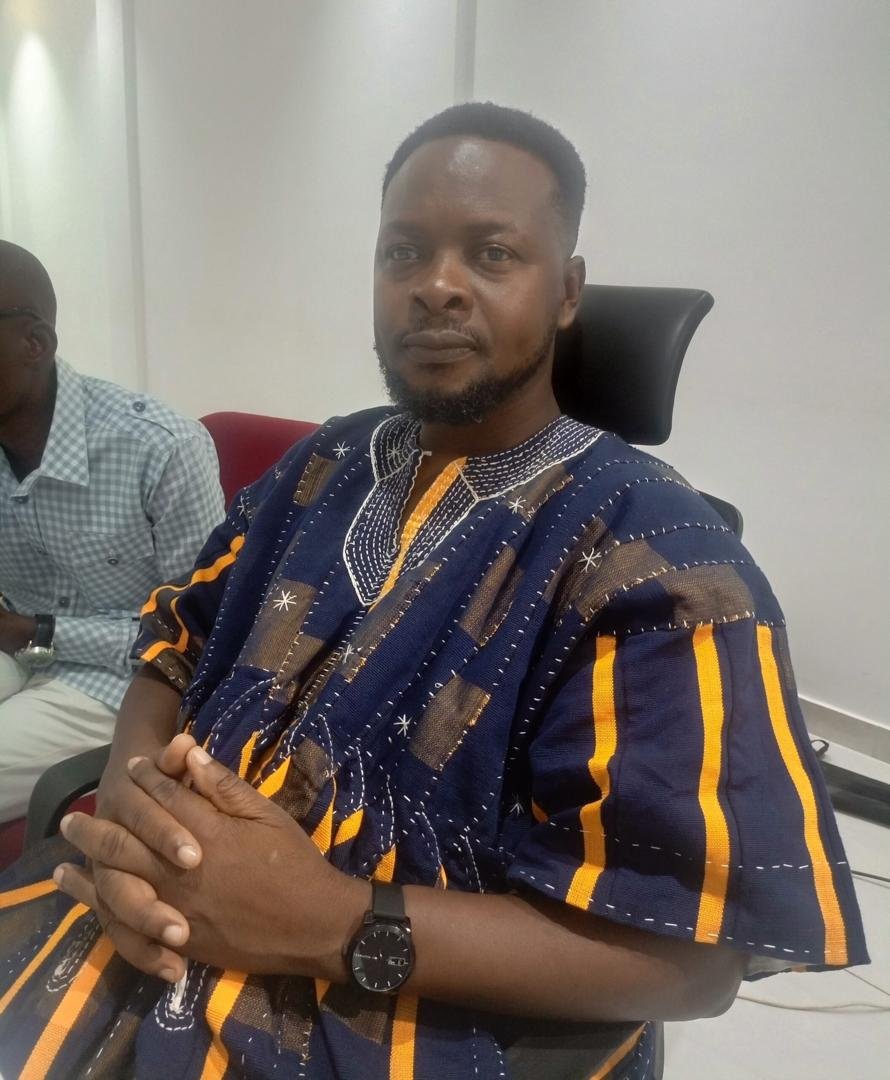
The President of the Private Newspapers and Online Publishers Association of Ghana (PRINPAG), David Tamakloe, has dismissed claims that traditional media has been rendered obsolete by the rise of new media, insisting that professional journalism remains irreplaceable.
Mr. Tamakloe made this assertion during a two-day capacity-building workshop on “Responsible Security Reporting” in Accra on Saturday, August 29, 2026.
The event, themed “Media as a Strategic Partner in National Security,” was organized in collaboration with the National Security Council Secretariat and brought together security experts, media executives, journalists, and other stakeholders.
Challenging the narrative of a dying traditional press, he stated, “The media is only one; it has always been one, and it will always remain one.”
He drew a sharp distinction between professional journalism and the chaos of the digital space.
“Let me be unequivocal, the madness we witness on social media is not journalism. Journalism is a noble profession which has shaped and continues to impact humanity for centuries,” he stated.
Mr. Tamakloe cautioned against the misconception that technological advancements have rendered newspapers and traditional broadcast media irrelevant.
Instead, he argued that the proliferation of social media has increased the need for professional journalism, as it serves as a vital defence against the spread of misinformation, disinformation, and unverified content.
Highlighting the historical significance of the profession, he noted that journalism has long exposed tyranny, championed the oppressed, and chronicled the triumphs of the human spirit.
He warned against abandoning this legacy simply because society has grown intolerant of divergent views or, worse, because there is an unwillingness to finance the industry’s growth.
To prevent the collapse of Ghana’s private print media which has contributed immensely to the country’s democratic development for decades, Mr. Tamakloe made a passionate appeal to the government and state institutions to support their continuous existence.
He called for stronger financial, regulatory, and institutional support to help private media organizations survive growing economic and technological challenges.
Urging the government, the National Security Council Secretariat, and other public bodies to deepen their partnerships with media organizations, he said, “Let us provide the ink through funding, through regulation, and through partnership.”
He emphasized that a strong, independent media requires an economically viable industry, one that can invest in journalists, upholding professional standards, and consistently delivering accurate information to the public.