

By Prince Ahenkorah
The Obuasi Prison has taken a significant step to ensure self-sufficiency and inmate well-being with the launch of its first-ever aquaculture project. This marks a major transformation moment in the prison.
The strategy was put in place to expand food production within the prison while equipping inmates with valuable agricultural skills.
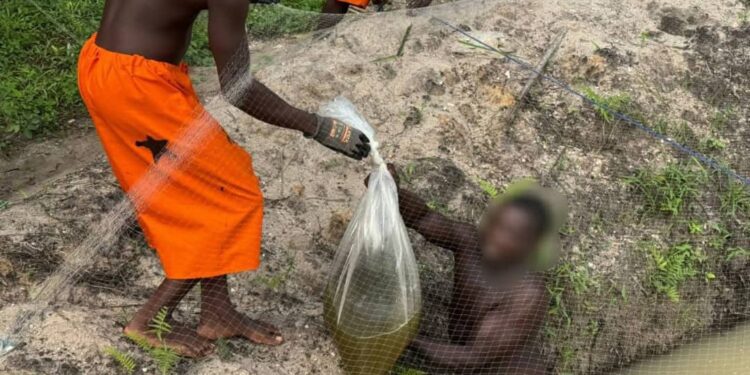
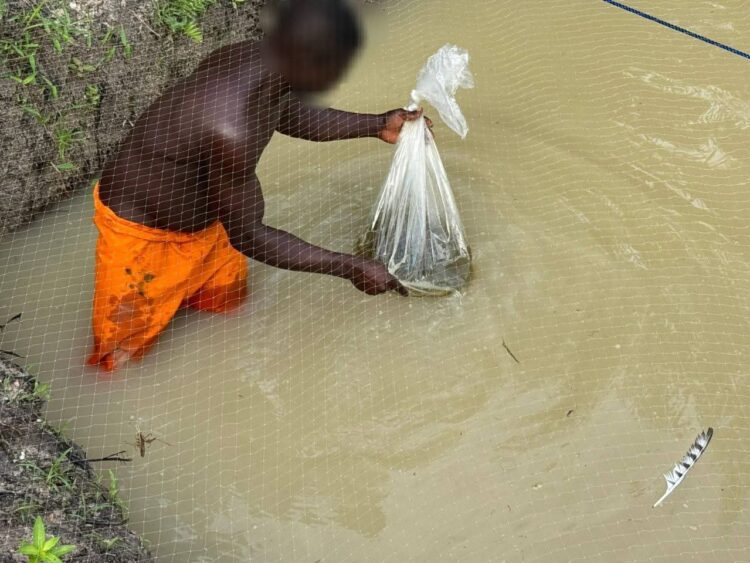
The project was started with 1,000 fish fingerlings, comprising 500 tilapia and 500 catfish. These fingerlings were put into two newly constructed ponds inside the prison premises. These species were carefully selected for their adaptability to the local climate and their high nutritional value, making them ideal for both consumption and training purposes.
The fingerlings were generously donated by George Boamah, an agri-consultant and philanthropist based in Obuasi, Kyekyewere. His contribution played a vital role in ensuring the project became a success.
In his delivery, he highlighted the importance of communal participation in development. Spearheading the initiative is the Officer-in-Charge of the Obuasi Local Prison, CSP Francis D.K. Deku.
Under his directive, the two functional fish ponds were constructed, laying the foundation for what is expected to become a sustainable food production system. CSP Deku also led efforts to engage local stakeholders, securing essential materials and support from the surrounding community.
According to prison officials, the aquaculture project is currently in its pilot phase. This stage will allow for close monitoring of fish growth, feeding practices, and water management systems, ensuring that the prison builds the necessary expertise to scale the operation effectively. Authorities believe that the lessons learned during this phase will inform future expansion and replication across other correctional facilities.
The initiative forms part of the broader Kitchen Support Program introduced by the Director General of Prisons. This program seeks to reduce reliance on external food supplies by encouraging internal agricultural production across prisons in the country. By integrating aquaculture into its operations, the Obuasi Local Prison is positioning itself as a model for innovation within the correctional system.
The kitchen support program seeks to boost food self-sufficiency, improving inmate nutrition and fostering rehabilitation. The initiative focuses on establishing agricultural projects, notably farming, to supplement standard meals and reduce reliance on state funding.
Aside from food production, the project encompasses a robust rehabilitative component. Inmates, while undergoing the fishing activities, will also gain practical skills in aquaculture, a skill that holds economic value and can support their reintegration into society after serving their sentence.
Officials emphasize that such programs are essential in shifting the perception of prisons from punitive institutions to centers of reform and opportunity. The aquaculture initiative also aligns with the “Think Prisons 360” agenda, which encourages an overall transformation of the prison system.
This vision prioritizes sustainability, productivity, and rehabilitation, aiming to create an environment where inmates can develop skills, contribute meaningfully, and prepare for life beyond confinement.
Community members and stakeholders have praised the initiative, describing it as a forward-thinking solution to longstanding challenges in prison management. The involvement of local partners not only strengthens the project’s foundation but also fosters a sense of shared responsibility for rehabilitation and development.
As the fish begin to mature in their new environment, expectations are high for a successful harvest that will supplement inmate meals with fresh, protein-rich food. If successful, the project could significantly reduce feeding costs while improving dietary quality within the prison.
The Obuasi Local Prison’s aquaculture project represents more than just a farming venture—it is a symbol of innovation, collaboration, and hope. By investing in sustainable practices and human development, the facility is setting a precedent for how correctional institutions can evolve to meet modern challenges while prioritizing dignity and rehabilitation.
With careful management and continued support, the initiative is poised to become a foundation of the prison’s processes and the pioneer for similar programs to be initiated in other prisons across the country.