

Judge Orders Defense Lawyers to Prove his innocence
By Prince Ahenkorah
On a humid morning in mid-April last year, police officers swept into the Samreboi concession, a tract of land in Ghana’s Western Region rich with mineral deposits. What they found was not a small-scale operation but an industrial-scale extraction site: excavators clawing at the earth, stockpiles of equipment, and workers who, when questioned, could not produce the required licenses.
When the two-day special operation concluded on April 17, 2025, authorities had arrested 29 people. They had also seized weapons, explosives, mining machinery, vehicles, and cash totaling 157,000 Ghana cedis about $10,140.
The scene bore the hallmarks of galamsey, the informal and often destructive illegal mining that has poisoned rivers and denuded forests across the country.
But this raid had an added dimension. The concession belonged to Akonta Mining Limited. And Akonta Mining, according to court documents, is controlled by Bernard Antwi Boasiako.
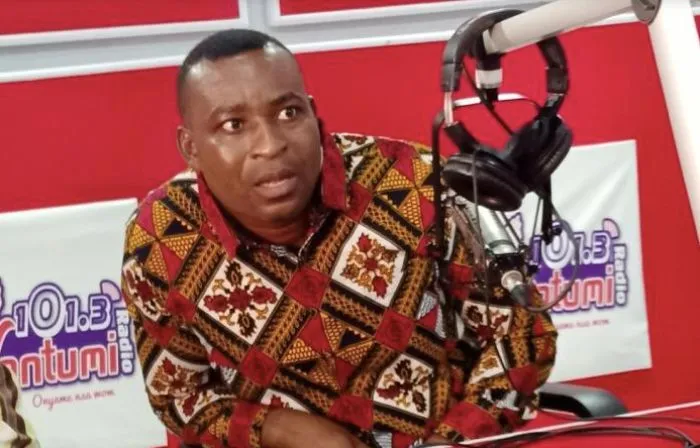
Boasiako, 49, is better known to Ghanaians as Chairman Wontumi, the pugnacious and influential Ashanti Regional chairman of the opposition New Patriotic Party. His name carries weight in political circles. Now, it is also attached to criminal charges that accuse him of using his mining concession not for lawful extraction, but as a staging ground for illegal operations.
On Monday, a High Court judge in Accra ruled that the evidence gathered by prosecutors is strong enough to demand an answer.
“A Rebuttable Presumption”
Justice Audrey Kocuvie-Tay delivered a pointed ruling: Bernard Antwi Boasiako and Akonta Mining Limited must open their defense against charges of assigning mineral rights without ministerial approval and facilitating unlicensed mining.
The decision came after Boasiako’s legal team, led by Andy Appiah-Kubi, filed a motion arguing that prosecutors had failed to establish a case a standard maneuver in Ghana’s legal system, essentially asking the judge to halt the trial before the defense must present its side.
Justice Kocuvie-Tay was not persuaded.
“From the evidence presented,” she said, “there is a rebuttable presumption that the first and third accused may have committed the offenses as charged.”
The “first accused” is Boasiako. The “third” is his company. The second accused, Kwame Antwi, a director of Akonta Mining, remains at large and is believed to be outside the country. Boasiako has told the court he has had no contact with Antwi and has exercised full control over the company since its registration in 2010.
The ruling does not establish guilt. But it signals that the prosecution, led by Deputy Attorney General Dr. Justice Srem-Sai, has presented enough — witness testimony, physical evidence, and documentation — to clear the low bar of a prima facie case. The burden now shifts to Boasiako and his company to respond.
The allegations against Boasiako hinge on a single act: granting access.
According to the charge sheet filed on Oct. 6 and signed by Attorney General Dr. Dominic Ayine, Boasiako is accused of allowing third parties to mine within his Samreboi concession without obtaining the legally required approval from the minister responsible for mines.
The evidence presented by prosecutors traces a direct line from the men arrested on the concession to Boasiako himself.
During investigations following the April raid, one of the arrested individuals, Michael Ayisi Gyedu, identified his supervisor as Henry Okum, a 44-year-old from Krobo Odumase. When questioned, Okum did not dispute his role. He told investigators that in September 2024, he had approached Boasiako personally to seek permission to operate within the concession. Boasiako, according to Okum’s account, granted it.
What Boasiako did not do, prosecutors allege, was secure the necessary approval from the minister a requirement enshrined in Ghana’s mining laws to prevent exactly the kind of unregulated activity that police discovered months later.
Boasiako has pleaded not guilty. His defense team has not yet indicated what arguments they will present.
The case has unfolded against the backdrop of Ghana’s long and fitful struggle against galamsey. Successive governments have launched task forces, military operations, and public campaigns to curb illegal mining, with limited success.
The environmental toll is visible: rivers once clear run brown with sediment; vast stretches of forest have been cleared; communities dependent on agriculture watch their water sources disappear.
But the fight has always been complicated by the involvement of powerful interests politicians, businessmen, and traditional leaders who profit from the trade or protect those who do.
The Akonta Mining case offers a rare glimpse into that intersection of power and extraction. The items seized from the Samreboi concession the weapons, the explosives, the machinery are now evidence. The prosecution has indicated it will seek a forfeiture order for all of them at the conclusion of the trial.
For now, the immediate question is whether Boasiako will take the stand or exercise his right to remain silent under Article 19(10) of Ghana’s constitution, a right the judge reminded him of during Monday’s hearing.
His lawyer, Andy Appiah-Kubi, said the defense team would request a copy of the full ruling before deciding whether to appeal.
The next hearing is scheduled for March 26.