

By Kwesi B. Randolph Johnson
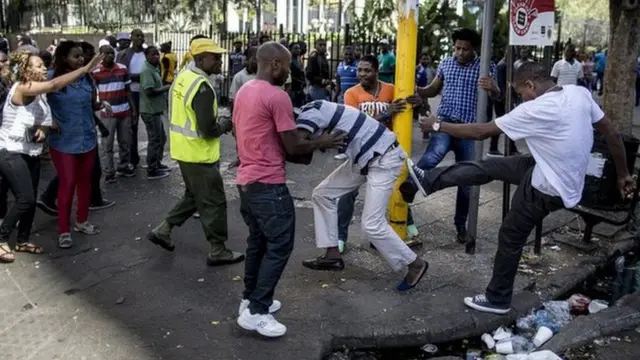
South Africa occupies a unique place in Africa’s history. It is a nation whose struggle against apartheid inspired the world and whose transition to democracy became a symbol of reconciliation, justice and hope. It is therefore painful to witness the growing tide of xenophobia that threatens to undermine these hard-earned values.
There is no denying that South Africa faces serious challenges. High unemployment, crime, inequality, pressure on public services and slow economic growth are genuine concerns that deserve urgent attention. Every sovereign nation has the right, and indeed the responsibility to regulate its borders and enforce its immigration laws. However, these responsibilities belong to the state and must be exercised lawfully, fairly and with respect for human dignity.
Unfortunately, some political actors and activists have portrayed foreign nationals as the primary cause of South Africa’s socio-economic problems. While this message may resonate with those frustrated by years of hardship, it does not withstand careful scrutiny. The country’s challenges are rooted in complex issues including corruption, poor governance, weak economic growth, skills shortages and longstanding structural inequalities. Blaming migrants does not solve these problems.
As the saying goes, “When the wrong person is blamed, the real problem remains unsolved.”
Across the world, history has shown that economies grow through sound leadership, investment, education, innovation and the rule of law; not by turning neighbours into enemies. When businesses are looted, workers are intimidated and communities are divided because of nationality, everyone loses. Investor confidence declines, tourism suffers, local businesses close, and jobs disappear. Such actions damage the very economy they claim to protect.
Many foreign nationals living in South Africa are not strangers to the African family. They are fellow Africans who came seeking safety, education, employment or opportunities to contribute their skills. Many operate small businesses, pay rent, employ local residents and contribute to economic activity. Like any society, there may be individuals who break the law, but criminality should be addressed through law enforcement, not through collective punishment and vigilantism based solely on nationality.
South Africans should also remember an important chapter in their own history. During the struggle against apartheid, many African countries, including Botswana, Ghana, Nigeria, Tanzania, Zambia and others opened their doors to South African exiles, students and freedom fighters. They provided refuge, education, diplomatic support and solidarity when it was most needed. That spirit of African unity should not be forgotten.
As Archbishop Desmond Tutu wisely observed, “My humanity is bound up in yours, for we can only be human together.” Likewise, Nelson Mandela reminded the world that “To deny people their human rights is to challenge their very humanity.” These words remain relevant today.
It is interesting to hear from the rumour mills that Ms. Jacintha Ngobese, the leader of tge March to March Movement is to fly outside the country for medical treatment. This could demonstrate the symbiotic nature of the global village.
South Africa’s healthcare system itself, like many public institutions, undoubtedly faces significant pressures. The solution is to strengthen hospitals, improve management, invest in infrastructure, recruit and retain healthcare professionals, and ensure efficient service delivery. It is not to intimidate or exclude patients because of where they were born.
Healthcare should never become a battleground for xenophobia.
Those who genuinely wish to build a stronger South Africa should channel their energy into demanding accountable leadership, fighting corruption, creating employment opportunities, improving education and supporting policies that stimulate sustainable economic growth.
These are the reforms that build nations. Hatred does not.
The reality is that today’s politicians and activists will one day leave the public stage. Yet millions of South Africans and foreign nationals will continue living together, working together, worshipping together and raising families together in South Africa.
Their shared future depends not on division, but on justice, lawful governance, economic opportunity and mutual respect.
Ubuntu teaches us, “I am because we are.” It reminds us that our humanity is intertwined.
A nation that embraces this principle is stronger, safer and more prosperous than one divided by fear and suspicion.
South Africa does not need more enemies within its borders. It needs visionary leadership, inclusive economic growth, effective governance and the courage to confront its real challenges. Xenophobia may generate headlines and political slogans, but it cannot create jobs, repair hospitals, improve schools or grow the economy.
South Africa’s future will not be secured by driving people away. It will be secured by building a nation where justice, opportunity, accountability and humanity prevail over fear, anger and division.
The choice before South Africa is therefore clear: build bridges or build barriers. History will judge which path truly served the nation.