

TNR Files
On July 27, in a Manhattan federal courtroom, Judge Arun Subramanian handed down a sentence that, on paper, sounds like a victory for the U.S. justice system: 85 months in federal prison, two years of supervised release, and a forfeiture order for $10.1 million.
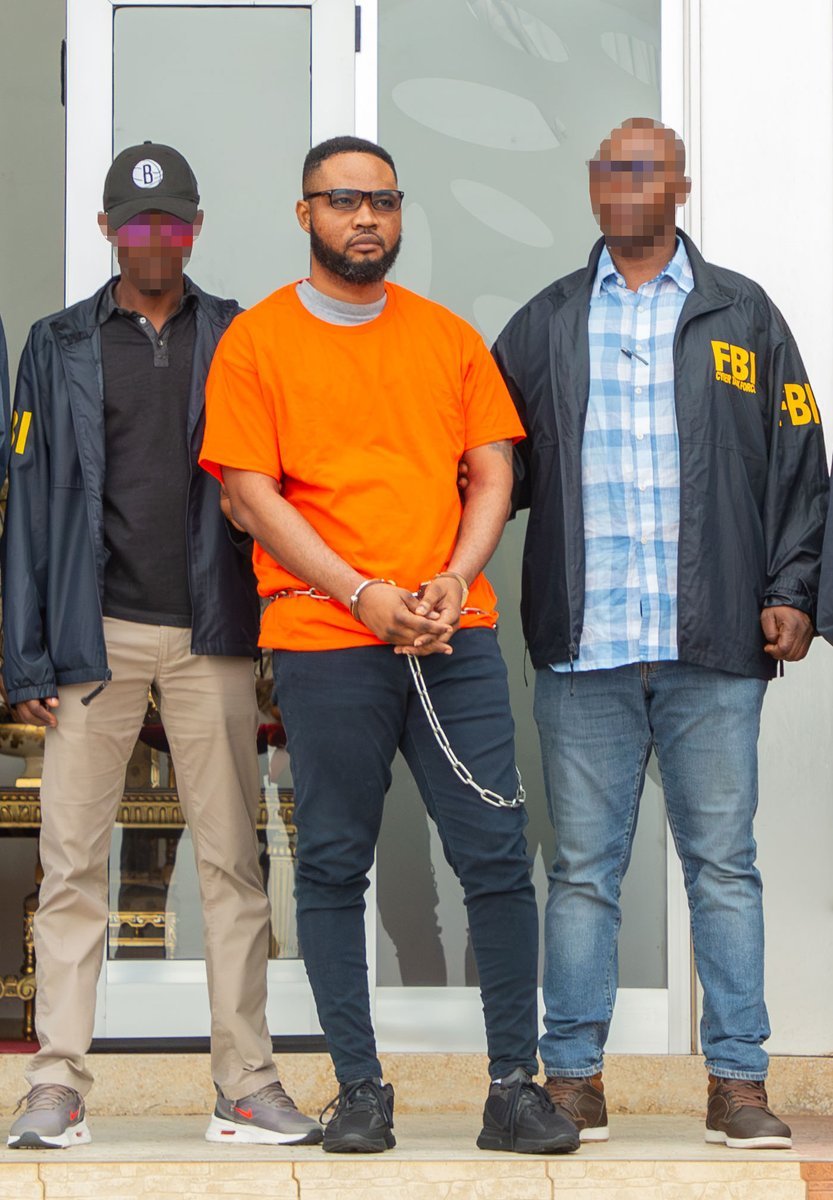
The defendant, 41-year-old Derrick Van Yeboah, pleaded guilty in March to conspiracy to commit wire fraud a single count for a man prosecutors say orchestrated a transnational criminal enterprise that drained more than $100 million from American victims.
But the math tells a more unsettling story. For every month Van Yeboah will spend behind bars, his syndicate stole roughly $1.18 million. For every dollar he was ordered to forfeit, his network laundered ten more into West African accounts, likely beyond the reach of U.S. restitution efforts.
And for the dozens of victims elderly women convinced they had found love, small-business owners tricked into wiring payroll to “CEOs” the sentence is less an ending than a hollow epilogue to a tragedy that federal authorities are still struggling to comprehend.
Van Yeboah, also known as “Van,” was not a lone wolf. Court documents describe him as one of the leaders of a sophisticated Ghana-based syndicate that operated with the precision of a corporation except its product was human loneliness.
The operation ran two parallel schemes: romance scams and business email compromise (BEC). The first preyed on the heart; the second, on the balance sheet.
The romance fraud, as described by prosecutors, was meticulously scripted. Victims including many elderly men and women were drawn into months-long online relationships.
Fraudsters cultivated intimacy, shared fabricated personal histories, and, when the emotional bond was forged, pivoted to requests for money. The funds were framed as emergency medical bills, funeral costs, or in one particularly brazen 2024 case the release of gold and diamonds from Italy.
According to the U.S. Attorney’s Office for the Southern District of New York, Van Yeboah personally orchestrated a scheme between 2019 and 2020 that convinced women in Ohio and Delaware to wire approximately $4.2 million into accounts controlled by his syndicate.
In the 2024 case, a North Carolina man transferred roughly $123,000 after Van Yeboah falsely claimed he needed cash for a parent’s funeral and the release of precious metals. The man believed he was helping a friend in crisis; in reality, he was funding a criminal enterprise whose only loyalty was to its own ledger.
The syndicate’s second pillar business email compromise was equally destructive. Fraudsters impersonated company executives, often using spoofed email addresses that looked almost identical to legitimate corporate domains. Businesses, from small suppliers to mid-sized firms, were duped into transferring funds to accounts that appeared to belong to vendors or partners. The money vanished into a labyrinth of shell accounts, cryptocurrency mixers, and cash hauls before crossing the Atlantic.
In total, the network stole and laundered more than $100 million from dozens of victims. The funds, investigators say, ultimately settled in West Africa a region that has become a burgeoning hub for cyber-fraud syndicates, yet one that remains woefully under-equipped to prosecute them.
Van Yeboah was extradited from Ghana to the United States on August 7, 2025, after a joint operation that involved the U.S. Department of Justice, Ghana’s Office of the Attorney-General, the Economic and Organised Crime Office (EOCO), the Ghana Police Service INTERPOL Unit, the Cyber Security Authority, and the National Intelligence Bureau. It was a rare moment of transatlantic cooperation a diplomatic feat that, in another context, would be hailed as a model for international law enforcement.
Yet the logistics of the extradition also expose the gap between the scale of these crimes and the capacity to punish them. Van Yeboah was captured in 2025 for crimes that date back to 2019. For six years, his network continued to operate, ensnaring new victims while U.S. and Ghanaian agencies negotiated the legal labyrinth of extradition.
The 85-month sentence just over seven years means Van Yeboah could be released by 2033, at age 48. By that time, the U.S. Attorney’s Office estimates, the syndicate he helped lead will have likely evolved, rebranded, or simply been replaced by new players.
In a statement after the sentencing, U.S. Attorney Jay Clayton offered a stark assessment: “Romance scammers do not simply steal money; they weaponize trust. Van Yeboah and his co-conspirators exploited trust, loneliness, and legitimate business relationships to steal more than $100 million.”
Clayton’s framing is apt, but it also reveals a paradox. The U.S. legal system treats these crimes as fraud a property offense but the victims suffer the trauma of emotional betrayal. The elderly woman who emptied her retirement account for a “lover” she never met is not merely a financial victim; she is a casualty of a system that has failed to regulate the digital frontier where intimacy and commerce collide.
Prosecutors held Van Yeboah personally responsible for more than $10 million in fraudulent proceeds, but the forfeiture order of $10,149,429.17 is largely symbolic. Most of the money has been laundered, transferred, or spent. The victims, many of them retired and financially decimated, will see little, if any, restitution.
Van Yeboah’s case is not an anomaly; it is a case study. In 2023, the FBI’s Internet Crime Complaint Center reported that romance scams alone cost Americans more than $1.3 billion a figure that has likely risen since.
BEC scams, meanwhile, were responsible for over $2.9 billion in losses. The United States has made strides in prosecuting individual kingpins, but the infrastructure of these networks the money mules, the tech-savvy enablers, the corrupt banking nodes remains largely intact.
The 85-month sentence sends a signal, but it is a muted one. For the women in Ohio and Delaware, for the man in North Carolina, and for the dozens of businesses that watched their working capital evaporate, the punishment may feel like a distant abstraction. Their money is gone. Their trust is shattered. And the syndicate, with its $100 million war chest, has already reinvested in its next campaign.
Van Yeboah will serve his time in a U.S. federal prison, but the architecture of his enterprise the scripts, the shell accounts, the global network of facilitators will outlast him. As Clayton noted, the Justice Department remains “committed to pursuing international criminal organizations that target Americans.”
But until the U.S. and its allies address the root vulnerabilities aging populations isolated online, businesses with weak cybersecurity protocols, and a global financial system that makes money laundering alarmingly easy the romance scam will remain what it has always been: a crime that, for the perpetrators, pays far better than the price of getting caught.