

By Nelson Ayivor
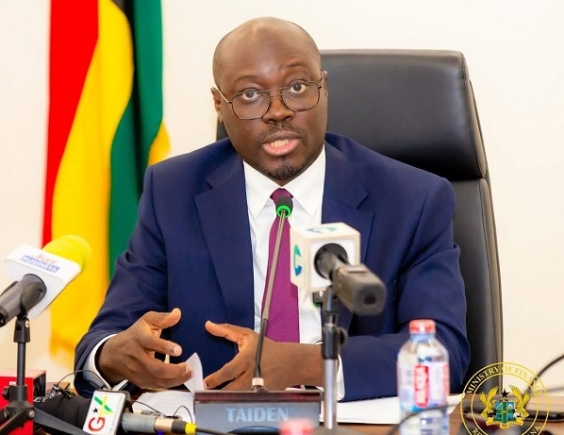
While presenting the 2026 Budget Statement to Parliament on Thursday, November 13, Ghana’s Finance Minister, Dr. Cassiel Ato Forson delivered a candid assessment of Ghana’s energy sector describing it as a persistent source of fiscal risk but noting that recent reforms under the Energy Sector Recovery Programme (ESRP) have begun to yield tangible improvements.
Dr. Forson said persistent structural weaknesses in the energy sector continued to drive financial shortfalls, despite a year of significant policy actions.
“Mr. Speaker, the 2025 Budget flagged chronic energy-sector weaknesses driving rising shortfalls: poor collections, high system losses, elevated generation costs from limited competition and renewables, non-cost-reflective tariffs, weak compliance with the Cash Waterfall Mechanism (CWM), SOE inefficiencies, and unwarranted subsidies.”
The Minister’s statement underscored the systemic inefficiencies that have long undermined fiscal stability, often resulting in mounting arrears and liquidity challenges across the electricity value chain.
A major highlight of the Finance Minister’s presentation was the progress made under the ESRP in enforcing the Cash Waterfall Mechanism (CWM), a framework designed to ensure fair and transparent allocation of revenues collected from electricity sales across the value chain.
“Mr. Speaker, under the Energy Sector Recovery Programme (ESRP), enforcement of CWM has improved markedly: monthly declarations rose from about GH₵950 million in 2024 to GH₵1.7 billion by August 2025.”
This sharp increase, he said, reflected stronger compliance by sector players and a more disciplined approach to revenue management.
Analysts view this as a sign of improving operational transparency, though questions remain about the sustainability of such gains without deep tariff and efficiency reforms.
To reinforce fiscal discipline, the government has imposed tighter oversight on State-Owned Enterprises (SOEs) within the energy sector.
“Mr. Speaker, to align SOEs with fiscal consolidation, Government now requires prior approval and commitment authorisation for SOE spending and has halted subsidies to selected private operators.”
The measure is expected to reduce fiscal exposure from inefficient or unsanctioned SOE spending, which has historically contributed to rising public debt and arrears in the sector.
In a bid to tackle inefficiencies in billing and collections, Cabinet has approved a Private Sector Participation (PSP) strategy for the Electricity Company of Ghana (ECG).
“A Transaction Advisor procurement is under way (completion targeted end-November 2025); concession contracts are expected by Q3 2026.”
This marks one of the most significant structural changes since the unsuccessful concession attempt in 2019.
The government hopes that engaging private partners will improve operational efficiency, boost revenue collection, and reduce technical and commercial losses, which have remained above 25 percent.
Strengthen Power Sector Stability:
Dr. Forson further highlighted that the government has made progress in restoring liquidity within the power sector through consistent payments and improved coordination with international partners such as the World Bank.
“Mr. Speaker, the Ministry of Finance agreed on a payment plan with the World Bank to restore drawn Standby LCs and clear monthly gas invoices.
“From January–August 2025, US$384.6 million has been paid, reducing LC drawdowns to US$210.5 million; full restoration is targeted by end-April 2026.”
In addition to clearing arrears, the government has arranged increased gas deliveries to the power sector by about 70 million standard cubic feet per day (MMscf/d) to reduce reliance on expensive liquid fuels.
These efforts have been complemented by significant payments to Independent Power Producers (IPPs).
According to the Finance Minister, about US$1.5 billion was disbursed in 2025 to honour renegotiated Power Purchase Agreements (PPAs), reduce legacy arrears, and maintain current payments to key gas partners such as OCTP.
ESRP Reforms Narrow Projected Shortfalls by US$600 Million
Stable Power Supply:
Perhaps the most encouraging development in the energy sector, Dr. Forson noted, was the measurable fiscal impact of the reforms implemented under the ESRP.
“Mr. Speaker, ESRP financial modelling in March 2025 projected a business-as-usual (BAU) shortfall of US$2.2 billion for 2025. The latest update revises this down to US$1.6 billion, reflecting gains from the reforms already implemented.”
The reduction of approximately US$600 million in projected shortfalls demonstrates tangible progress toward fiscal sustainability in the energy sector.
However, the Finance Minister cautioned that continued vigilance is necessary to prevent the re-emergence of inefficiencies.
The 2025 budget signals the government’s determination to consolidate progress while addressing the deep-rooted financial and operational issues within Ghana’s energy sector.
As the 2026 fiscal year begins, stakeholders will be watching closely to see whether these commitments translate into consistent progress, ensuring that Ghana’s power sector becomes both a driver of growth and a pillar of fiscal stability.