


By Godson Bill Ocloo
The recent escalation involving U.S–Israel strikes on Iran marks a dangerous phase in Middle East geopolitics. While geographically distant from West Africa, its consequences are not remote.
In an interconnected global system, conflicts of this magnitude generate economic, diplomatic, and security ripple effects that reach far beyond their immediate theatre. As a security analyst, I view this development primarily through the lens of national resilience and citizen protection.
Understanding the Escalation
The strikes, which began in late February 2026, have been described by Washington and Tel Aviv as targeted operations intended to degrade Iran’s strategic military and nuclear-linked infrastructure. The stated objectives revolve around deterrence, limiting missile capabilities, and reinforcing regional security balances.
Iran’s response has included calibrated military signaling and diplomatic condemnation, framing the attacks as violations of sovereignty. Although the confrontation remains below full-scale war, escalation risks are real, particularly given Iran’s network of regional alliances and proxy relationships.
In security analysis, the greatest risk lies not only in direct confrontation but in unintended escalation.
Ghana’s Travel Advisory: A Necessary Precaution
Importantly, Ghana’s Ministry of Foreign Affairs has already issued a travel advisory regarding the evolving situation. This is a prudent and responsible step.
Travel advisories serve three critical security functions:
• Risk Awareness: Informing citizens about evolving threats
• Preventive Protection: Discouraging non-essential travel to volatile areas
• Consular Preparedness: Enabling diplomatic missions to activate monitoring and emergency protocols
In times of geopolitical volatility, such advisories are not political statements; they are instruments of citizen protection.
Economic Ripple Effects on Africa
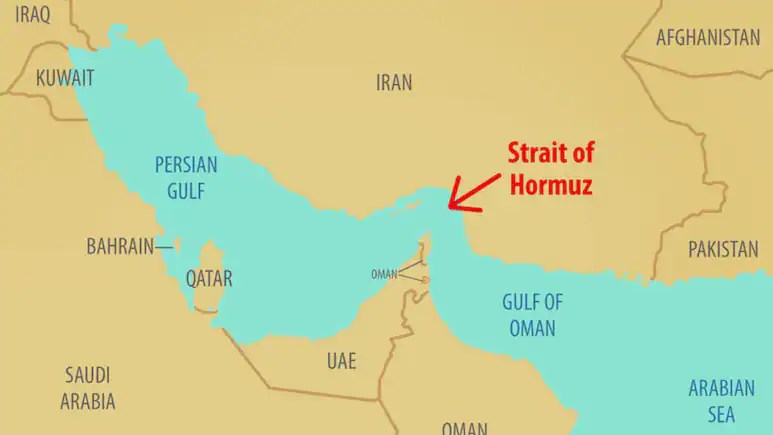
Africa’s vulnerability lies in economic exposure rather than military entanglement. Should tensions disrupt strategic maritime corridors such as the Strait of Hormuz or the Red Sea, the implications would include:
- Oil price volatility
- Increased shipping insurance costs
- Higher freight charges
- Delays in global supply chains
For many African economies, these shocks translate directly into domestic inflation and fiscal strain.
What This Means for Ghana
Fuel Prices and Household Impact
Rising global crude prices would result in higher pump prices domestically. Transportation costs would increase, influencing food prices and consumer goods. The impact would be felt directly by households, particularly lower-income families.
Foreign Exchange and Fiscal Pressure
Higher import bills for fuel increase demand for foreign currency. This places pressure on Ghana’s foreign exchange reserves. If government intervenes through subsidies or price stabilization mechanisms, fiscal burdens may rise.
Trade and Shipping
Ghana’s economy relies heavily on maritime trade. Any disruption in shipping routes will increase freight rates and insurance premiums, raising the cost of imports from fuel to industrial inputs. Security today is economic as much as it is military.
Security and Human Dimensions
There are Ghanaian nationals living, studying, and working across the Middle East. The travel advisory indicates that Accra is monitoring developments closely.
Key security measures likely include:
- Enhanced consular communication
- Registration of nationals for emergency contact
- Contingency evacuation planning
- Continuous diplomatic monitoring
From a broader security perspective, Ghana must also monitor indirect risks
- Economic stress that could generate domestic social tension
- Geopolitical polarization pressures
- Potential proxy or radicalization narratives influenced by global developments
Ghana’s Diplomatic Posture
Ghana has traditionally maintained a balanced, non-aligned foreign policy orientation. In crises such as this, restraint and support for dialogue remain the most strategically sound positions.
It is unlikely that Ghana will align itself with any power bloc in this confrontation. Rather, its focus will remain on peace advocacy, multilateral diplomacy, and citizen protection.
Strategic Lessons for Ghana
This crisis reinforces several national security priorities
- Strengthening strategic petroleum reserves
- Accelerating energy diversification and renewable investment
- Enhancing foreign exchange resilience
- Institutionalizing rapid-response travel advisory systems
- Protecting diaspora communities through proactive diplomacy
- Resilience, not reaction, must define policy.
Risk Forecast Matrix: Future Scenarios
- High-Risk Scenario (Escalation and Regional Spillover)
- Triggers: Direct U.S–Iran confrontation, expansion of proxy warfare, disruption of maritime chokepoints.
Implications
- Sharp oil price increases
- Severe inflation pressure
- Supply chain disruptions
- Moderate-Risk Scenario (Most Likely Outcome)
- Limited military exchanges and diplomatic containment.
Implications: - Gradual fuel price increases
- Rising shipping costs
- Forex pressure on import-dependent economies
- Low-Risk Scenario (Diplomatic De-escalation)
- Successful multilateral mediation.
Implications: - Temporary economic volatility followed by stabilization.
Strategic Indicators to Monitor
- Naval deployments near strategic maritime routes
- Global crude oil supply forecasts
- Diplomatic negotiations between major powers
- Activities of regional militant proxy networks
Early warning intelligence is more valuable than reactive response.
Closing Analytical Reflection
Ultimately, the Middle East escalation is a reminder that security in the 21st century is no longer defined by geographic distance but by economic and geopolitical interdependence. Wars that begin in one region now transmit their effects through energy markets, trade systems, migration patterns, and digital information networks.
For Ghana and Africa, the strategic lesson is clear. National security is no longer only about defending borders. It is about building economic and institutional resilience against external shocks.
The issuance of Ghana’s travel advisory is therefore not merely a diplomatic measure but a reflection of modern security governance. It represents a shift toward preventive security management rather than reactive crisis response.
In the evolving global order, Africa must strengthen its strategic autonomy, deepen regional cooperation, and maintain balanced international partnerships.
Peace, stability, and development will ultimately depend on how well nations anticipate risk before it becomes crisis.
The writer is executive director, Africa Centre for Human Security and Emergency Management (ACHSEM)