

By Phillip Antoh
The Mahama administration is placing a high-stakes bet on connectivity. With a cabinet directive to the National Communications Authority (NCA), the government has set an ambitious target: 70% 5G population coverage by Ghana’s 70th Independence anniversary in March 2027. The timeline is aggressive. The politics are intricate. And the stakes extend far beyond faster download speeds.
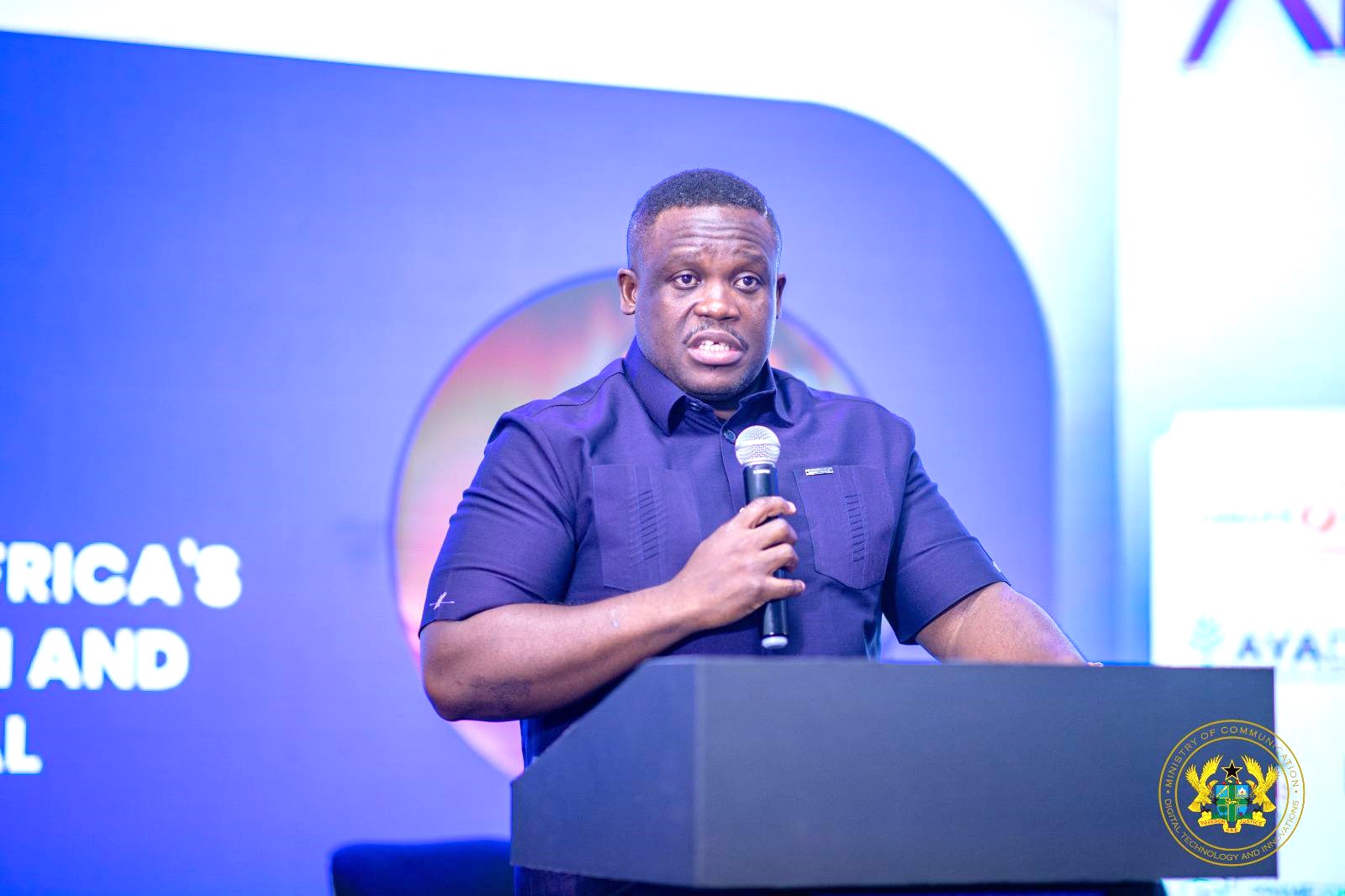
Speaking at the NCA’s 30th anniversary launch in Accra on 25 February, Communications Minister Samuel Nartey George unveiled what insiders describe as a “policy pivot” away from the previous administration’s wholesale-only model toward a hybrid approach combining wholesale and network-led operations.
“Our aim is to reach 70% of 5G population density coverage by our nation’s 70th independence celebration next year,” George announced. “The regulator has a clear task ahead. You have less than a year.”
Behind the minister’s public optimism lies a complex technical and political arithmetic. Sources close to the NCA indicate that the accelerated timeline will require a spectrum auction in the coming months a process that typically takes longer than the government appears willing to allow.
The regulator now faces a dual mandate: managing the existing wholesale model (under which NextGen InfraCo holds the national 5G licence) while simultaneously accommodating network-led operations from mobile network operators who have long chafed at the exclusivity of the previous arrangement.
Industry insiders suggest the policy shift represents a delicate compromise—one that preserves the wholesale infrastructure while allowing MTN, Telecel, and others to deploy their own networks in areas where the national rollout lags.
Acting NCA Director General Rev. Ing. Edmund Fianko acknowledged the magnitude of the task. Speaking to staff, he emphasised the transition from “building access” to developing “digital power” a phrase that signals the government’s broader ambitions for the sector.
But the infrastructure requirements are formidable. 5G networks demand dense fibre optic backhaul and significant capital investment. With less than a year to achieve 70% coverage, the timeline leaves little room for the regulatory approvals, right-of-way negotiations, and construction that typically accompany such rollouts.
Board Chair Mavis Ampah offered historical perspective, recalling an era when only three of every thousand Ghanaians had internet access. “Several important firsts were achieved, not only for Ghana, but for the region,” she noted, referencing the bold decision to issue two licences to compete with Ghana Telecom a move that drew political fire but ultimately liberalised the sector.
For the NDC government, the 5G target is as much political as technological. Independence Day 2027 offers a symbolic deadline 70% coverage for 70 years of nationhood. Missing that mark would provide political ammunition to opponents who question the administration’s delivery capacity.
Yet the timeline also reflects genuine competitive pressures. Regional neighbours are moving rapidly on 5G deployment, and Ghana risks falling behind in the digital economy race. As George framed it: “If the last 30 years focused on building access, the next 30 should concentrate on building digital strength.”
Industry observers note several unresolved issues. The relationship between the wholesale operator and new network-led deployments remains to be clarified. Pricing for spectrum always a contentious issue has yet to be announced. And the capacity of mobile operators to invest in parallel infrastructure during a challenging economic period is far from certain.
There is also the question of the previous administration’s 5G arrangements. While George’s announcement represents a policy shift, the government has not explicitly repudiated the wholesale model. The emerging hybrid approach suggests an effort to build consensus or at least avoid outright confrontation with existing licence holders.
The minister’s rhetoric reached beyond technical targets. “We have the ability to innovate, compete on a global scale, and determine our own technological future,” he declared. “This is the Ghana we need to create.”
For the NCA, now celebrating three decades of existence, the 5G mandate represents both opportunity and risk. Success would cement its reputation as a forward-looking regulator. Failure or even delay would invite scrutiny of its capacity to execute.
As one industry insider put it: “The target is achievable, but only if everything goes right. In Ghana, things rarely go entirely right.”
The clock is now ticking. By March 2027, Ghanaians will know whether 70% of them can access 5G and whether the NDC’s digital gamble has paid off.