

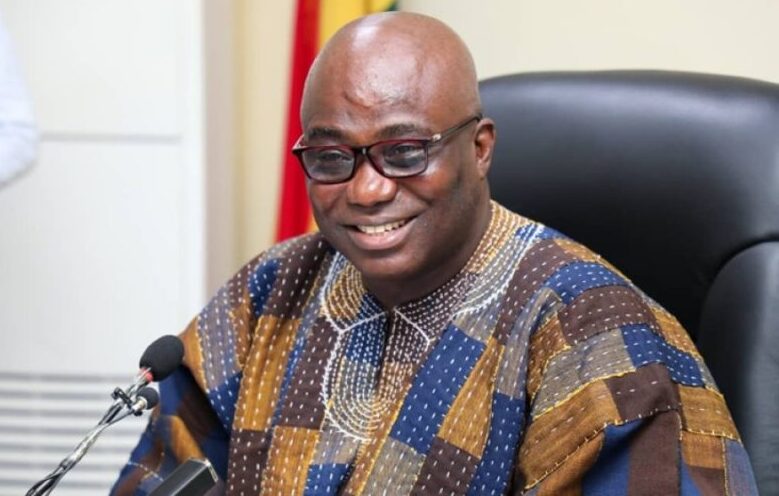
But Eric Opoku Announced 40,000acres Tomato Farms On standby
By Philip Antoh
Ghana’s tomato markets are breathing a tentative sigh of relief or so the government would have them believe.
Following Burkina Faso’s surprise ban on fresh tomato exports, announced on March 16, anxious traders and consumers have been waiting for the inevitable price spike.
But Food and Agriculture Minister Eric Opoku is betting that a domestic production push can avert what many see as an impending supply crisis.
“There will be no shortage,” Opoku assured reporters in Accra on Wednesday, citing the government’s Feed Ghana initiative launched in 2025. Under the programme, he said, 81 communities have been supported to cultivate 1,000 acres of tomatoes. The target for this year: 40,000 acres.
That forty-fold leap, if realised, would represent a dramatic shift for a country that has long relied on imports from its northern neighbour to bridge the gap between local harvests. Burkina Faso’s ban, ostensibly aimed at securing raw material for its own processing factories, has laid bare the fragility of that dependency.
Opoku’s strategy has two prongs: scaling up commercial production through the Feed Ghana scheme, and encouraging backyard gardening to supplement household supply. Processing centres have been established near the University of Ghana bypass, serving as a farmers’ market where fresh tomatoes can be sold directly to buyers.
“Now is the perfect time to boost this campaign,” the Minister said, urging families to cultivate their own gardens.
But the numbers invite scrutiny. The jump from 1,000 acres in 2025 to a planned 40,000 this year implies a massive mobilisation of land, inputs, and extension services—all within a single growing season. Even if the acreage target is met, the lag between planting and market-ready harvests means consumers may face a lean period before the new supply materialises.
Tomatoes are more than a staple; they are a political bellwether. In past years, shortages have triggered street protests and become shorthand for government incompetence in managing food security. The Burkina Faso ban, which took effect immediately, caught Ghana’s traders and processors off guard, exposing the absence of a strategic reserve or alternative import sources.
Opoku’s assurances are designed to pre-empt panic buying and price gouging. But behind the scenes, market watchers note that the timing is delicate. The ban coincides with the tail end of Ghana’s own tomato season, when local supplies typically dwindle and imports from Burkina Faso fill the gap.
The Minister acknowledged the urgency, but he did not address the logistical question of how the 40,000-acre target will be financed, irrigated, or harvested in time to meet the shortfall. Nor did he explain why the Feed Ghana initiative, launched in 2025, only now finds itself tasked with replacing the country’s primary external source of tomatoes.
For now, the government is leaning heavily on the narrative of self-sufficiency. “We will produce more than the national demand,” Opoku said, framing the ban not as a crisis but as an opportunity to accelerate local production.
Yet for the traders who line the aisles of Accra’s Agbogbloshie market, and the households who have watched tomato prices climb with each dry season, the coming weeks will be the real test. If the 40,000-acre target proves ambitious rather than achievable, the political fallout may be as hard to contain as a spoilt harvest.
“We encourage every Ghanaian to have a backyard garden,” the Minister urged. In the absence of a more concrete plan, that advice may become not just a slogan, but a necessity.