

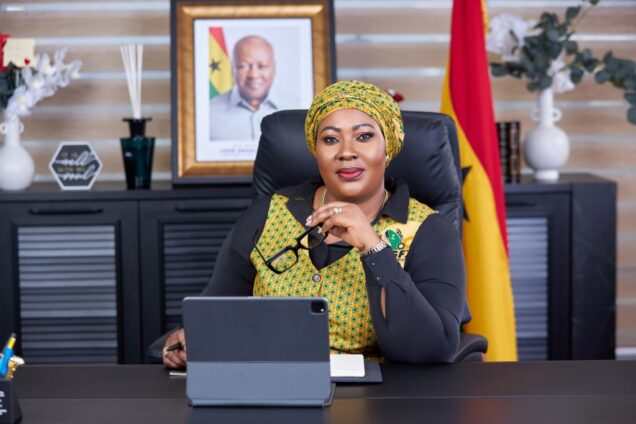
By Leo Nelson
Probe Free Zones CEO Over Remarks on Pentecost Church Chairman – AIGS Urges Prez Mahama, Cites Security Risks
The Africa Institute on Governance and Security (AIGS) has called on the Presidency to investigate the Chief Executive Officer of the Ghana Free Zones Board over alleged insults directed at the Chairman of The Church of Pentecost, warning that the incident could have wider national security implications.
In a letter dated April 24, 2026, addressed to the Chief of Staff at the Jubilee House, the policy and advocacy group said public attacks on religious leaders by state officials risk undermining social cohesion and weakening public trust in the government’s anti-galamsey campaign.
“The fight against galamsey requires unified moral and state authority. Public officers must not be seen to attack the very voices that reinforce state legitimacy in this campaign,” the Institute stated.
The letter, signed by Senior Fellow Dr Palgrave Boakye-Danquah, was also copied to the National Security Coordinator, the Minister for National Security, the Minister for Lands and Natural Resources, and the Chairperson of the Public Services Commission.
According to AIGS, the Church of Pentecost represents millions of Ghanaians, and any perceived denigration of its leadership by a public officer could create unnecessary tension between the state and faith communities.
The Institute further argued that failure to act on such conduct may signal impunity and discourage religious and civil society leaders from speaking on major national issues such as illegal mining.
It also warned of possible “youth mobilisation, counter-narratives, and information disorder” if such incidents are left unchecked.
Illegal mining, commonly referred to as galamsey, remains one of Ghana’s biggest environmental and governance challenges. The activity has been linked to pollution of major water bodies, destruction of forest reserves, land degradation, and growing public frustration over enforcement failures.
AIGS described galamsey as a “tier-one national security threat” because of its connection to water insecurity, land conflicts and illicit financial flows.
Beyond the criticism, the Institute proposed several measures to strengthen the fight against illegal mining. These include deploying financial intelligence to track sponsors of galamsey operations, establishing a vetted, multi-agency anti-galamsey task force under National Security, and using drone and satellite surveillance to monitor forest reserves and rivers.
It also called for lifestyle audits of public officials in mining districts, reforms to community mining schemes, and the creation of special galamsey courts with a 90-day case resolution target.
Among its key requests to the government, AIGS urged the Presidency to publicly communicate the outcome of any investigation into the Free Zones CEO, reaffirm protection for religious and civil society voices, and convene a National Security Council briefing to review the anti-galamsey strategy.
The latest intervention adds to growing pressure on the government to intensify the fight against illegal mining while ensuring public officials uphold standards of conduct in dealing with critics and advocacy groups.