

By Leo Nelson
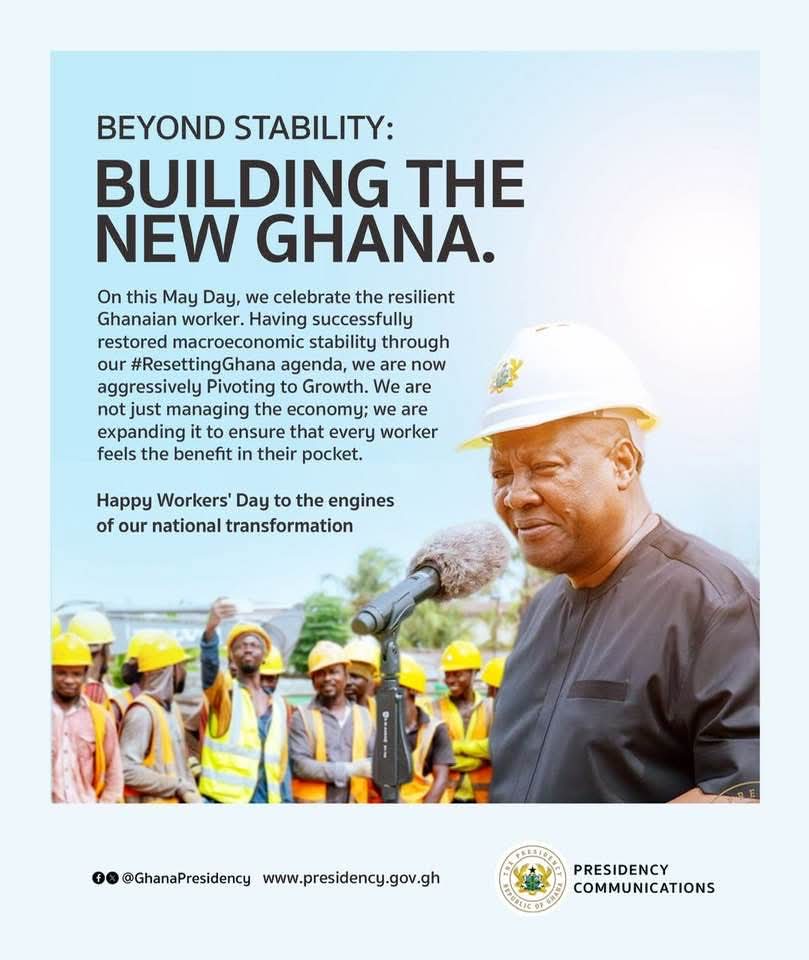
At a lively citizen engagement forum in Koforidua, President John Dramani Mahama outlined key policy decisions and governance reforms tied to his “Resetting Ghana” tour, with a strong focus on decentralization, statutory funds management, and equitable development across districts.
Addressing a diverse audience during the town hall meeting, Mahama explained the structural challenges surrounding statutory funds, including the Road Fund, District Assemblies Common Fund, and National Health Insurance allocations. According to him, existing financial regulations require that these funds maintain a capped balance, with any excess redirected into the Consolidated Fund, the central government’s main account.
President Mahama criticized how this system was previously implemented, arguing that during the tenure of the preceding administration, significant portions of these funds were routinely transferred back to Accra. This, he said, left local government authorities—particularly District Chief Executives (DCEs), with inadequate financial resources to meet development needs.
“Funds were often insufficient at the district level, What was released covered salaries, and little remained for development projects.”
Upon assuming office, Mahama said he conducted an assessment of the situation and initiated reforms aimed at strengthening fiscal decentralization. A key intervention involved restructuring the allocation of the District Assemblies Common Fund.
Specifically, he directed that 80 percent of the 5 percent allocation earmarked for district-level decentralization projects be transferred directly to the districts in order to help them implement developmental projects that will improve the lives of citizens.
This shift, he explained, has significantly improved liquidity at the local level, empowering DCEs to undertake meaningful development initiatives. He added that the impact has been so noticeable that some local officials have informally referred to him as “adwumawura,” a term implying a reliable provider of resources for work and development.
President Mahama also emphasized improvements in the disbursement schedule of funds. He contrasted the current system with past delays, noting that under the previous administration, funds could be delayed for up to three quarters within a fiscal year.
In contrast, his administration ensured quarterly releases, allowing for better planning and execution of projects. The regularity of disbursements, he said, has led to visible development outcomes across the country.
He highlighted specific directives given to district assemblies on how to utilize the funds for schools under trees,” effectively. Among these are the construction of two classroom blocks to replace makeshift structures and the building of two Community-based Health Planning and Services (CHPS) compounds to improve access to primary healthcare.
Continuity Of Legacy Projects
Beyond new projects, Mahama reiterated his campaign promise to continue and complete legacy projects initiated by previous governments. He stressed that national development should not be politicized, and that abandoning ongoing projects undermines both public trust and economic efficiency.
“I made a commitment that no project started by a previous administration would be left to deteriorate,” he said. He opined that measures have been put in place by the government, and the projects have been continued.
The government is actively working on those abandoned projects to ensure continuity and value for money. Participants at the town hall welcomed the discussion, with several community members acknowledging improvements in infrastructure and service delivery in their districts.
President Mahama affirmed his administration’s commitment to oversight and citizen participation. He encouraged communities to remain actively engaged in monitoring projects and holding local officials accountable for the use of public funds.
The “Resetting Ghana” tour continues to serve as a platform for dialogue between leadership and citizens, with a focus on rebuilding trust, strengthening institutions, and promoting inclusive development.
At the district assembly level, his message remains centered on decentralization, timely resource allocation, and a commitment to completing what has already been started.