

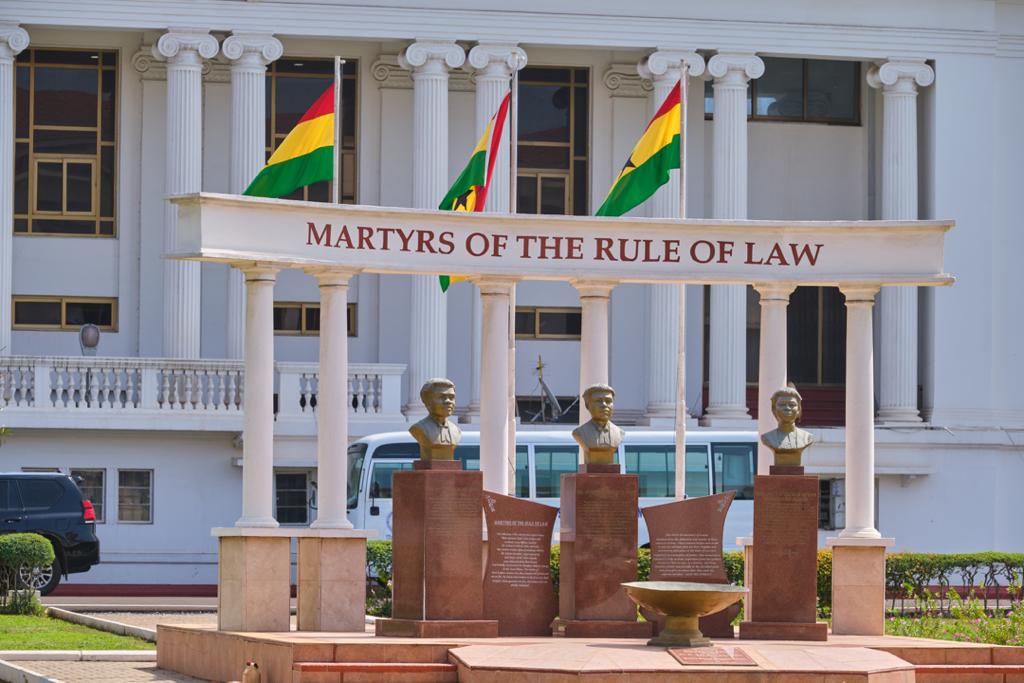
With International Human Rights Law and the 1992 Constitution of Ghana
LEGAL MEMORANDUM
By Bobby Quarqoo
I. INTRODUCTION
This memorandum examines whether the decision of the Supreme Court of Ghana delivered on 25 February 2026—upholding convictions under a military-era Prohibited Organisations Decree and the Decree itself—complies with:
Ghana’s obligations under international human-rights law and Regional obligations under the African Charter on Human and Peoples’ Rights; and the guarantees enshrined in the 1992 Constitution of Ghana.
Particular attention is given to:
*Prolonged pretrial detention;
*Failure to credit time already served;
*Disproportionate sentencing;
*Criminalization of alleged non-violent political activity.
II. ISSUES PRESENTED
1. Whether the continued application of a military-era Prohibited Organisations Decree is compatible with international human-rights standards.
2. Whether prolonged detention and failure to credit time served violate the right to liberty and fair trial.
3. Whether the criminalization of peaceful political advocacy violates freedom of association and expression.
4. Whether the Supreme Court’s decision is consistent with Ghana’s 1992 Constitution.
III. APPLICABLE LAW
A. International Instruments
Ghana is a State Party to:
* International Covenant on Civil and Political Rights
* African Charter on Human and Peoples’ Right
Relevant provisions include:
* Right to liberty (ICCPR Art. 9; African Charter Art. 6)
* Right to fair trial (ICCPR Art. 14; African Charter Art. 7)
* Freedom of expression and association (ICCPR Arts. 19 & 22; African Charter Arts. 9 & 10)
B. Regional Jurisprudence
The ECOWAS Court of Justice has held in related cases involving Western Togoland activists that:
Prolonged detention without prompt judicial oversight constitutes arbitrary detention;
Ghana violated both the African Charter and its own constitutional safeguards.
C. Domestic Law — 1992 Constitution of Ghana
Article 14 — Protection of personal liberty
Article 19 — Fair trial guarantees
Article 21 — Freedom of expression and association
Article 33(5) — Incorporation of international human-rights norms
IV. ANALYSIS
1. Compatibility of the Prohibited Organisations Decree
International law permits restrictions on association only where they are:
Clearly defined;
Necessary;
Proportionate.
Military-era decrees of broad scope raise concerns of:
*Vagueness
*Overbreadth
*Discretionary enforcement
Where such a law criminalizes political activity without precise limits, it risks violating Articles 9 and 10 of the African Charter and Articles 19 and 22 of the ICCPR.
2. Arbitrary Detention
Under both international and constitutional law:
Detention must be lawful, necessary, and subject to prompt judicial oversight.
Prolonged pretrial detention:
Constitutes arbitrariness when excessive or unjustified,
has already been found unlawful in related ECOWAS jurisprudence.
A judicial decision that affirms outcomes derived from such detention risks perpetuating the violation.
3. Failure to Credit Time Served
Failure to account for time spent in detention:
Results in disproportionate punishment and
undermines fairness in sentencing. This contravenes:
*Article 7 of the African Charter
*Article 14 of the ICCPR
Principles inherent in *Article 19 of Ghana’s Constitution
4. Disproportionate Sentencing
International standards require that penalties:
Be proportionate to the offense–Reflect mitigating factors.
Where sentencing exceeds statutory limits or disregards pretrial detention, it may amount to:
*Arbitrary punishment
*Violation of fair trial rights
5. Criminalization of Peaceful Political Advocacy
Even where a state disputes claims to self-determination,
Peaceful advocacy remains protected.
Restrictions must satisfy strict tests of:
*Necessity
*Proportionality
*Legitimate aim
Criminal sanctions against non-violent expression risk violating:
*Article 9 and 10 of the African Charter
*Article 21 of the Constitution
6. Constitutional Inconsistency
*Article 14 (Liberty)
Failure to ensure prompt judicial oversight and lawful detention contradicts constitutional guarantees.
*Article 19 (Fair Trial)
Disproportionate sentencing and failure to credit time served undermine fairness;
*Article 21 (Freedoms)
Criminalization of peaceful advocacy conflicts with protected freedoms;
*Article 33(5)
By incorporating international human-rights principles, the Constitution reinforces Ghana’s treaty obligations.
V. CONCLUSION
The Supreme Court decision of 25 February 2026, as described, raises substantial legal concerns:
*It affirms the application of a broadly framed military-era decree without sufficient scrutiny of its compatibility with modern human-rights standards;
*It fails to remedy or adequately address prolonged detention;
*It permits sentencing practices that may be disproportionate and inconsistent with fair-trial guarantees;
*It risks criminalizing protected forms of peaceful political expression;
*It appears inconsistent with both Ghana’s constitutional protections and its international obligations.
VI. RECOMMENDED LEGAL POSITION
A rights-consistent approach would require:
*Strict scrutiny of the decree’s compatibility with constitutional and international norms;
*Recognition and remedy of unlawful detention;
*Sentencing that fully accounts for time served;
*Protection of peaceful political expression within lawful limits.
VII. FINAL OBSERVATION
States retain legitimate authority to protect national security and public order. However, under binding international and constitutional standards, such authority must be exercised within a framework of:
*Legality
*Necessity
*Proportionality
Where these principles are not observed, judicial endorsement of enforcement measures risks constituting a violation of both domestic and international law.
Bobby Quarqoo
African Diasporan Freelance Journalist and Freedom Advocate
May 02,2026
Contacts:
westtogo@gmail.com
weettogo@outlook.com