

By Leo Nelson
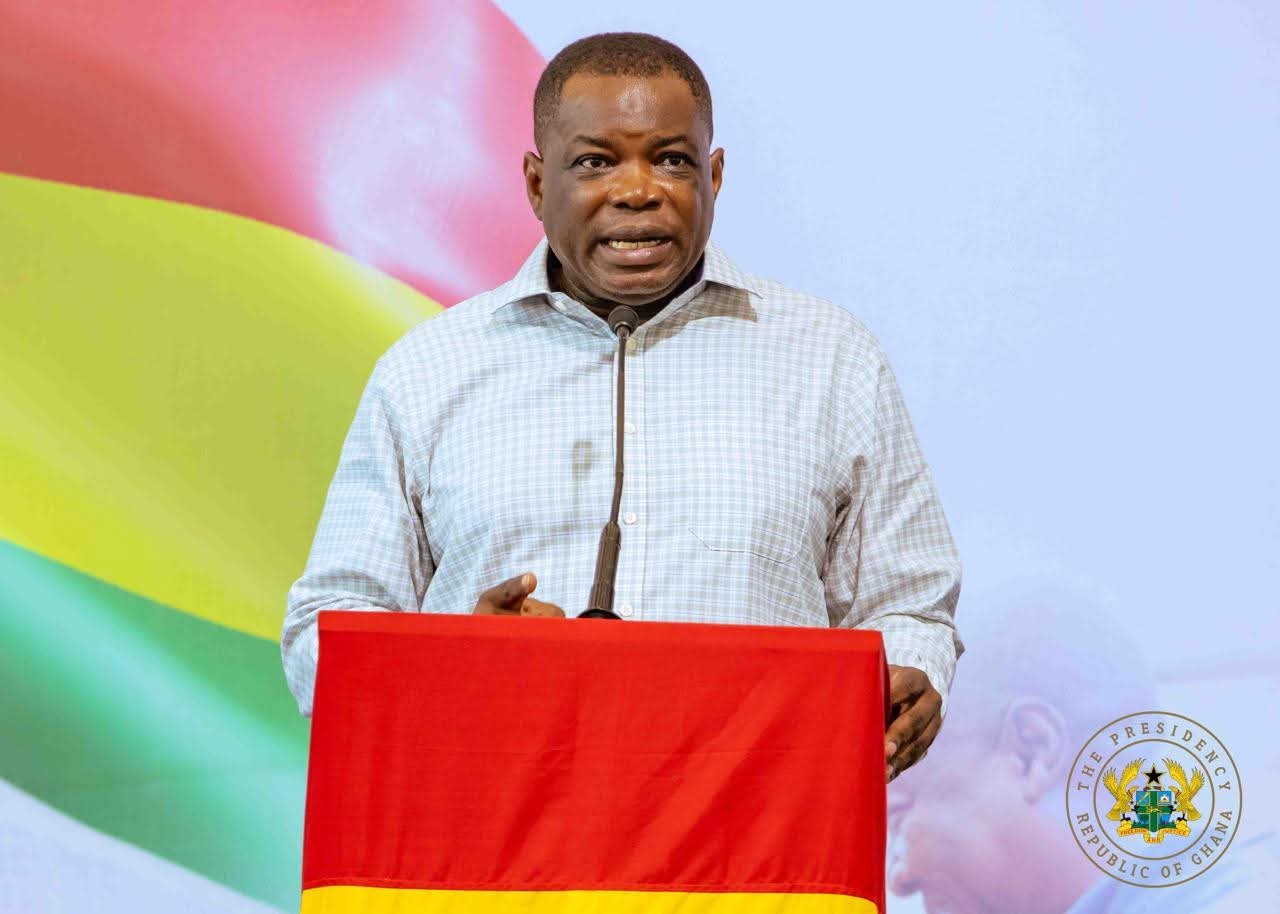
Minister of Roads and Highways, Kwame Governs Agbodza, has detailed the extensive progress made under the Reset Ghana agenda within the Eastern Region at the Town Hall Engagement with the President.
The Minister confirmed that the current administration has refused to suspend any existing road projects upon taking office.
“Every inherited contract has remained active to ensure the continuous development of vital national transport links.”
Agbodza described the strategic decision to settle outstanding debts owed to various road contractors across the country. The government has successfully paid over 12 billion Ghana cedis to firms for works yet to be completed under the previous regime.
“President Mahama has paid over 12 billion Ghana cedis to contractors he inherited. Not one cedi of those amount was project he has awarded. So if a President actually came and actually paid 12 billion cedi for project he inherited, that is a Reset President.”
This massive financial injection represents the largest single payment period in the history of the Ghanaian road sector. Leadership aims to restore trust between the state and private construction firms through these payments.
The Minister acknowledged that a significant debt remains from the previous administration, totaling nearly 40 billion Ghana cedis. He urged contractors to maintain their presence on site despite these inherited financial challenges.
He identified road networks as the primary lifeline for local communities and essential public services. The current administration has prioritised the completion of routes leading to hospitals, schools, and tourism hubs.
Minister Agbodza condemned the historical trend of abandoning infrastructure projects when political power shifts between parties. He stated that President Mahama has issued a specific directive to protect every ongoing road development.
The Reset Ghana policy intentionally reversed the 2017 decision to halt all cocoa road construction projects. The previous suspension led to the total collapse of many critical rural infrastructure programmes.
Current leadership has focused on the actual completion of works rather than symbolic ceremonies or political optics. The Adaklu MP noted that contractors for the Big Push initiative have already commenced technical soil testing at various sites.
The Minister expressed gratitude to the firms that continued working despite the significant domestic debt situation. He promised that the Ministry would continue to prioritise those who remain committed to their assignments.
Accountability remains a central pillar of the new road sector strategy for the Eastern Region. Agbodza encouraged residents to monitor site activities and report any perceived theft of construction materials.
Technical teams are currently preparing for the second phase of the Big Push project to expand the network. Several urgent priority roads have been added to the list for immediate rehabilitation and surfacing.
Public involvement serves as a tool to prevent the waste of state resources during construction phases. The Minister asked for vigilance from traditional leaders and youth groups regarding the quality of workmanship.
Eastern Region Infrastructure Receives Major Big Push Investment
The Adomi Bridge project has emerged as the largest single component of the Big Push initiative in the country. This three-kilometre structure represents a massive economic enclave designed to stimulate regional trade and industry.
“The Adomi Bridge is the largest Big Push project in the country, and it’s a bridge about 3 kilometres. People think we are building a bridge but we are actually building a whole economic enclave.”
Minister Agbodza explained that the bridge will facilitate agro-processing and create thousands of jobs for local residents. Geotechnical investigations and preliminary works have already started on this landmark infrastructure project.
Contractors in the Eastern Region are currently working ahead of their projected schedules for the Big Push. The Minister praised the local cooperation that has allowed these firms to exceed their initial performance targets.
Government plans indicate that several major projects will reach completion before the end of the 2027 calendar year. Some specific sites may even finish a full year ahead of the original contract dates.
The Minister stressed that speed will not lead to a reduction in the quality of the roads. He insisted that every project must meet the highest international safety and durability standards.
He added that the Eastern Region as a primary beneficiary of the national infrastructure reset. The Minister reaffirmed the commitment to providing the area with its fair share of development. Future road designs focus on connecting production centres to urban markets to lower the cost of food.
Agbodza warned that contractors who abandon their sites will not receive any new government contracts. He stated that the ministry keeps a detailed record of every firm and their performance. Minister Agbodza promised that the Eastern Region will see unprecedented levels of road connectivity.