

By Leo Nelson
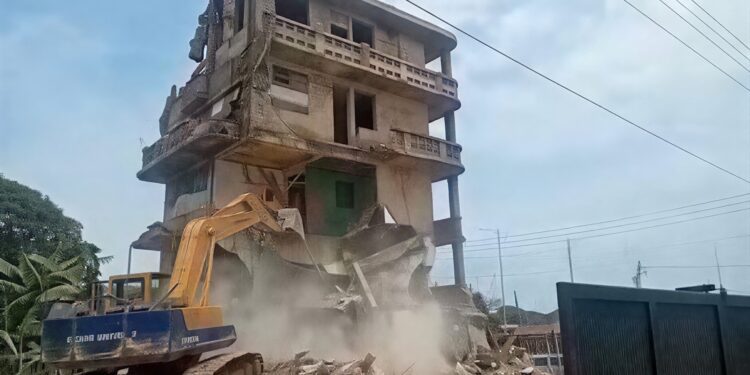
The Director of Man Made Disaster at National Disaster Management Organization (NADMO), Maxwell Emmanuel Niber has disclosed that the agency has identified several buildings considered unsafe for human occupation. He explained that approval has been secured from the relevant ministry to begin the next phase of action.
The Director indicated that the affected structures pose risks because of their condition, location and other safety concerns. Consequently, NADMO has started engaging occupants to vacate the premises ahead of demolition exercises.
He stated that the agency’s priority is to safeguard lives and property before any disaster occurs. Furthermore, Niber noted that preventive action is more effective than emergency rescue operations after a collapse.
Several of the identified buildings are located in parts of Greater Accra. He mentioned Tema, Osu and Achimota among the areas where many of the structures have been earmarked.
The Director revealed that most of the buildings are occupied residential and commercial properties. A number of them are multi storey structures accommodating many people on a daily basis.
Niber explained that the high number of occupants increases the level of exposure whenever a building develops structural weaknesses. As a result, the agency considers intervention necessary to prevent avoidable tragedies.
“We have earmarked these buildings and secured approval to take action. Our focus is to ensure that people move to safety before the structures are brought down.”
The Director clarified that the exercise did not begin because of recent building collapses. He said the identification process started long before the rainy season and is part of an ongoing national safety programme.
Earlier interventions, he recalled, were carried out in Sakumono where structures found in unsuitable locations were removed. Similar exercises have also taken place in other communities over the years.
Niber stated that the agency assesses each case individually before any decision is taken. Some buildings, he explained, are old and weakened while others suffer from poor construction standards.
In addition, some recently developed structures have been identified because they were erected within waterways and unauthorised locations. Such developments, he said, create risks for residents and surrounding communities.
The Director disclosed that 16 buildings are currently under active consideration for demolition. He added that several others have already been removed through previous operations conducted by NADMO and partner institutions.
Demolition Exercise Backed By Assessments And Safety Checks
Niber defended the ongoing demolition exercise as a carefully assessed intervention. He stressed that decisions are based on technical evaluations conducted with relevant institutions.
Niber explained that several agencies participate in the verification process before any structure is marked for removal. These include Metropolitan Municipal and District Assemblies together with institutions responsible for assessing building integrity.
He stated that officials examine the location, structural condition and documentation of each property. Those assessments, he noted, help determine whether a building is suitable for habitation.
Furthermore, affected occupants receive prior notification before any action is taken. He explained that evacuation measures are implemented to ensure public safety throughout the operation.
The Director indicated that demolition sites are secured before work begins. Areas surrounding the structures are also examined to prevent damage to neighbouring properties.
According to Niber, NADMO collaborates with the military during demolition activities. He said the expertise of the security service helps ensure that the process is carried out safely and professionally.
“We work with the appropriate agencies before any structure is identified. Every step is taken to ensure that the right procedures are followed.”
He rejected suggestions that the exercise is a reaction to recent incidents. He argued that the programme follows established procedures designed to reduce disaster risks across communities.
Beyond the demolition campaign, Niber welcomed proposals for a National Disaster Relief Management Fund. He described the idea as an important step towards strengthening support for disaster victims.
The Director noted that rising numbers of affected persons continue to place pressure on available resources. Additionally, NADMO is seeking additional partnerships to enhance its relief operations.
He explained that evacuation exercises often require assistance for displaced residents. Support for relocation and temporary accommodation, he observed, remains a significant challenge for the agency.
Niber disclosed that NADMO intends to engage the media in appealing for greater institutional support. He said contributions from organisations and corporate bodies can strengthen ongoing relief efforts.
Recently, Stanbic Bank provided items to support the agency’s humanitarian activities. The Director commended the gesture and encouraged other institutions to follow similar path.
The Director added that disaster management requires collective responsibility. He therefore called on public institutions, businesses and citizens to support initiatives aimed at protecting lives and communities across the country.