


By Stanley Asor
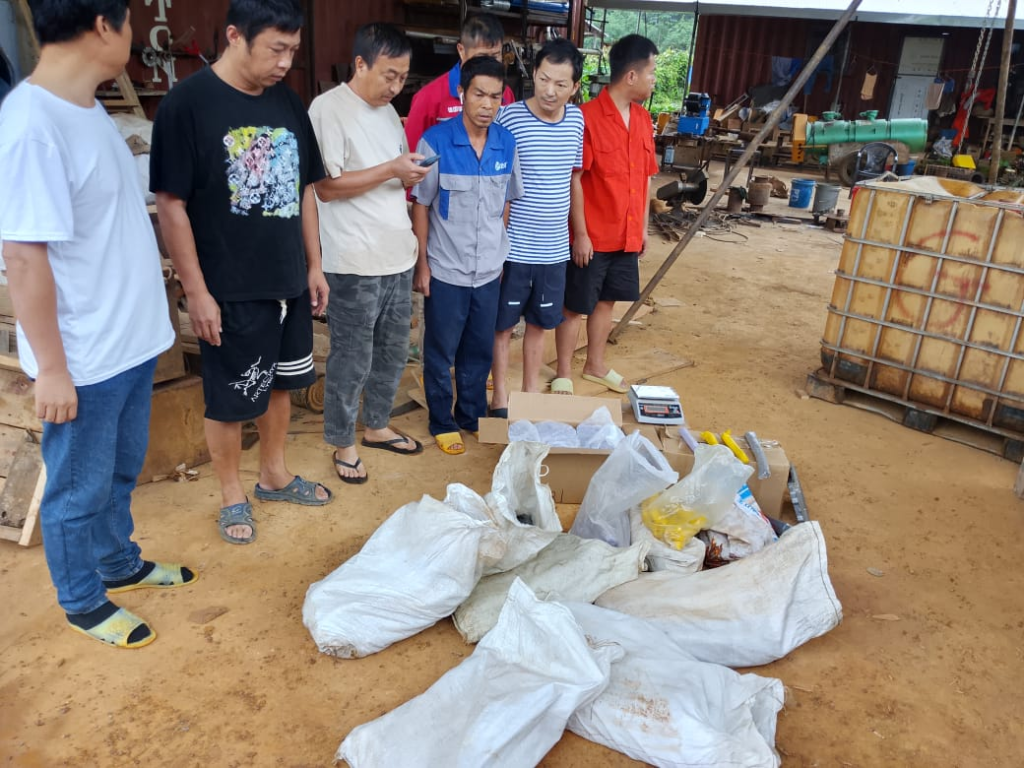
A confrontation between national security operatives and political figures in the Western Region has exposed the deep entanglement of local officials in the illegal mining economy, following the arrest of 15 Chinese nationals suspected of operating and manufacturing explosives for mining without requisite permits .
The incident occurred on 2 July at the Tarkwa-Wasa-Mpohor junction, where a task force from the National Anti-Illegal Mining Operations Secretariat (NAIMOS) detained the Chinese nationals allegedly engaged in galamsey activities.
According to reports, the operation was soon met with intervention attempts from two prominent local political figures: Mpohor Member of Parliament Henry Godfred Bentil and former District Chief Executive Ignatius Asaah Mensah.
The former DCE is said to have been the first to contact the National Security Taskforce, seeking the release of the suspects. When that approach was rejected, the MP allegedly followed up with a call during which he issued threats to the security operatives.
“I will report you to the lands minister… Do you know how we won that seat?” Bentil is quoted as saying, among other remarks.
When contacted by The New Republic, the MP did not clearly confirm or deny his involvement. Instead, he reportedly threatened legal action against the newspaper if the story was published, while offering an explanation that his intervention stemmed from a complaint received from a traditional leader in the area.
According to Bentil, a chief in the area informed him that national security personnel had approached owners of registered small-scale mining concessions and requested meetings to discuss negotiations concerning the mining lands.
“I was there one evening, and I had a call from one of the chiefs in one of the communities that a group of people came to their registered small scale mining site and they asked them to come and meet them at Bogoso for negotiations because they are from national security, they are in charge of revenue mobilisation,” Bentil told The New Republic.
“People from national security wanted to meet the site owners and I took his number from the chief and I called and he said he is from national security and so I asked, so national security, you have been mandated to go to the various small scale mining sites to mobilise for resources, is that part of your job?”
The New Republic requested the name and contact details of the alleged national security operative for further investigation. The MP asked to first contact the chief involved before providing the information, but did not subsequently return with the details.
The matter involves alleged illegal mining activities linked to a Chinese-owned company identified as Yaanum Mining Company, operating in the Tarkwa-Nsuaem area. Intelligence gathered by The New Republic indicated that the 15 arrested Chinese nationals were operating illegal mining sites around the Wasa-Mpohor junction.
Beyond operating without the required permits, the miners were allegedly underdeclaring gold production figures to reduce tax obligations a practice that has become increasingly common in the sector and a major concern for revenue authorities.
The incident raises significant questions about the relationship between local political figures and illegal mining operations in the Western Region, a key theatre in Ghana’s protracted struggle against galamsey.
The MP’s reference to “how we won that seat” suggests an underlying political calculus to the intervention, while the former DCE’s initial contact indicates a coordinated effort to shield the operation from enforcement.
The task force, backed by national security, has been at the forefront of the administration’s renewed push against illegal mining. Confrontations such as this one test the government’s resolve to enforce the law against politically connected operators and their local allies.
The incident has been reported to the appropriate authorities, and further action is expected. The MP’s threat of legal action against The New Republic adds a layer of tension to the matter, though the newspaper has indicated it stands by its reporting.
For the anti-illegal mining task force, the episode serves as a reminder of the political pressures that accompany enforcement operations in mining communities. For the government, it presents a test of whether the Reset Agenda’s commitment to tackling galamsey extends to holding elected officials accountable for interference in law enforcement.