

Party Loyalists Threaten Retaliation Against Institutions Accuse Of ‘Silence’
TNR Files
On a recent broadcast, Jennifer Oforiwaa Queen, the deputy communications director of Ghana’s New Patriotic Party (NPP), issued a stark warning. She promised that if her party returns to power in 2028, it will systematically exclude civil society leaders, traditional chiefs, religious figures, and journalists who, in her view, have remained conspicuously silent over the conviction of party stalwart Bernard Antwi-Boasiako.
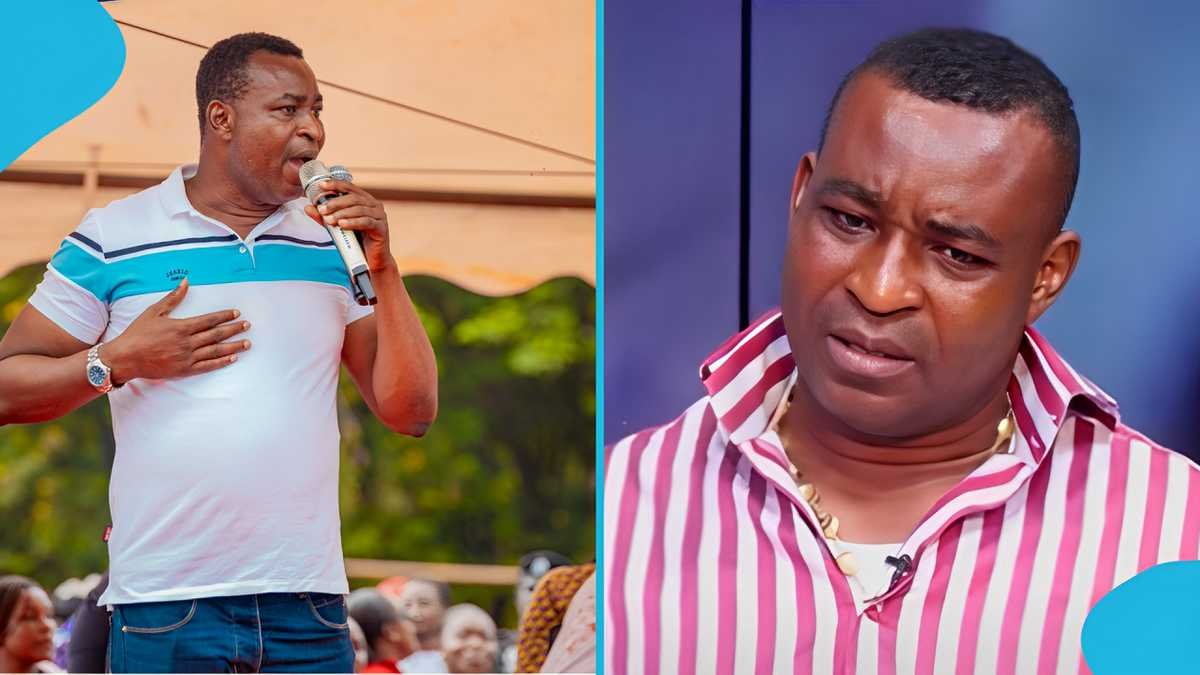
Antwi-Boasiako, widely known as Chairman Wontumi, was sentenced last month to 20 years of hard labor by an Accra High Court in a case that has polarized the nation. The NPP has characterized the sentence as political persecution, while the government has defended it as a lawful judicial outcome.
“Power is transient,” Queen said on Movement TV, a station owned by Antwi-Boasiako. She urged the so-called neutrals to “continue to observe table manners” until the NPP wins the next election, at which point she vowed to “see those who will come out.”
She went further, mocking journalists who refer to President John Dramani Mahama as “Deputy Jesus Christ on earth” and promising that a future NPP administration would go even further, playing the roles of “Jesus Christ, the Twelve Disciples, and everything.”
The rhetoric has alarmed civil rights advocates, who see it as an assault on the independence of institutions that are meant to serve as checks on executive power.
The NPP’s grievance is not merely about silence. The party argues that civil society and the clergy are tacitly endorsing the Mahama administration, while the press has been co-opted through state appointments.
Former Majority Leader Osei Kyei Mensah Bonsu elaborated on this in a separate interview, accusing the government of actively recruiting journalists into lucrative state positions, creating a chilling effect that discourages remaining reporters from asking tough questions.
Mensah Bonsu laid out a systemic argument: the Mahama government has appointed a “wide range of journalists” to posts, leading those still in newsrooms to self-censor in hopes of securing their own future appointments.
“Even if the issues are not going well they do not want to say it because it can get to my turn,” he said, describing a culture of calculated silence that he claims is undermining journalistic integrity. “Let be forthright with ourselves and let be truth that is what will help the country,” he added, while declining to name specific appointees.
The NPP’s criticism, however, collides with its own recent history. Under former President Nana Akufo-Addo, the NPP government appointed a long list of prominent journalists to ambassadorial roles, board chairs, chief executive positions, and parliamentary seats. A review of those appointments includes Yaw Boadu Ayeboafo, Kwami Sefa Kayi, Paul Adom Otchere, Francisca Odamten, Kojo Oppong Nkrumah, Elizabeth Ohene, and the late Kwabena Kwakye, among many others. Oppong Nkrumah, for instance, transitioned from journalism to become a minister and later a member of parliament.
Yet, by most accounts, the press during that period did not go silent; in fact, the NPP frequently decried media criticism of its own administration. Critics were quick to point out that those appointments did not muzzle the Fourth Estate rather, the party’s own hypersensitivity to unfavorable coverage often provoked outrage.
The juxtaposition of the NPP’s current threats with its past practices underscores a recurring tension in Ghanaian politics: the entanglement of the Fourth Estate with executive power.
While both major parties have used state appointments to reward loyalists, the NPP’s overt promise of retaliation against non-partisan actors and its characterization of all silence as complicity represents a rhetorical escalation. It signals a shift toward viewing institutional independence as an enemy rather than a safeguard.
For now, the Mahama administration has not formally responded to the NPP’s accusations. But the specter of a future NPP government wielding patronage not as an inducement but as a weapon sidelining entire classes of civic leaders has injected a new volatility into Ghana’s political discourse.
The question left hanging is whether the NPP’s scorched-earth posture will galvanize the very institutions it seeks to silence, or whether its threats will accelerate a drift toward transactional journalism and cautious neutrality, where the price of speaking out is measured not in censure, but in lost access.