

TUAG Fires Back With Damning Ultimatum, Demands Answers on Road Carnage
TNR Files
A geopolitical storm in the Middle East has triggered a fuel price surge in Ghana, setting the stage for a fierce confrontation between the Ghana Private Road Transport Union (GPRTU) and Transport Users Advocacy Ghana (TUAG).
With Brent crude oil climbing past US$95 per barrel and major Oil Marketing Companies (OMCs) hiking pump prices, the GPRTU has signaled it may announce new transport fares by the end of the week—a move TUAG has slammed as “unjustified, premature, dangerously misplaced, and unacceptable.”
Global Turmoil, Local Pain
Brent crude rose by about five per cent to nearly US$95 per barrel on Tuesday, its highest level since late July, following US military strikes against Iranian targets near the Strait of Hormuz after two tankers were attacked along the critical shipping route.
The escalation has heightened concerns about further disruptions to crude exports, with US President Donald Trump threatening a significantly larger response and Tehran warning of retaliation “many times greater.” A major Ukrainian drone attack on Russia’s Ust-Luga oil terminal has also compounded global supply fears.
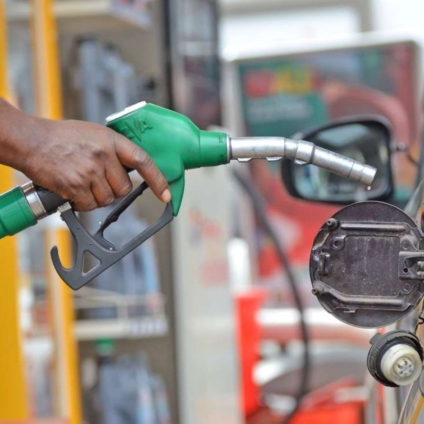
In Ghana, the ripple effects are already being felt. Star Oil has led the price adjustments, raising diesel from GH¢16.97 to GH¢17.26 per litre and petrol from GH¢14.97 to GH¢15.43 per litre. TotalEnergies has nudged its petrol price to GH¢16.18 per litre, while state-owned GOIL and Shell have maintained their August rates to provide some consumer relief.
The National Petroleum Authority (NPA) has also raised price floors, setting petrol’s minimum at GH¢14.53 per litre and diesel at GH¢15.60 per litre. Despite the government’s extension of a GH¢2-per-litre diesel subsidy into September, the NPA has confirmed that without it, diesel would now be selling for approximately GH¢20 per litre at the pumps.
GPRTU’s Defiant Stance
Despite the government’s intervention, GPRTU Deputy Public Relations Officer Samuel Amoah insists the union is left with little choice. “Every component that we are using has gone high. Spare parts are very high. Lubricants are high.
Taxes, insurance, DVLA all of them have gone high,” Amoah told Joy FM. He revealed that the union had initially proposed a 30% fare increase in August, which was suspended after the government announced the GH¢2 diesel subsidy. However, he says the expected price reductions “did not materialise,” and the latest fuel price surge has renewed pressure on operators.
“I strongly believe by the close of this week, by the end of this week, something will come out for our drivers and then our passengers to also comply with,” Amoah stated. He confirmed the union is assessing whether to maintain the 30% figure, reduce it to 20%, or adopt a different percentage.
TUAG’s Explosive Response
TUAG has responded with a blistering statement signed by Executive Director James Afedo, delivering four damning demands that go far beyond the fare debate:
Demand 1:
Investigate Spare Parts Pricing Don’t Blame Passengers
TUAG challenged the GPRTU’s reliance on spare parts costs as justification, pointing to a period of relative inflation stability. “The question the Union should be interested in investigating is why spare part prices are still high despite a more favourable economic climate,” the statement read. “Poor passengers who will suffer the brunt of any unreasonable hike in fares by the Union are not responsible for the reason spare part traders are refusing to reduce their prices.”
Demand 2:
Stop Negating Government Relief
The advocacy group argued that the GH¢2 diesel subsidy was a deliberate intervention to cushion operators and commuters. With projected fuel price adjustments at just 4.8% for petrol and 2.1% for diesel, any significant fare increase would “far outpace the actual fuel price adjustment, effectively punishing commuters for the unions’ inability to manage their own internal inefficiencies.”
Demand
3: Stop the “Cruel Economic Injustice” on Citizens
TUAG painted a stark picture of the average Ghanaian worker, trader, and student who are “already stretched to the breaking point by high food prices, rent, and utility bills.” The statement declared that “transport is an essential service, not a luxury,” and shifting operational costs onto citizens with no alternative but to commute daily is “cruel economic injustice.” TUAG also slammed the union’s threat that it would be “difficult to convince drivers not to increase fares” as placing “undue coercive pressure on the public.”
Demand 4:
Address the Road Safety Crisis Before Demanding More Money
In its most pointed criticism, TUAG accused transport unions of being “obsessed with their financial margins, to the detriment of the safety of their passengers.” Afedo called on operators to proactively investigate the causes of fatal road crashes and “take steps to urgently minimize the carnage on our roads to guarantee the safety of transport users, not always threatening to increase transport fares.”
NPA Boss Joins the Fray
The National Petroleum Authority has also weighed in, with CEO Godwin Edudzi Tameklo rejecting the transport unions’ threats as an attempt to “hold the entire country to ransom.”
“If you have a situation where government has demonstrated many times… Government of Ghana could be keeping this GH¢2 on it for developmental projects.
But Government of Ghana is making things easier. We expect a certain level of the sharing of burden between us and them,” Tameklo said. He also questioned why unions failed to reduce fares when fuel prices were as low as GH¢10 per litre, and noted that the cedi’s appreciation has lowered the cost of importing spare parts.
A Nation on Edge
The standoff has reached a critical juncture. TUAG has issued an unequivocal ultimatum: drop any plan to increase fares without proper justification, and provide detailed steps being taken to curb fatal road carnage and guarantee commuter safety nationwide.
With the GPRTU expected to announce its decision by the end of the week, Ghana’s commuters are bracing for another blow to their already overstretched finances while transport operators argue they can no longer absorb rising costs in the face of a global oil shock that shows no sign of abating.