

…as Print Media Bleed Heavily
By Philip Antoh
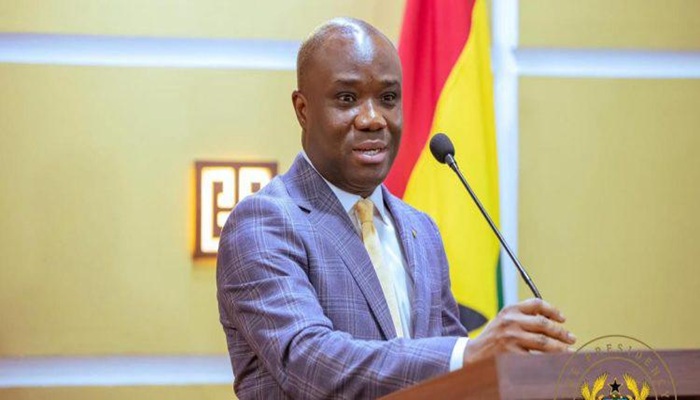
The Minister of Government Communication, Felix Kwakye Ofosu, has painted a grim picture of the traditional media landscape in Ghana, warning that the economic strangulation of print media poses a direct threat to the country’s national security.
Speaking at the PRINPAG Capacity Building Workshop on Responsive National Security Reporting in Accra, the Minister whose address was delivered on his behalf by Deputy Government Communication Minister, Shamima Muslim detailed how tech giants and skyrocketing production costs have devastated the industry’s financial foundations.
The most severe blow, he noted, has been the exodus of advertising revenue. While print media captured roughly 30% of Ghana’s ad spend in 2016, that figure has plummeted to less than 7% today.
In contrast, Google and Meta now siphon off over 60% of the country’s total advertising revenue without employing a single local reporter.
The Minister noted that the highly coveted front pages of newspapers have been entirely bypassed by the algorithmic appeal of platforms like TikTok.
Compounding this digital disruption is a severe supply chain crisis. Because newsprint is still imported, costs have nearly doubled, surging from $600 per tonne in 2020 to over $1,100 today. With readers already financially strained, publishers are unable to raise cover prices to offset the difference.
The resulting business model is under immense stress.
Citing historical data, Kwakye Ofosu noted that the Daily Graphic sold over 100,000 copies daily in 2005; today, despite a doubled national population, circulation is just a fraction of that figure.
Furthermore, he said Audit Service data reveals that public institutional purchases of newspapers have dropped by over 70% in a decade.
Consequently, newspapers have been forced to abandon sales-driven models, now relying on a 75:25 revenue split heavily weighted toward advertisements, events, and marketing initiatives.
Beyond the financial crisis, the Minister warned of a dangerous shift in journalistic standards.
In an era where anyone with a smartphone can publish, professional journalists are forced to compete on speed with rumours. To survive, he lamented, some papers are trading in-depth reporting for sensationalism, risking the very credibility that once made print media a powerful societal pillar.
However, Kwakye Ofosu argued that the death of print cannot be an option for Ghana. “Radio is fast. TV is dramatic. Online is viral. Print is record. Print is what we cite in court, Hansard, in history books,” he stated.
“So, if print loses relevance, we lose our national memory.”
Linking the fate of print media directly to the workshop’s theme, he explained that social media provides “heat, not light.” It might show a video of soldiers, he noted, but it lacks the verification to tell the public whether the footage is from Ghana or Mali, or whether it was filmed in 2021 or 2025.
Traditional media, particularly print, remains the credible bedrock that security agencies need for verification, context, and historical record-keeping.
“Colleagues, let me be frank as a friend. Print is bleeding. And when print bleeds, national security bleeds,” the Minister cautioned, stressing that saving the traditional media industry is no longer just a business concern, but a matter of national safety.