

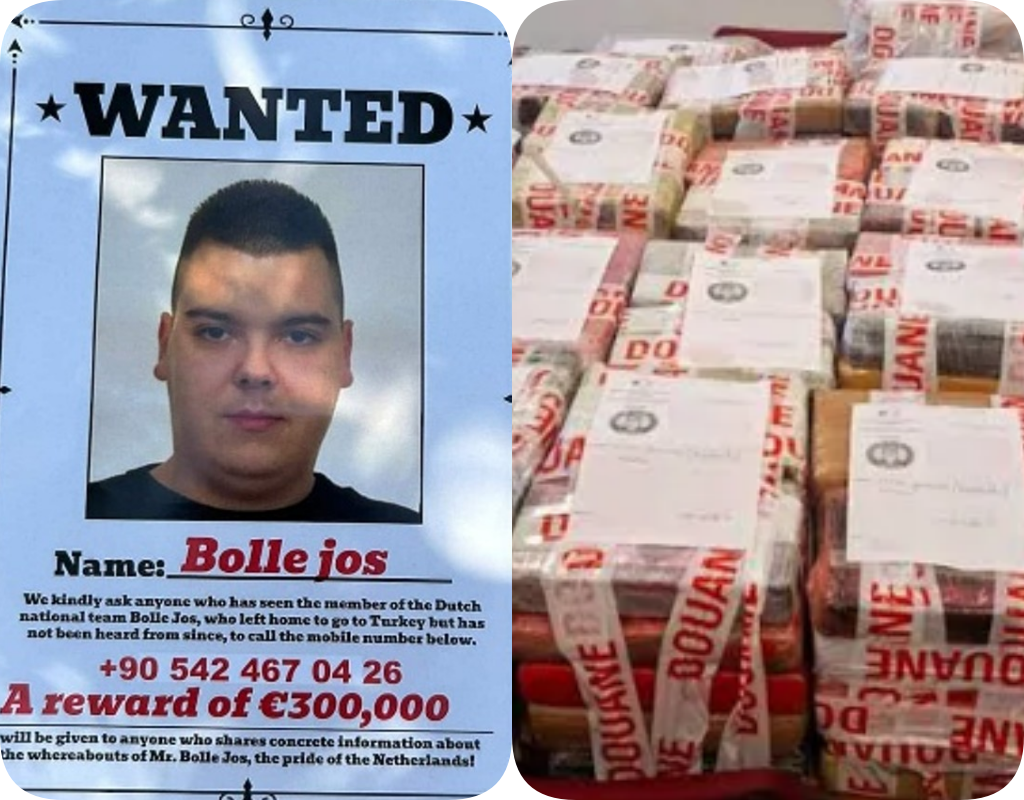
3.9-Tonne Cocaine Bust Triggers Panic, As Cartels Rush To Empty Hidden Stockpiles Across West Africa
TNR Files
The arrest of three Ghanaian operatives linked to the network of Dutch cocaine fugitive Jos Leijdekkers, known in European law enforcement circles as Bolle Jos, may represent far more than another routine narcotics case.
It may be the first public indication that international drug syndicates are rapidly clearing vast stockpiles of cocaine and other narcotics accumulated in Ghana during the permissive years of 2023 and 2024.
A review of major international drug seizures over the last two years reveals a striking pattern. Increasingly, large-scale cocaine and methamphetamine interceptions across Europe, Australia and West Africa have one common denominator: Ghana.
Security and intelligence sources familiar with regional trafficking routes told The New Republic that the recent surge in Ghana-linked seizures is not necessarily evidence that more drugs are entering the country. Rather, it suggests that cartels which previously used Ghana as a storage, transit and concealment hub are now moving accumulated inventories out in unusually large consignments.
The result is a growing trail of spectacular interceptions across multiple jurisdictions.
For much of 2023 and 2024, sources say, Ghana occupied a privileged position within the logistics architecture of several international trafficking organisations. Political stability, strategic maritime access, commercial shipping volumes and weaknesses in cargo inspection systems made the country an attractive staging post for narcotics destined primarily for European markets.
According to individuals familiar with regional trafficking trends, large quantities of cocaine were warehoused across the country while operators consolidated routes and distribution networks.
That environment, however, appears to have changed.
Growing international intelligence cooperation, increased scrutiny of West African shipping corridors and heightened interest by European enforcement agencies have reportedly made Ghana a less comfortable operating space. Faced with greater exposure, criminal networks are now attempting to move stockpiles out of the country quickly, often through bulk consignments concealed within legitimate exports.
The pattern is becoming increasingly difficult to ignore.
In June 2024, Britain’s National Crime Agency intercepted 166.88 kilograms of cocaine concealed in the luggage of two British nationals travelling from Accra to London Gatwick.
The following year, authorities tracking suspicious movements linked to an aircraft that arrived in Accra later connected intelligence to a maritime vessel intercepted in Senegal carrying significant quantities of narcotics.
In June 2026, Australian authorities seized 320 kilograms of methamphetamine hidden inside a commercial charcoal shipment traced back to Ghana.
Then came the seizure that has rattled anti-narcotics agencies across Europe and West Africa alike.
On 7 September 2026, French customs officers at the Port of Dunkirk intercepted 3.9 tonnes of cocaine concealed beneath recycled plastic waste loaded into a container that originated in Ghana. The drugs carried an estimated value of €225 million and formed one of the largest cocaine seizures connected to Ghana in recent memory.
Part of the consignment was reportedly destined for Antwerp, one of Europe’s most important commercial ports and a longstanding battleground between law enforcement agencies and organised criminal groups.
The fallout was immediate.
Within days, Ghana’s Narcotics Control Commission (NACOC) announced the arrest of three suspects alleged to have facilitated operations linked to the trafficking network of Leijdekkers, one of Europe’s most wanted narcotics figures.
The Commission disclosed that the cocaine shipment had been concealed within a consignment of plastic waste exported from Ghana. Investigators believe the suspects played roles in coordinating or facilitating aspects of the operation.
NACOC has stressed that the arrests demonstrate Ghana’s determination not to become a sanctuary, transit base or operational headquarters for international narcotics organisations.
Yet law enforcement officials privately acknowledge that the Dunkirk seizure may represent only a fraction of a much larger criminal enterprise.
Intelligence emerging from neighbouring Liberia points to the breadth of that challenge.
Regional security sources indicate that investigators have been examining possible links between the Leijdekkers network and a separate major cocaine investigation involving former Liberian Vice President Jewel Howard-Taylor.
Howard-Taylor was arrested in Monrovia on 19 August 2026 and subsequently charged with multiple offences, including drug trafficking and money laundering. Authorities also charged three European nationals in absentia as part of the same investigation.
For anti-narcotics officials, the significance of the Liberian case extends beyond the individuals involved. It highlights growing concerns that major trafficking syndicates have developed relationships and influence networks extending into elite political and commercial circles across parts of West Africa.
Such developments complicate enforcement operations considerably.
The challenge facing NACOC is further amplified by its own limitations.
Despite its expanding mandate, the Commission currently operates with approximately 1,300 personnel nationwide, a figure many security specialists consider inadequate against transnational criminal organisations possessing vast financial resources and sophisticated logistical capabilities.
Even more troubling are structural vulnerabilities within Ghana’s cargo inspection regime.
Large volumes of export cargo entering the ports of Tema and Takoradi are loaded and sealed long before reaching the ports. By the time many containers arrive for shipment, opportunities for comprehensive physical inspection have largely disappeared.
This creates obvious opportunities for criminal networks seeking to embed illicit cargo within legitimate exports.
According to Anne Maria-Gorretti, a consultant with the International Drug Policy Consortium, while scanning procedures exist within Ghana’s port system, inspection capabilities remain constrained.
“From personal observation, there is no indication of mobile scanning technology being deployed,” she told The New Republic.
The implication is significant. Containers loaded and sealed outside port facilities may enter shipping chains with only limited opportunities for independent verification of their contents.
Customs authorities conduct risk-based inspections and intelligence-led interventions, but examining every container physically is impossible given the scale of international trade passing through the ports.
Consequently, authorities depend heavily on intelligence gathering, risk profiling and fixed scanning systems.
These limitations help explain why major narcotics discoveries increasingly occur thousands of kilometres away from Ghana, after shipments have already entered global transport networks.
The broader question now confronting investigators is whether the recent seizures represent isolated successes or evidence of a much larger evacuation operation underway.
Black market sources interviewed by The New Republic recalled an unusual glut of cocaine within parts of Ghana’s underground drug economy during 2023 and 2024. According to these sources, increased availability pushed down street prices and squeezed profits for lower-level traffickers and couriers.
At the time, the phenomenon attracted little attention.
Today, investigators view those accounts differently.
If intelligence assessments prove accurate, the current wave of seizures from Dunkirk to Sydney may be exposing the delayed consequences of years during which international cartels quietly transformed Ghana into a storage and transit platform for narcotics heading to Europe and beyond.
The arrests announced by NACOC may therefore mark the beginning, rather than the conclusion, of a far larger story.
The evidence emerging across several continents suggests that some of the world’s most sophisticated trafficking organisations are not establishing new routes through Ghana. They are dismantling old ones, one jumbo shipment at a time.