

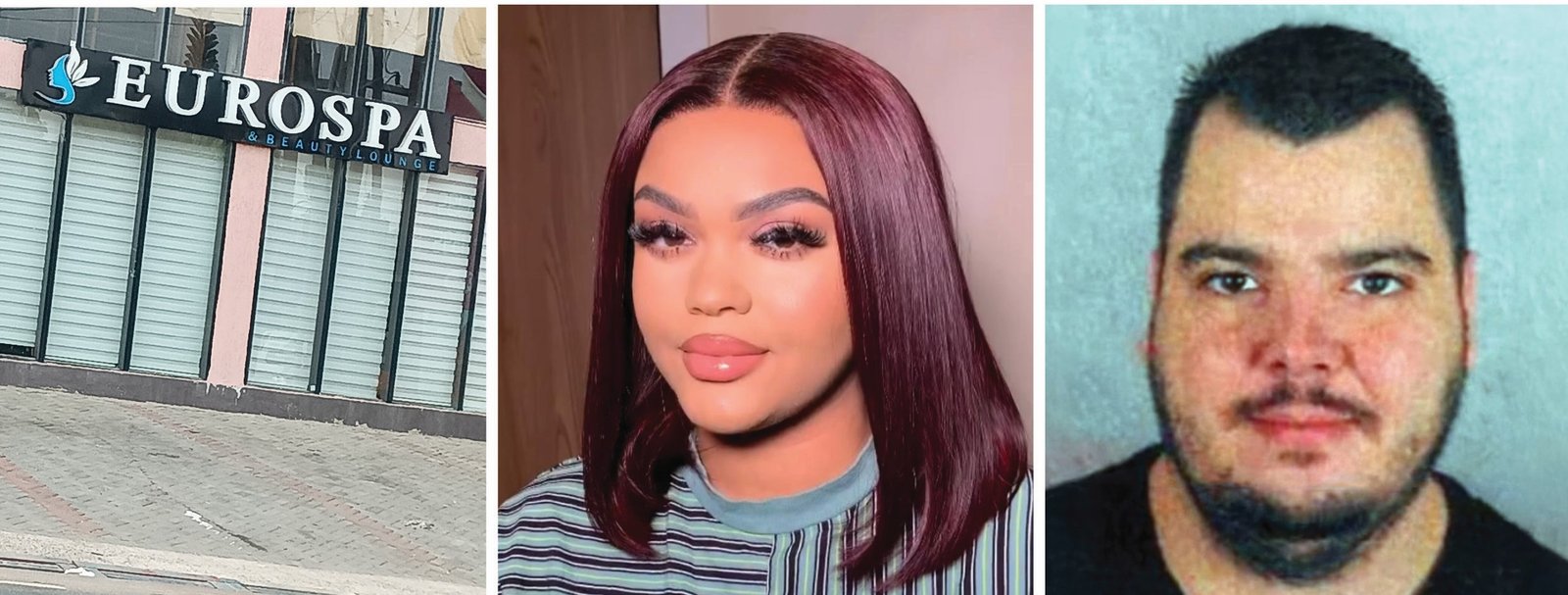
-Four Named in Dunkirk Case
-‘Accra Chief’ and EUROSPA’ wife Bust Draws link to East Legon Club
TNR Files
The investigation into the 3.9 tonnes of cocaine seized by French Customs at the Port of Dunkirk on 7 September 2026 has produced its first named suspects. Reliable sources have identified Desmond Koranteng, alias Biggie, alias Accra Chief, and his wife Jessica, along with Musah Atta and Kwaku Okyere, as four suspects being held by the Narcotics Control Commission (NACOC). NACOC has not publicly confirmed the names. All are entitled to the presumption of innocence.
The New Republic understands that Jessica, Koranteng’s wife, owns Eurospa spa and salon, an upscale beauty parlour near Shiashie in East Legon, Accra. Sources say Koranteng had been under NACOC surveillance for some time before the bust. He is the principal suspect among the four.
One of the suspects is a member of the East Legon Executive Fitness Club (ELEFC), the invitation-only Accra club whose members include some of Ghana’s most prominent business and political figures. Koranteng is said to be in his late 30s or early 40s and is suspected of being a Ghana-based point man for the network of Dutch fugitive Joseph Johannes Leijdekkers, alias Bolle Jos, alias Omar Sherif.
The seizure remains one of the largest Ghana-linked cocaine cases in recent memory. French Customs found the cocaine concealed beneath recycled plastic waste in a container that originated in Ghana. The haul is estimated at €225m. Part of the consignment was reportedly destined for Antwerp, a key European port and a long-standing battleground between law enforcement and organised crime.
The case has drawn attention because of the alleged Bolle Jos connection. The Dutch fugitive, convicted in the Netherlands in 2024 and sentenced to 24 years, is believed to run a West African network from bases in Sierra Leone and Liberia. Investigators estimate its annual turnover at about US317m cocaine case involving former Liberian Vice-President Jewel Howard-Taylor, arrested in August 2026, and to a 2026 seizure of more than 30 tonnes from a vessel that had departed Sierra Leone.
The ELEFC is a marker of the elite context in which the case sits, though no allegation is made against the club or its other members. Its membership is by invitation and includes media proprietor Osei Kwame Despite; Ernest Ofori Sarpong; Kennedy Asante Osei; Kennedy Ohene Agyapong, the New Patriotic Party financier and failed presidential aspirant; football legend Samuel Osei Kufuor; leisure-industry businessman Clifford Poku Amankwah; financier and restaurateur Richard Nii Armah Quaye; actor, comedian and property developer Kwaku Manu; and Milton Keynes-based healthcare and education investor Aaron Owusu Boateng. The club’s influence reaches across Ghanaian business and politics. In 2024 it mourned Daniel Kwame Boakye, alias Otega, with a GH¢200,000 funeral donation.
The four named are alleged facilitators or associates at this stage. The central questions remain unanswered: who paid for the cocaine, who owned it, who arranged its passage through Ghana, and who, if anyone, provided protection. Those questions go to the heart of Ghana’s exposure to transnational narcotics networks and the extent to which they have penetrated elite circles.
NACOC initially announced the arrests without names. It has not said whether any suspect is cooperating or has implicated others. It is also unclear whether the commission is holding three or four suspects. The naming of four accused, including a wife, raises questions about the scope of the arrests and the charges that may follow. The New Republic understands that investigators regard at least one suspect as a key connection in the Ghana end of the Bolle Jos network.
The Dunkirk case will test Ghana’s willingness and capacity to pursue a network that reaches into the country’s social and political elite. It will also test regional cooperation with Sierra Leone, Liberia, the Netherlands and European Union agencies. For now, the names are a step forward. The money, the ownership and the protection remain in the shadows.
Additional reporting and verification are continuing. NACOC and ELEFC could not be reached for comment before publication. The New Republic will publish further details as they are confirmed.