

Cites Air Pollution Violations
By Philip Antoh
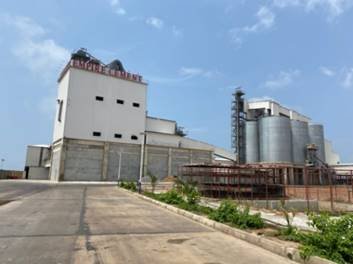
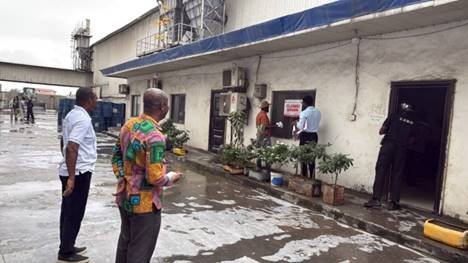
The Environmental Protection Agency (EPA) has enforced the immediate shutdown of Empire Cement Ghana Ltd.’s operations in Weija, Greater Accra, following allegations of air pollution breaches and non-compliance with its environmental permit.
The directive, issued in a notice dated September 14, 2026, is a response to numerous public complaints regarding pollution and nuisance caused by the factory’s activities.
An investigation by the EPA revealed sustained emissions of visible particulate matter, gases, and other pollutants, which the Agency says have detrimental effects on public health and the environment.
The EPA found that Empire Cement failed to submit its quarterly environmental monitoring returns, constituting a breach of Condition 9.1 of its environmental permit (No. EPA/MID/EMP/CU 859/25/1013/01/0042947).
Furthermore, the company was cited for failing to implement critical conditions regarding the installation and maintenance of pollution control systems.
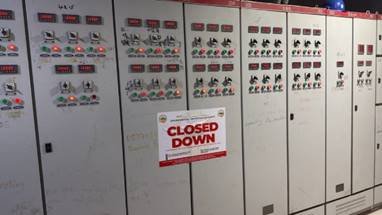
According to the EPA, the company neglected to install “appropriate State-of-the-Art pollution Control Systems” on all discharge units, a requirement necessary to meet the Ghana Standard for Environment and Health Protection (GS 1236:2019).
Additionally, the existing pollution control systems and auxiliary equipment were not properly maintained, leading to excessive dust emissions into the external environment.
Consequently, the Authority declared Empire Cement in breach of Conditions 5.1(a), 5.1(h)(i), 5.1(h)(iv), and 9.1 of its permit schedules.
To resume operations, the EPA has mandated that the company take specific remedial actions. Empire Cement has been ordered to submit its outstanding quarterly environmental monitoring returns by October 1, 2026.
Additionally, the company must install state-of-the-art air pollution control systems and ensure all existing equipment is repaired and maintained to guarantee compliance with permissible emission limits.
Background
The long-running conflict between Empire Cement Ghana Limited and the McCarthy Hill Residents Association stems from intense community protests over environmental, health, and regulatory violations.
The background of the dispute is defined by a timeline of permit bait-and-switches, grassroots pushback, legal battles, and decisive environmental enforcement:
The “Bait-and-Switch” Permit Dispute
The conflict began when Empire Cement a Chinese-owned company—secured an interim environmental permit from Ghana’s Environmental Protection Agency (EPA). However, the permit was strictly designated to produce cement paper bags, not actual cement production.
According to the McCarthy Hill Residents Association, led by association chairman Eddie Quaynor, the company used this limited permit on the blind side of the law to install heavy machinery, including three massive silos, to transition into full-scale cement manufacturing.
Resident Outcry & Environmental Threats
When the community realized a manufacturing plant was being erected at South McCarthy Hill along the Weija road, the association organized heavy public protests. The residents highlighted several critical threats
The prevailing winds would blow toxic cement dust particles directly into adjacent residential enclaves, risking respiratory illnesses. [
The factory site immediately borders Panbros Salt Industries Ltd, the oldest and largest wholly Ghanaian-owned salt producer in West Africa.
The association formally sued Empire Cement and sought injunctions to freeze construction.
Despite repeated orders from the EPA to stop work and decommission their mounted equipment, Empire Cement allegedly relied on political backchannels to push production forward at an accelerated speed.
This prompted multiple legal and regulatory counteractions over the years:
June 2021, following persistent resident tips, the EPA and police raided the site and temporarily shut it down, but the company somehow came back to operation due to an invincible hand.
In September 2021, an Accra High Court ordered a halt on construction, noting the company lacked valid permits to produce cement and in November 2022, t he High Court again placed an expanded injunction on the site’s operations until the final determination of the resident association’s lawsuit.